
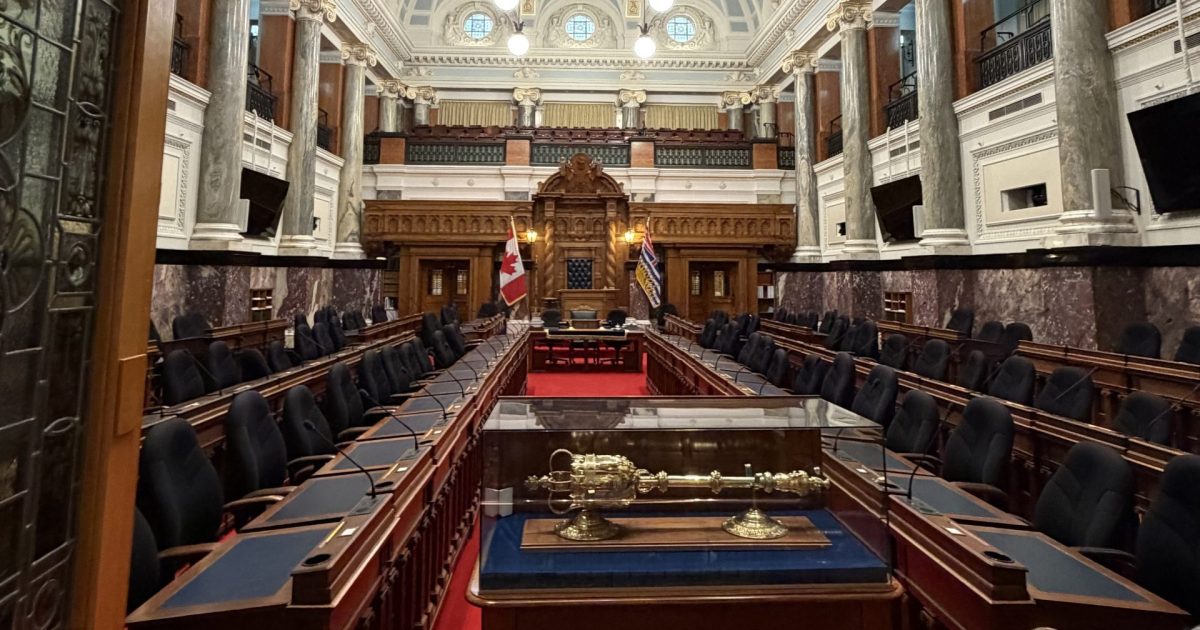
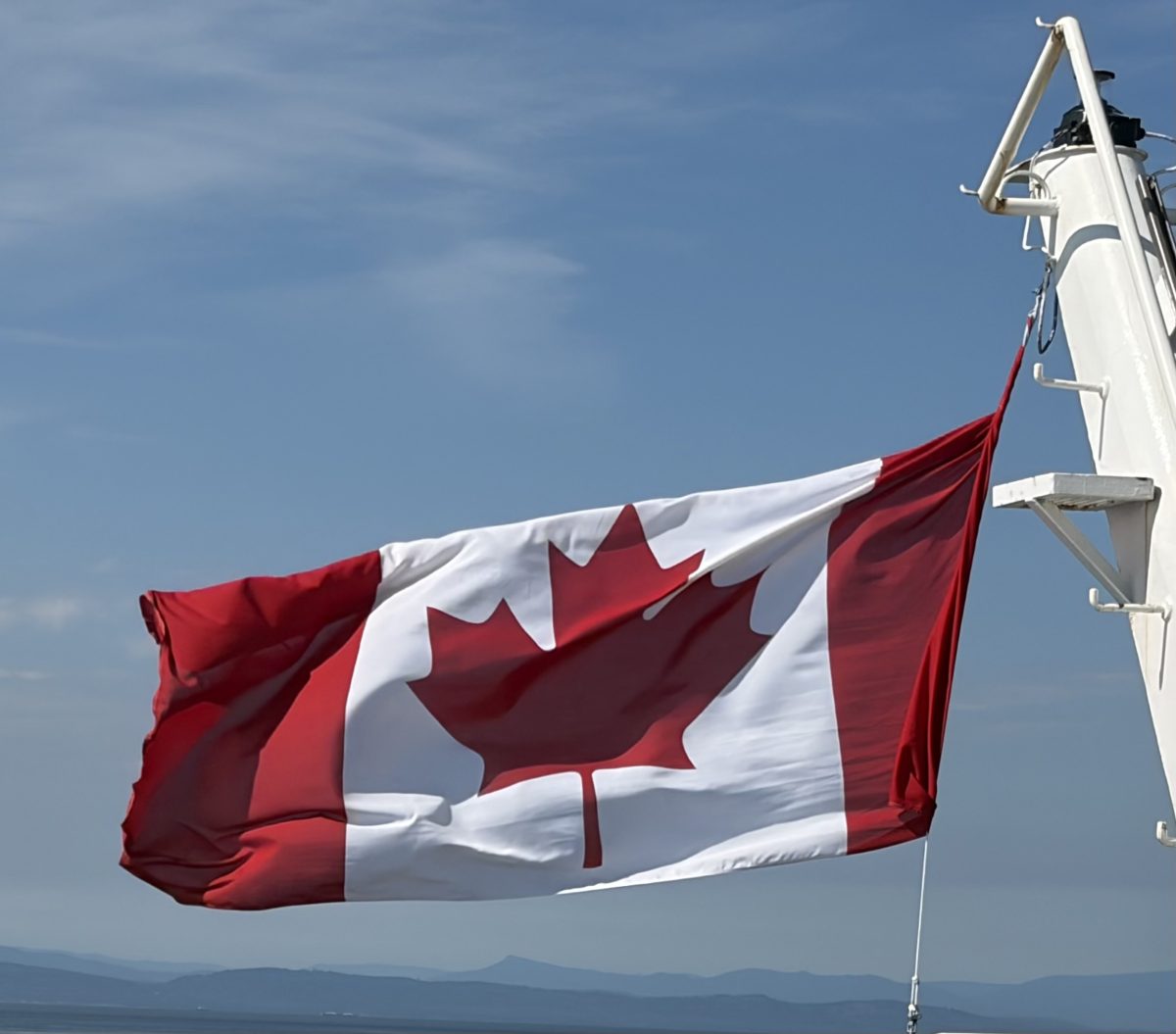
The Canadian flag flies from the ferry in British Columbia. Photos: Genevieve Jacobs.
I recently visited the Boer War Memorial in Victoria Park, London.
The statue of a soldier in a pith helmet, with a grieving woman at his feet, was surrounded by well-tended plantings. Wreaths remained from a recent memorial service. There were field gun trophies and park benches beneath shady oaks as the River Thames ran nearby in the late summer heat.
I’m not in England, though. This was London, Ontario, part of a work trip to look at how Canadian community foundations boost giving.
London, a blue-collar town about the same size as Canberra, has over $100 million invested in its foundation, and it needs every bit of it. Their post-industrial economy was devastated by COVID, and the number of homeless has risen from around 200 to over 1000.
There are beautiful parks and gracious old houses, good museums, lovely churches and a thriving produce market, but downtown is filled with boarded-up buildings and victims of the fentanyl crisis are everywhere on the streets.
Unemployment has eased a little to 6.4 per cent nationwide. However, Canadians still look at our economy with some envy: our GDP per capita is higher, our growth is better, and best of all, the neighbours aren’t actively trying to destroy us. There’s little else on the news besides the US president’s inexplicable 50 per cent tariff declaration and locals are absolutely furious.
They’re incredulous that a longstanding free trade agreement has been dumped, that a fully integrated car industry is being attacked with baseball bats, and that Lake Ontario’s 400-year-old Wendat name was struck out with the presidential Sharpie.
Overwhelmingly, Canadians are backing Prime Minister Carney, who stood up to the bullying with dignity. I heard Canada’s chief trade negotiator calmly, clearly, and carefully rebut flat-out lies and exaggerations peddled by Trump henchmen who were not in the room when negotiations broke down.
Manitoba Premier Wab Kinew laughed in disbelief as he said renaming a Great Lake reminded him of an ageing rockstar, reduced to playing old hits in casinos to a dwindling crowd of devotees.
Many, many houses are flying the maple leaf flag and up close, you can see they’re brand new.
Canada and Australia have so much in common in every way. In British Columbia, I visited the beautiful copper-roofed Provincial Parliament. Inside, the mace of office was displayed, and a wall told the stories of every British Columbian awarded the Victoria Cross.
Outside, a dramatic re-enactment of BC women demanding the vote played out beneath a statue of Queen Victoria and a piper played “The Campbells are Coming” on the harbourfront.
There are other, sadder, similarities too. Our delegation was greeted in ceremony by Lekwungen-speaking peoples of the Esquimault nation, and Haida Gwaii, whose villages were almost completely destroyed by smallpox in 1862, as authorities herded the sick and well together.
We met the extraordinary Chief Wilton Littlechild, a Cree lawyer and First Nations parliamentarian, an original North American Free Trade Agreement negotiator, whose face is currently on Canadian stamps.
He helped write the UN Declaration on the Rights of Indigenous People, was a member of Canada’s Truth and Reconciliation Commission, a hockey champion, an inductee to their sports hall of fame – and a survivor of the residential school system, where he was abused and stripped of his name, becoming number 65.
In Australia, we’ve been spared the worst of the Trump madness so far, thanks to our longstanding trade deficit.
We’re already walking a tightrope with our major trade partner, China. For decades we’ve followed the US on the promise of friendship and protection.
None of that looks so secure anymore, and there are at least two more years of erratic, impulsive, tariff-addicted government by executive order ahead in the States. Who knows what comes after that?
Here in Canada, in New Zealand and in the United Kingdom, our ties run deeper than trade and defence.
We share centrist governments and strong democratic traditions. We’re free traders whose economies depend on global relationships. We’re middle powers in every sense – and we have the heft and weight of common understanding when we band together.
Goodness knows if we’ll ever see those second-hand Aukus submarines, but we should be carefully considering our traditional allegiances, which seem far less meaningful to Washington than we believed.
The Commonwealth charter supports democracy, human rights, world peace, and the rule of law, connecting 2.5 billion people across five continents to share ideas and trade.
Right now, that sounds pretty good. Perhaps it’s time to get the old band back together?
Genevieve Jacobs is the CEO of Hands Across Canberra, the ACT’s community foundation