
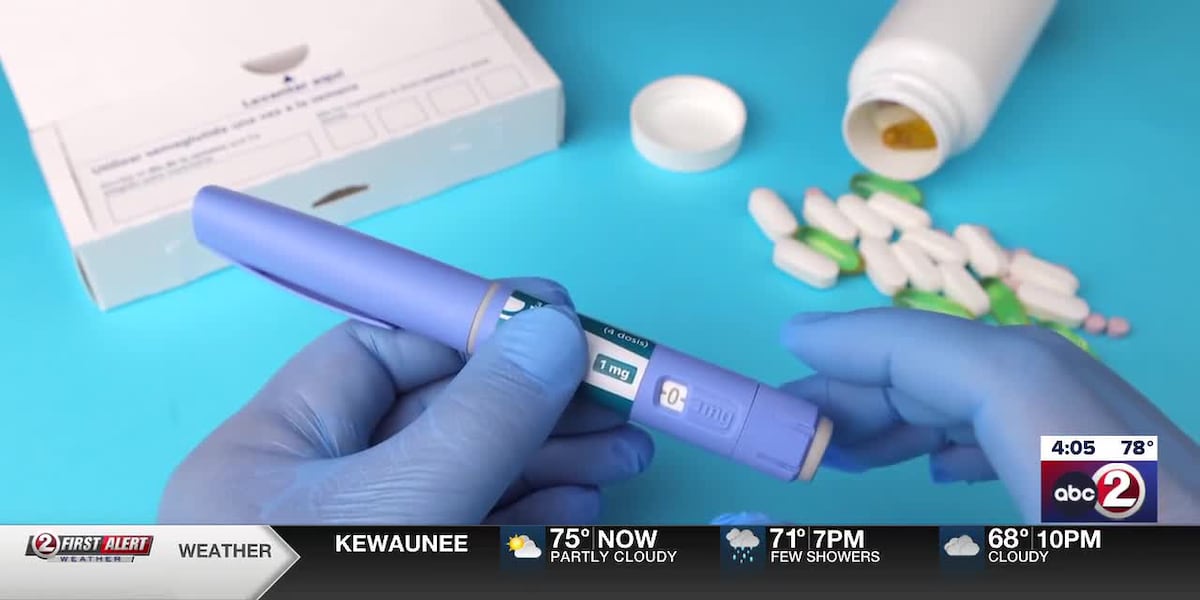
(WBAY) – The FDA is tracking hundreds of reported problems involving compounded weight-loss medications, as unapproved peptide products marketed for weight loss, muscle growth and recovery become more widely available.
GLP-1 drugs, used for diabetes and weight loss, have become widely known in recent years. Peptides, another product appearing more often in the weight-loss market, are small chains of amino acids that act as messengers in the body.
There is growing concern about the push for compounded GLP-1s and unapproved peptide products, especially as more are marketed for weight loss, muscle growth and recovery. Compounded drugs are not FDA approved, and some peptides being sold are labeled “research use only” or “not for human consumption.”
Experts say the availability of a product for sale does not mean it has been proven safe or legal to sell for human use.
“What people are being misled by is the idea that because they are being advertised, they must be legal. They’re not. In many cases, things like retatrutide, they call it also triple G, or peptides like the Wolverine or the GlowStack. These things are not legal to distribute to Americans,” said Shabbir Imber Safdar, CFE, executive director of Partnerships for Safe Medicines.
Cost is a factor in the demand for these products. Experts say prices for some approved options have come down and advise consulting a doctor before turning to a compounded or unapproved product because of price.
Breakdown of the medications
GLP-1s are diabetes and weight-loss drugs. Peptides are small chains of amino acids being marketed for weight loss, muscle growth and recovery. “Compounded” means a pharmacy makes a medication for a patient with a specific medical need. Compounded drugs are not FDA approved.
The FDA says it is seeing problems with some compounded GLP-1s, including dosing errors. As of the end of May, the FDA had received 990 adverse-event reports associated with compounded semaglutide and more than 730 involving compounded tirzepatide.
The FDA says that does not mean the drug caused every reported problem, but the agency warns some dosing errors have required hospitalization.
“And when we look at the FDA’s adverse events database, we see a higher incident of issues related to that. We’re also seeing spikes in poison control calls for the last four years for people who are misdosing themselves with compounded products. And then there’s standout individual incidences of harm,” Safdar said.
Reports may be underreported
The FDA says the adverse-event numbers may be underreported. Advertisements for these products are increasingly common online, and concerns over access to compounded medications continue to increase.
What to ask before buying
Not every GLP-1 or peptide product on the market has been approved by the FDA. Experts say that is where consumers should start asking questions.
For a compounded GLP-1, consumers should find out why they are being prescribed that version and which pharmacy is making it. For a peptide, consumers should find out exactly what the product is and whether it is approved for human use.
Experts also advise watching how quickly a prescriber is willing to prescribe a product. A medical consultation should include a review of a patient’s health history, not just a few clicks or a brief chat.
“If you have like an email consultation or like a 30-second conversation or even a chat diagnosis and medical consult, that’s not sufficient. You should run the other way. That is not real medical supervision, and these drugs require real medical supervision,” Safdar said.
The FDA has found fraudulent compounded products that listed pharmacies that did not actually make them. Peptides labeled “research use only” or “not for human consumption” should not be treated like approved medications.
Experts advise knowing the product, the prescriber and the pharmacy before purchasing.
Copyright 2026 WBAY. All rights reserved.