
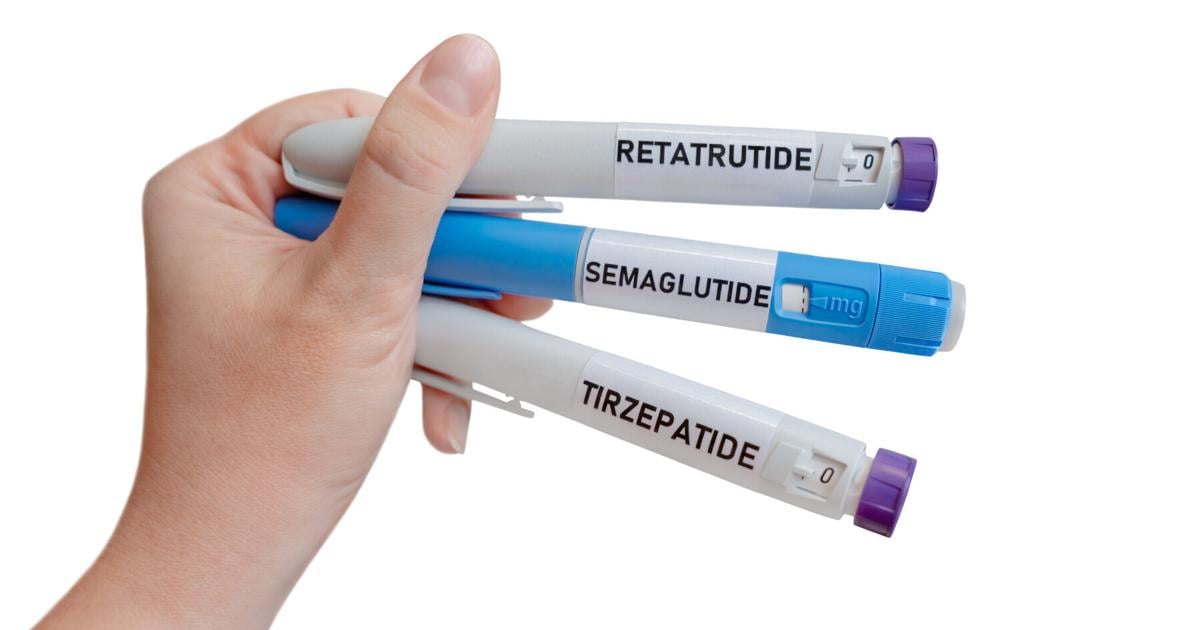
A new obesity medication is coming, one that may prove a “blockbuster” in states like Louisiana that struggle with high obesity rates.
The experimental drug retatrutide will probably hit markets next year, said Dr. Eric Ravussin of the Pennington Biomedical Research Center in Baton Rouge.
“It’s going to be a blockbuster,” Ravussin said. “Now it’s just a question of the pricing. When you start with these drugs and they are not covered by insurance, is it going to be the one that everybody is going to use? I don’t know yet. It would be if it was the same price or accessible to most people.”
How it works
Retatrutide, an injectable weekly shot, appears to be highly effective as an appetite suppressant and weight loss medication, according to parent company and drug manufacturer Eli Lilly.
Ozempic and Wegovy are both GLP-1 receptor agonists using semaglutide that reduce appetite and control blood sugar levels. Weight-loss management medications like Mounjaro and Zepbound combine GLP-1 receptor agonists and glucose-dependent insulinotropic polypeptide, or GIP, receptor agonists to create a “dual-action” medication that both suppresses appetite and helps the body process insulin.
The three-receptor targeting in retatrutide, attacks GLP-1, GIP and glucagon hormones, making the weight-loss drug a “triple threat.”
“It is a change, but the GLP-1 is the major effector on food intake, decreasing food intake, improving association,” Ravussin said. “The fact that you stop a meal, and even not being very interested in what was before a food that people would love, with high fat content and high sugar content. It’s still the same hack, but it’s added peptides for different mechanisms.”
Retatrutide has similar reported side effects as to on-market GLPs, such as nausea and diarrhea.
“These side effects can be present, even though it’s mild to moderate in nature,” said Dr. David Lau, a professor emeritus of medicine at the University of Calgary in Alberta, Canada. “It can lead to discontinuation of the drug.”
Eli Lilly announced successful Phase 3 trials of the drugs. In this phase of testing, large-scale trials are conducted in patients to test efficacy, safety and compare results to on-market medications. The company published results for TRIUMPH-1, a Phase 3 clinical trial, in May and presented their findings at the American Diabetes Association conference in New Orleans in June.
The 80-week trial studied adults with obesity and weight-related health conditions. Participants taking the highest weekly dose — 12 mg — lost an average of 70 pounds over the duration of the study. Trial participants on the 4 mg dose lost around 47 pounds in the same time frame.
“Obesity is a chronic disease, and people living with obesity deserve treatment options that match the complex biology of their neurometabolic disease,” said lead investigator Ania Jastreboff, director of the Yale Obesity Research Center, in a May news release about the results. “It was impressive to see that every dose of retatrutide resulted in clinically meaningful weight reduction for nearly all participants.”
Stoking the black market
People with severe obesity on the highest dose lost on average 30% of their body weight over two years.
“It matches what you can achieve with weight-loss surgeries. In many ways, that would put the bariatric surgeons out of business,” Lau said. “Not every person with obesity needs to lose 30% body weight. The majority of the obesity-related complications greatly improve with 10% body weight loss.”
In late July, the company announced the success of two more trials, TRIUMPH-2 and TRIUMPH-3, with similar results.
“When it comes to efficacy, retatrutide certainly trumps all the other weight-loss medications that are currently available,” Lau said. “That’s the reason why the public is so attractive to this medication, even though it’s not available and not officially approved by the FDA.”
The company is expected to file for FDA approval in the first quarter of 2027, however, public controversy emerged after Eli Lilly approved a 79-year-old to use the drug pre-federal approval.
Eli Lilly filed six lawsuits against med spas, a compounding pharmacy and other vendors that the drugmaker said are stoking a black or gray market for “fake retatrutide” to people hoping to gain access to the drug before its officially available.
The emergence of black-market copies of weight management drugs is “primarily because of the cost,” Lau said.
“Don’t forget that obesity prevalence is seen greater in people from lower socio-economic status,” Lau said. “They can’t afford it, so they resort to compounded semaglutide or tirzepatide because it’s a lot cheaper.”
A study released in late August by a Massachusetts-based data analytics company found that people taking Eli Lilly’s experimental weight-loss drug, retatrutide, outside of clinical trials lost significantly less weight than patients participating in the trials.
Black market users lost an average of 4.7%, 5.3%, and 7.2% of their weight after taking “reta” for three months, six months and one year, respectively.
The market keeps growing
Lau, director of the Julia McFarlane Diabetes Research Center in Alberta, Canada, founded the first interdisciplinary weight management clinic in a hospital over 40 years ago.
“At that time, we were still focusing on the narrative that people can lose weight by eating less and moving more,” Lau said. “We know that that narrative really doesn’t work.”
Since then, the world has rallied behind weight management drugs. More than 12% of Americans said they were taking a GLP-1 drug such as Ozempic or Wegovy either to lose weight or treat a chronic condition in 2025, according to a poll from KFF.
Louisiana alone spends over $1 billion in weight-loss drugs in 2023.
People with a body mass index (BMI) greater than 30 are eligible for medications to treat obesity.
“To put things in context,” Lau said. “The latest data reports that 40% of adult Americans have a BMI above 30. You’re talking about a large number of individuals who are eligible for obesity management.”
On top of that, people with BMI between 25 and 30 who have comorbidity associated with obesity, Type 2 diabetes, sleep apnea or fatty liver disease, also are eligible for weight management medications.
“That’s why it’s such a huge market,” Lau said. “And it’s a very competitive space.”