

Some people can get the tablets free while others will need to buy it themselves
Neil Shaw Assistant Editor
09:48, 04 Sep 2026
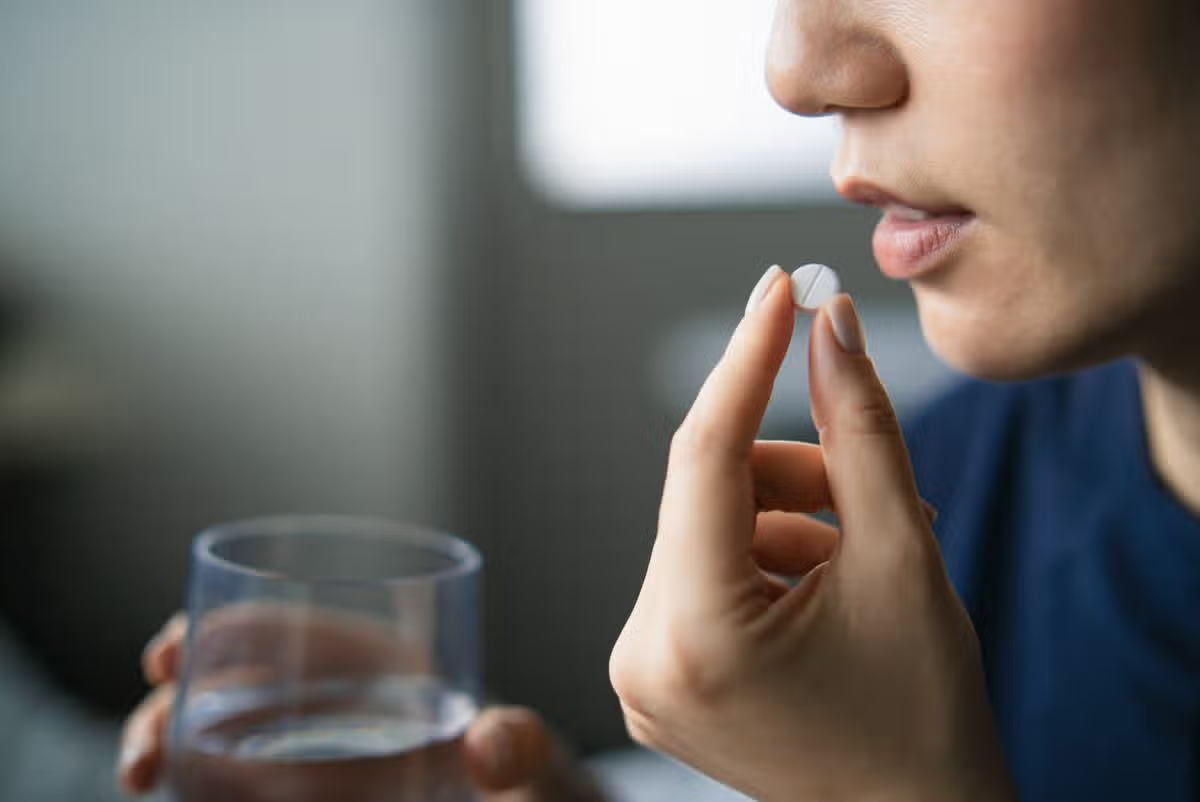
The pills can be bought over the counter
The NHS is advising people across the UK to start taking a daily pill within weeks. Everyone in the country should be taking the supplement from October 1, according to the NHS.
Vitamin D helps regulate the amount of calcium and phosphate in the body and is needed to keep bones, teeth and muscles healthy. A lack of vitamin D can lead to bone deformities such as rickets in children, and bone pain caused by a condition called osteomalacia in adults.
Government advice is that everyone should consider taking a daily vitamin D supplement during the autumn and winter. People at high risk of not getting enough vitamin D, all children aged 1 to 4, and all babies (unless they’re having more than 500ml of infant formula a day) should take a daily supplement throughout the year.
According to the NHS: “From about late March or early April to the end of September, most people should be able to make all the vitamin D they need from sunlight. The body creates vitamin D from direct sunlight on the skin when outdoors.
“But between October and early March we do not make enough vitamin D from sunlight.”
You can get inexpensive vitamin D pills over the counter in supermarkets, health shops, chemists, and online. You can also get vitamin D in some foods. According to the NHS, good sources include:
oily fish – such as salmon, sardines, trout, herring or mackerelred meategg yolksfortified foods – such as some fat spreads and breakfast cerealsliver (avoid liver if you’re pregnant)
Children from the age of 1 year and adults need 10 micrograms (mcg) of vitamin D a day. This includes pregnant and breastfeeding women, and people at risk of vitamin D deficiency. Babies up to the age of 1 year need 8.5 to 10 micrograms of vitamin D a day.
A microgram (mcg) is 1,000 times smaller than a milligram (mg). The word microgram is sometimes written with the Greek symbol μ followed by the letter g (μg).
Sometimes the amount of vitamin D is expressed as International Units (IU). 1 microgram of vitamin D is equal to 40 IU. So 10 micrograms of vitamin D is equal to 400 IU.
The NHS said: “During the autumn and winter, you need to get vitamin D from your diet because the sun is not strong enough for the body to make vitamin D. But since it’s difficult for people to get enough vitamin D from food alone, everyone (including pregnant and breastfeeding women) should consider taking a daily supplement containing 10 micrograms of vitamin D during the autumn and winter.”
They add: “The Department of Health and Social Care recommends that adults and children over 4 take a daily supplement containing 10 micrograms of vitamin D throughout the year if they:
are not often outdoors – for example, if they’re frail or houseboundare in an institution like a care homeusually wear clothes that cover up most of their skin when outdoors
“If you have dark skin – for example you have an African, African-Caribbean or south Asian background – you may also not make enough vitamin D from sunlight. You should consider taking a daily supplement containing 10 micrograms of vitamin D throughout the year.”
Advice for infants and young children
The Department of Health and Social Care recommends that babies from birth to 1 year of age should have a daily supplement containing 8.5 to 10 micrograms of vitamin D throughout the year if they are:
breastfedformula-fed and are having less than 500ml (about a pint) of infant formula a day, as infant formula is already fortified with vitamin D
Children aged 1 to 4 years old should be given a daily supplement containing 10 micrograms of vitamin D throughout the year. You can buy vitamin D supplements or vitamin drops containing vitamin D (for under 5s) at most pharmacies and supermarkets.
Women and children who qualify for the Healthy Start scheme can get free supplements containing vitamin D. See the Healthy Start website for more information.