
The NFL didn’t choose to open its season on a Wednesday this year so much as it was cornered into it by the law.
The Rams and 49ers are playing their Week 1 opener in Melbourne, where a Thursday night kickoff in the United States translates to Friday morning local time, and the Sports Broadcasting Act’s longstanding restrictions on Friday broadcasts left the league with no viable path to its traditional Thursday-night slot without running afoul of federal law.
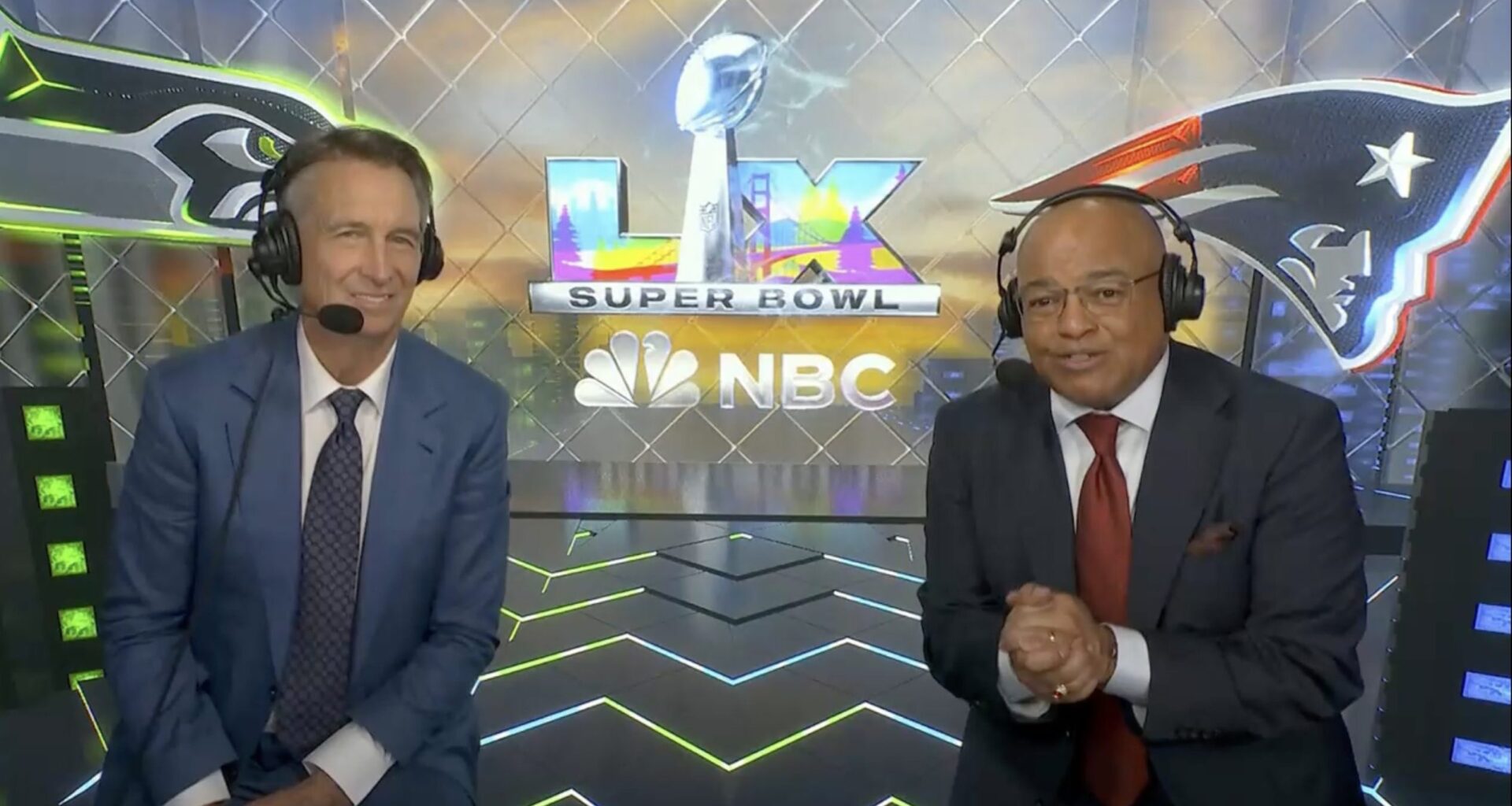
During NBC’s Sunday Night Football preview conference call, Awful Announcing asked Mike Tirico and Cris Collinsworth for their read on the experiment and whether they expected the league to lean on Wednesday nights again.
“Not the first time a Wednesday has been used for the opening game, but obviously it’s not common,” Tirico said. “I think there is a good cadence for everyone in general. But if the data comes back and the league sees that everyone is interested and is watching on a Wednesday, I would not be surprised to see different days of the week show up going forward. I do think the cadence of Thursday, Sunday, Monday on a regular basis feels right for the fans at home in general. I think the NFL is such an entertainment powerhouse that people will adjust their lives and schedules for the right matchup and the right game.”
The league has bent its calendar to circumstance before, most notably in 2012, when it shifted the Giants-Cowboys up a day to sidestep a direct collision with Barack Obama’s acceptance speech at the Democratic National Convention.
But despite that precedent, this feels categorically different.
NFL executive vice president of media distribution Hans Schroeder confirmed in May that weekday-night openers are squarely within the league’s long-term plans, tied to its Netflix partnership through the 2029-30 season and guaranteeing the streamer a Week 1 game as part of a four-game annual package. By August, however, Schroeder had walked those ambitions back considerably, telling reporters the league would deploy Wednesday games “selectively” going forward, reserved for occasions like this year’s Thanksgiving Eve matchup between the Packers and Rams rather than metastasizing into a full-fledged Wednesday Night Football package.
“A rematch of the Super Bowl, a couple of high-profile teams, makes sense,” Tirico continued. “And it makes logistical sense to clear out time so they can play Thursday night, which is Friday morning in Melbourne. I think if it works and it continues to work, which I expect it will, thanks in large part to the awareness of the camel commercial that the game is on hump day on Wednesday, that I think it adds possibilities there.”
While Tirico sees Wednesday as a fine option when circumstances call for it, Collinsworth thinks that kind of scheduling flexibility will only matter more as the NFL’s international footprint continues to grow.
“As the NFL expands their international schedule, which I hope they do more of, I love the idea of playing football around the world,” Collinsworth said. “And now with the Olympics, we’re going to get a chance to see flag football, both men and women, from around the world. We’re excited about that too. I think the schedule is going to have to be more flexible as we go along. It really would only be fair to San Francisco and L.A. that if they’re traveling to Australia, that they’re given a little time to come back and readjust for their second game, right? I don’t know all the nuances of how they’re going to do it, but it helps me. The more football I get to watch in one-off games, the less homework I have to do at 7:00 a.m. in the morning. You can put it on every night of the week for me. I’ll be just fine.”
So while there’s no weekly Wednesday package in the works, the NFL will continue to pick spots where Wednesday games make sense. After all, the more standalone games the league can carve out, the more opportunities it has to secure eight-figure audiences, and the more media companies will be willing to pay for broadcast rights.