
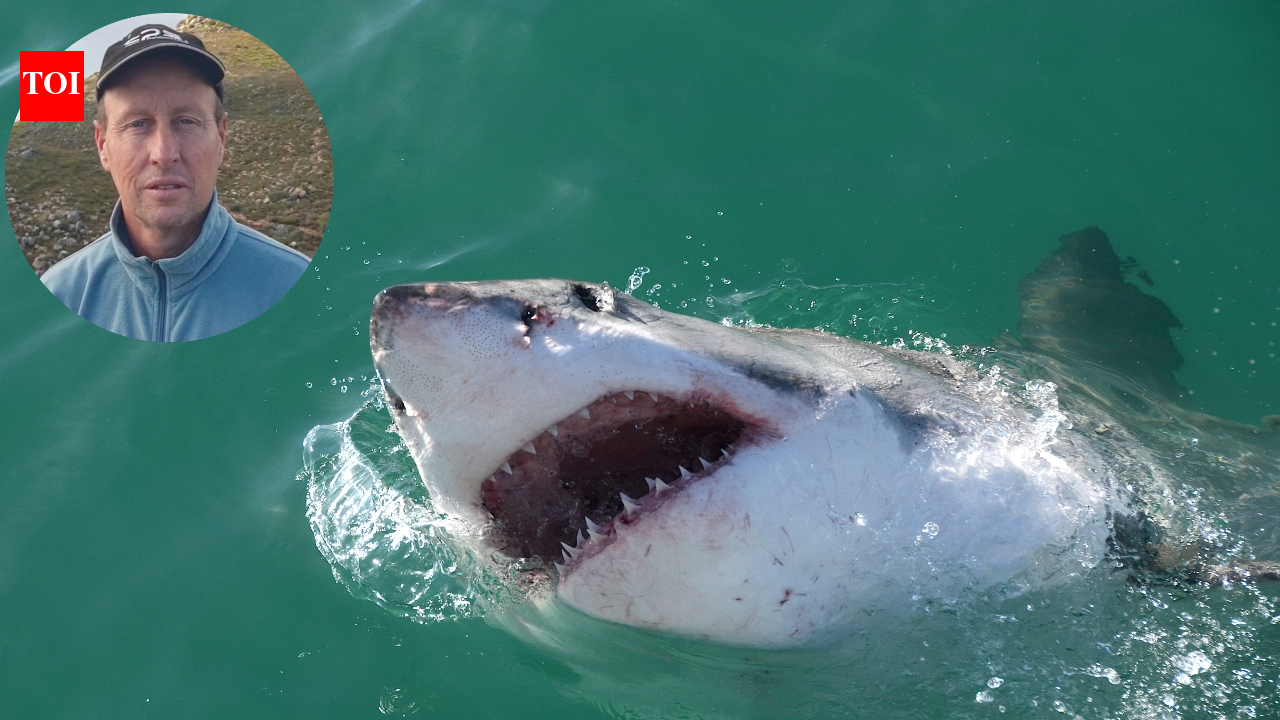
 Portrait of the photographer Chris Fallows along with the great white shark (Carcharodon carcharias) with its jaws open. Credits – Instagram/@chrisfallowsphotography, Wikimedia Commons Wildlife photographers spend careers chasing a few shots that define them, and then, more often than not, they move on to the next assignment. Chris Fallows took a different path. He spent more than two decades photographing one of his best known images, a great white shark hurling itself out of the ocean off the coast of South Africa, before he and his wife, Monique, used the proceeds from that career to buy worn-out farmland and return it to nature.Fallows made his name in 2001 with the image known as Air Jaws, a great white shark breaching captured off Seal Island near Cape Town, a photograph credited with helping inspire the long-running Air Jaws series on the Discovery Channel. His career as a wildlife photographer is profiled by Canon South Africa, for whom he serves as a professional ambassador. Fallows built much of that career around the sharks of False Bay until the population that made his reputation began to vanish from the area about a decade ago, a decline researchers have linked to several causes, including years of heavy fishing pressure on the smaller sharks and other prey that great whites depend on. Researchers have also suggested that at least part of the disappearance may be linked to a small number of orcas that hunt great whites along the same stretch of coast, leaving Fallows without the subject that had defined his working life and searching for a new way to put his photography to use.From ocean conservation to buying up farmlandFallows and his wife could not safeguard the sharks that had disappeared from the waters he knew best, so they decided to apply the same instinct to dry land, arguing that while nobody can control the sea, land can be acquired, fenced and actively managed for the benefit of the creatures living on it. In 2017 the couple used money earned from sales of Chris’s fine art prints to buy a modest plot on the western bank of the Breede River at Cape Infanta, on South Africa’s southern coast, an area badly overrun by introduced acacia and other alien trees planted decades earlier for timber and erosion control. Conservation specialists were brought in to remove the invasive growth, and at first they doubted the native fynbos beneath would recover. Fynbos occurs almost nowhere else on earth and forms the backbone of the Cape Floral Kingdom, one of the richest concentrations of plant diversity on the planet, despite covering only a small strip of South Africa’s southern coastline. The outcome of the experiment mattered well beyond the boundaries of one farm.A single farm grows into a much larger reserveWithin a few seasons, the bare alien-choked ground had started to recover into blossoming fynbos, and several neighbouring landowners, some with substantial cattle and crop farms of their own, approached the Fallows about contributing their holdings to the restoration project. Those voluntary agreements, combined with further land purchases, grew the couple’s original plot into a private reserve of roughly 3,200 acres by 2021, an area they continue to expand as more landowners sign up, restoring habitat for birds, small mammals and the region’s threatened fynbos plant communities in the process. That kind of voluntary, landowner-led expansion mirrors a formal stewardship option available to private landowners across the Western Cape through partnerships coordinated by Cape Nature, the provincial conservation authority, which has helped bring hundreds of thousands of hectares of privately owned land under some form of biodiversity protection over the past two decades.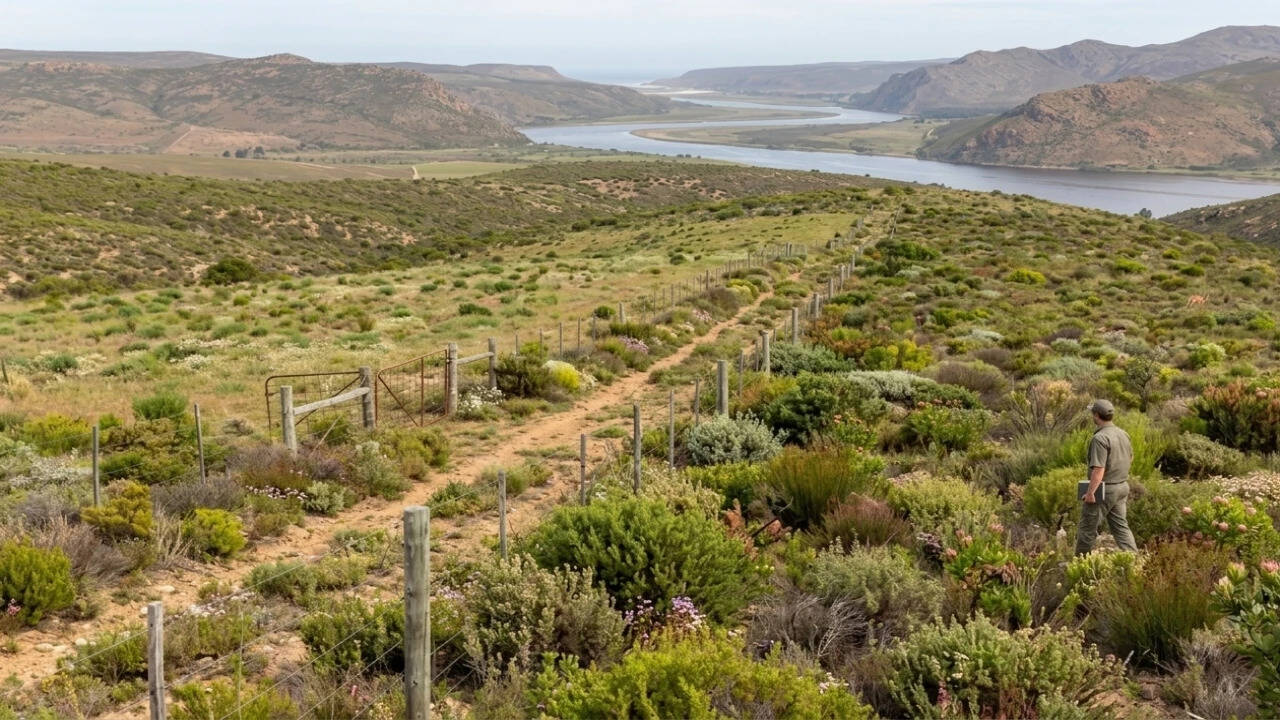
An AI-generated representative image describing Lower Porterberg Nature Reserve, which wildlife photographer Chris Fallows bought as part of his effort to restore degraded South African farmland to native habitat. Credits – Google gemini
Part of a much bigger vision for connected wildernessThe Fallows never intended the Cape Infanta reserve to be their destination. The couple have since begun purchasing a much larger area of desert country in neighbouring Namibia, using the same model of buying degraded farmland and letting it recover. Their goal is to connect their land to existing conservation areas and cross-border wildlife corridors in southern Africa. That ambition of stitching together isolated private reserves into one continuous landscape echoes the mission pursued for decades by the Peace Parks Foundation, which has been working since the late 1990s to link protected areas across national borders so elephants, big cats and other wide-ranging species can once again roam freely. From a single damaged farm bought with photography money, the project has become a working demonstration of how private conservation land can expand well beyond its original boundaries, one willing neighbour at a time.