
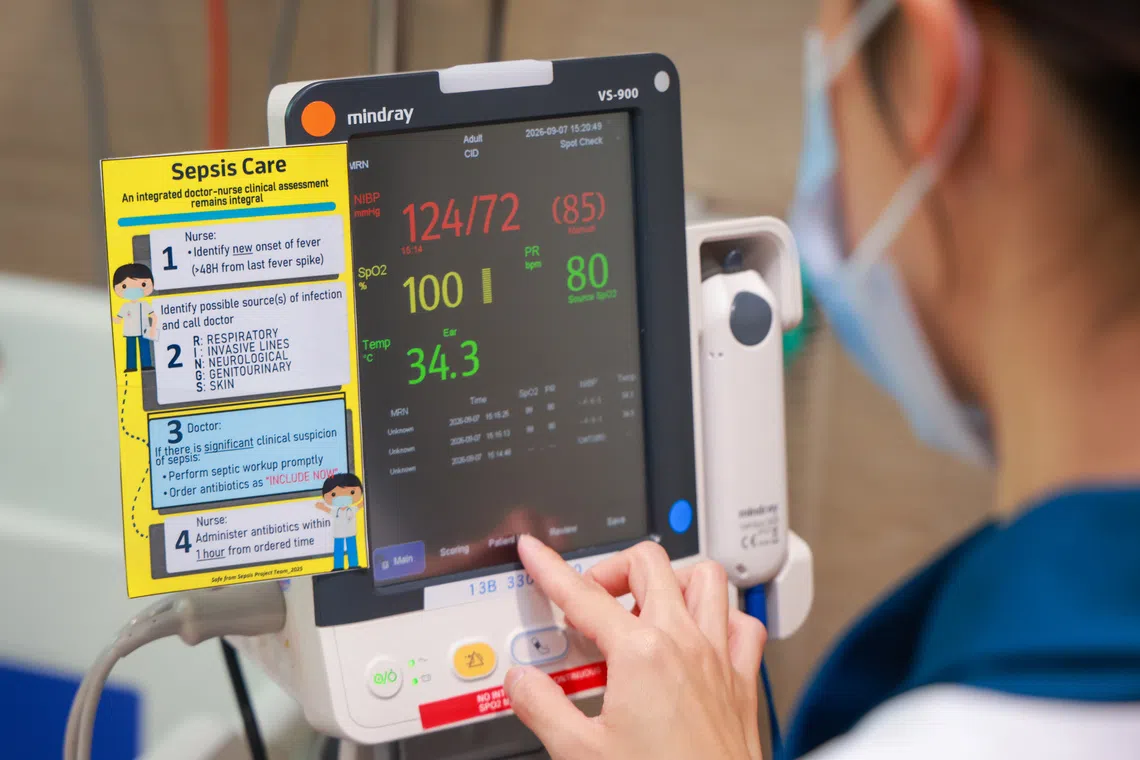
SINGAPORE – A team from Tan Tock Seng Hospital has developed a process to allow for the earlier detection and management of sepsis – a life-threatening condition that accounts for more than 20 per cent of all deaths worldwide.
Sepsis is an extreme reaction by the human body to an infection. It occurs when chemicals released by the body to combat pathogens cause inflammatory responses, impairing blood flow to vital organs in severe cases.
This, in turn, can lead to tissue damage, organ failure or death if not treated in time.
According to a study published in October 2025 in the Lancet Global Health, there were an estimated 166 million sepsis cases worldwide in 2021, with 21.4 million deaths from the condition that year.
To better manage sepsis and prevent it from progressing to septic shock – whose symptoms include extremely low blood pressure and organ failure – an eight-member team from Tan Tock Seng Hospital (TTSH) developed an initiative called Safe from Sepsis.
Led by nurses, the initiative aims to allow for the earlier identification of patients at risk of sepsis, as well as to provide such patients with accelerated treatment.
Prior to the initiative’s launch, the median time for antibiotics to be administered to patients with sepsis was 220 minutes, said Huang Wenhui, the medical project lead for Safe from Sepsis.
Huang – a senior consultant with the TTSH general medicine department – noted that only 37 per cent of such patients received antibiotics in under 180 minutes, a timeframe which significantly improves patient survival rates.
Safe from Sepsis was introduced with the aim of ensuring at least 80 per cent of patients receive antibiotics within this critical window, he said.
“Nurses have an extremely important role because they actually know the patients very well and they’re more in tune with the patients,” Huang said, noting they would be more aware of subtle changes in patients which could point to sepsis.
Under the new initiative, a structured sepsis assessment tool was introduced to help nurses recognise early symptoms of sepsis such as fever, breathlessness and altered mental status, as well as identify potential infection sources.
Should they suspect sepsis, the case will then be escalated to a suitable doctor to ensure patients get a medical review, have their blood culture collected and receive antibiotics within 180 minutes.
A year-long pilot of the initiative, which began in September 2024, proved to be successful, said TTSH senior nurse manager Caren Mok, who is also the nursing project lead for Safe from Sepsis.
Between September 2025 and May 2026, the initiative was expanded to 62 wards across the hospital and the TTSH integrated care hub, which offers rehabilitative and palliative care, as well as the National Centre for Infectious Diseases and TTSH’s acute care wards at the nearby Ren Ci Community Hospital.
Across the nine-month period, there were 1,395 sepsis cases, 75 per cent of which received antibiotics within 180 minutes.
The initiative cut the median time from fever recognition to antibiotic administration by 76 minutes, from 220 minutes to 144 minutes.
Among the 1,763 nurses trained under the initiative was TTSH senior staff nurse Fan Shuwan. She said that while there were concerns about the initiative adding to the workload of nurses, tackling sepsis before it worsens is easier than handling a patient whose condition has deteriorated.
“It actually helps to lessen the workload in the long run,” said Fan, who also acts as a “nurse champion” to advocate for Safe from Sepsis among her colleagues.
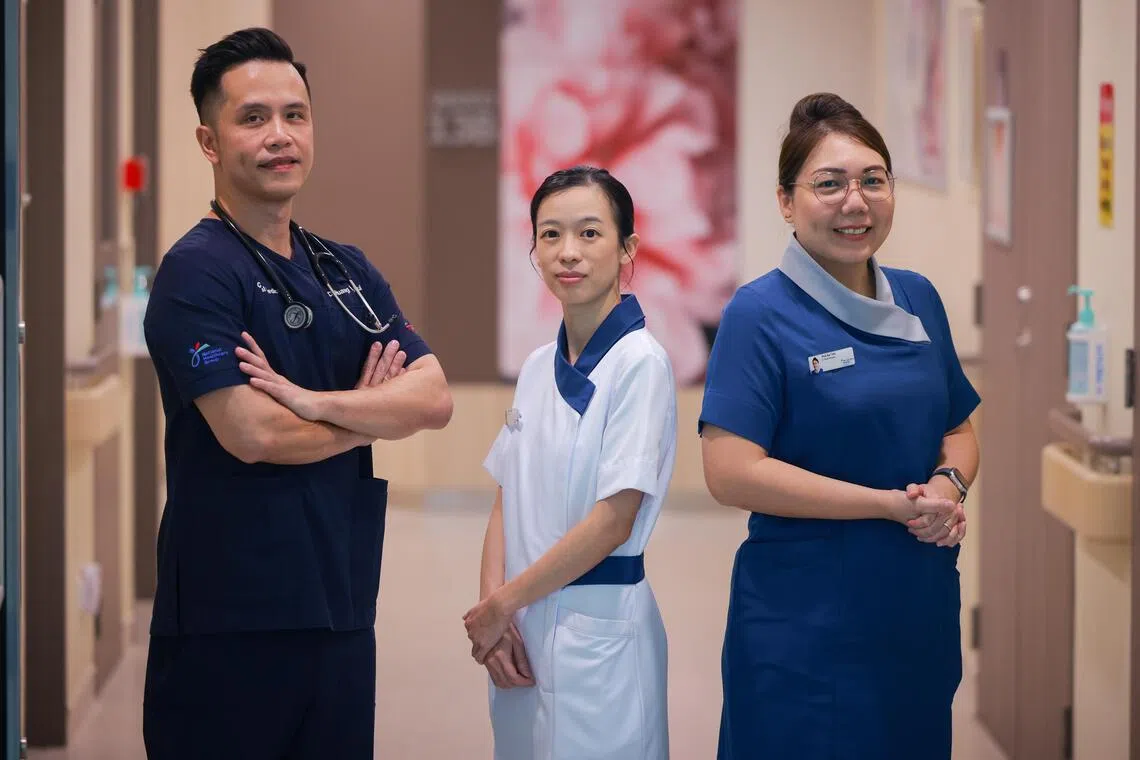
(From left) Huang Wenhui, the medical project lead for Safe from Sepsis, TTSH senior staff nurse Fan Shuwan and TTSH senior nurse manager Caren Mok.
ST PHOTO: JASON QUAH
Tackling sepsis is becoming increasingly important as Singapore’s population ages and patients present with more comorbidities, said Huang.
He noted that while there were concerns about overprescribing antibiotics as a result of the initiative, the hospital’s data showed their prescription continued to be appropriate.
Safe from Sepsis has also gained international recognition. At the recent Hospital Management Asia Awards in Bangkok – held annually to recognise healthcare excellence across the region – the team received the Gold Award for Clinical Effectiveness Improvement for their work.
In the longer term, TTSH hopes to be able to spread Safe from Sepsis to other institutions under the NHG Health public healthcare cluster and beyond, Mok said.