

September 7, 2026 — 5:00am
Save
You have reached your maximum number of saved items.
Remove items from your saved list to add more.
AAA
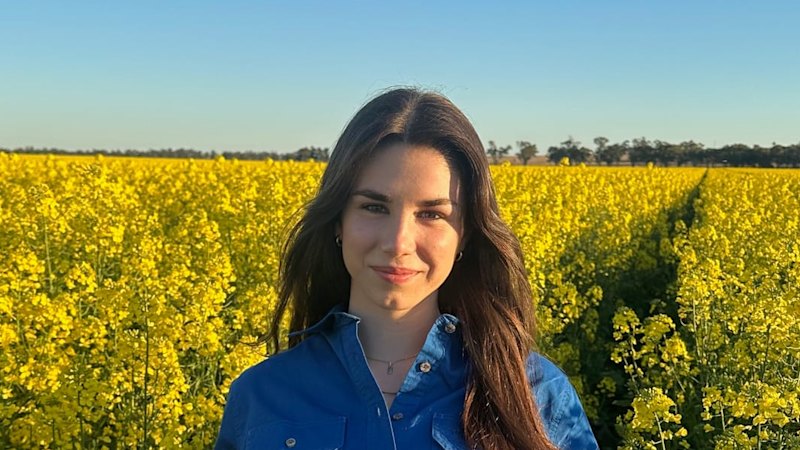
Before Annalise Magill began her studies, she had been on a farm only on holidays.
“I had no real experience in agriculture before I chose my degree. I’d been on a farm in a very light capacity where I’d gone and had to look at some cows and some sheep, very much the city kid out of her depth,” Magill, 19, said.
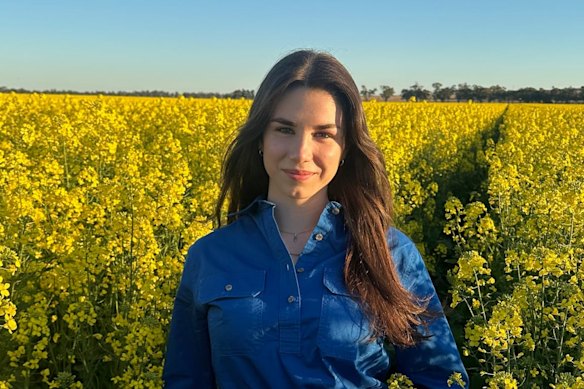 Agriculture appeals because “you get to actually be out there doing something in the real world and not sitting in an office typing away”, Annalise Magill says.
As AI begins to eliminate entry-level roles and reshape the early-career landscape, Magill is among a cohort of young Australians who are turning towards a career in the $101 billion agriculture sector.
The Concord High School graduate is working as a junior agriculture economist at consultancy AgEcon while she studies for a bachelor of agricultural science at the University of Sydney.
“AI is not something I had considered when I applied for my degree, but it’s definitely something that everyone is thinking about now. Agriculture jobs will never be replaced by AI – it might be able to do a monitoring map of your paddock, but it’s probably not going to sit in the tractor for you,” Magill said.
Related Article
“I’m not having that same level of anxiety and stress about my future in an industry because I don’t feel as though it will be replaced by it.”
Agriculture remains short of workers: the Australian Farm Institute says there are six jobs for every agriculture graduate.
But remote work and the increased professionalisation of the sector (due to the internet) have done a lot to increase its appeal.
The end of the Millennium Drought and increased community understanding of supply chains thanks to panic buying during the pandemic have also helped the sector overcome its image problems of the past 40 years, says a 2021 paper published in International Journal of Innovation in Science and Mathematics Education.
Sharon Starick, a grain and pork producer from South Australia who is chair of the Council of Rural Research and Development Corporations, agrees.
 Of the 20 domestic students in her cohort, Annalise Magill says that 10 are fellow city kids. Andrew Quilty
Starick grew up on a wine-growing property in the Barossa and studied agricultural science at university “at a time when it was seen as an industry that wasn’t going places, wasn’t exciting” as producers suffered through drought and low commodity prices in the early 1990s.
“There have been significant changes in farming, but also to the value chain, with new technology and new innovation. It’s creating new jobs that are highly skilled and highly technical,” she said.
Related Article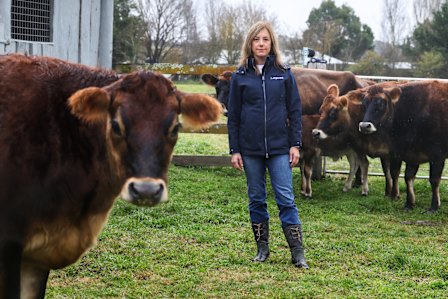
Agriculture offered a wide range of roles, from working on a farm to communications, management, finance, policy, technology and research. “We actually need people from a diverse range of backgrounds, ages, genders, cultures. It brings diversity of thought to the way to approach some of the big challenges,” Starick said.
AI was likely to automate repetitive jobs, she said. “But many of our roles in food and fibre production are based on judgment, creativity, problem-solving and really understanding people and their businesses. So AI will become a very useful tool.”
Start the day with a summary of the day’s most important and interesting stories, analysis and insights. Sign up for our Morning Edition newsletter.
Save
You have reached your maximum number of saved items.
Remove items from your saved list to add more.
From our partners