
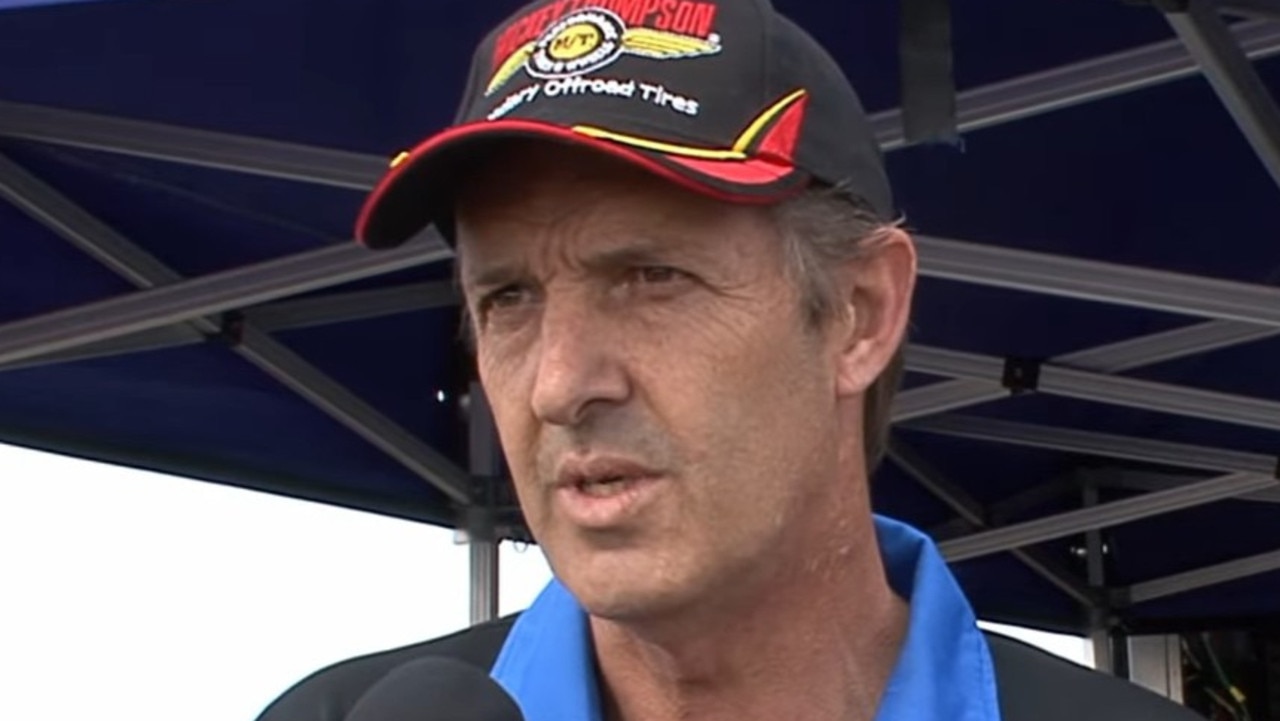
A stalwart of Victoria’s amateur motor racing scene died mid-race at Phillip Island racetrack after forging medical clearances so he could keep racing, despite having suffered a major heart attack just months earlier.
Andrew Rhodes-Anderson, 61, five laps into a race at the Island Magic motorsport event on Phillip Island in November 2024.
His car veered off Gardner Straight and onto grass, where paramedics pulled him from the car attempted to revive him after confirming he had suffered a major heart attack.
Mr Rhodes-Anderson’s car was capable of hitting more than 200km/h along the high-speed straight.
A lengthy coronial investigation into Mr Rhodes-Anderson’s death found Motorsport Australia medical clearances from 2021 and 2023 — which were a compulsory part of his licence renewals — had been forged.
Mr Rhodes-Anderson had a stent inserted at Casey Hospital in April 2024 after suffering a heart attack.
He was placed on a cocktail of at least nine medications, and was explicitly warned in July 2024 that he should not pilot aircraft, drive a race car, or operate a commercial vehicle.
Had Mr Rhodes-Anderson disclosed his medical history, Motorsports Australia would have immediately suspended his licence.
According to coronial findings published last week, Mr Rhodes-Anderson’s GP, Dr Goweid Goweid, told investigators he did not remember performing medical examinations for Mr Rhodes-Anderson’s in 2021 or 2023, and had no record of doing so.
Dr Goweid also told investigators Mr Rhodes-Anderson was not medically fit to race at the time he died.
Dr Goweid confirmed Mr Rhodes-Anderson’s 2021 and 2023 medical clearances were “doctored copies” of a 2018 exam record he completed.
In the doctored medical clearances, Mr Rhodes-Anderson falsely signed off that his clean bill of health was “true and correct”.
He also failed to inform Motorsport Australia of the heart attack he suffered seven months before he died.
Motorsport Australia, the governing body, confirmed to coronial investigators it was unaware Mr Rhodes-Anderson had been diagnosed with ischaemic heart disease, blocked arteries, or that he had suffered a heart attack.
Deputy State Coroner Paresa Spanos said: “Although (his) death was from natural causes, it is significant that he was engaged in competitive motorsport racing at the time of his death.
“While clearly a hobby which he enjoyed throughout his life, motorsport is inherently risky.
“It entirely fortuitous that (he) managed to leave the racing track and come to a stop without endangering other competitors, officials or members of the public.”
Ms Spanos found Mr Rhodes-Anderson “either falsified the documents he submitted to Motorsport Australia in 2021 and 2023 himself or submitted documents that he knew to have been falsified in that they certified he was fit to participate in motorsport which he knew not to be true.”
In a written response to the coroner, Motorsport Australia said it “prides itself on its longstanding commitment to participant safety and to the safe conduct of motorsport nationwide, recognising the inherent risks of the sport”.
The organisation rejected any criticism from Ms Spanos, saying it audited its members’ medical clearances after Mr Rhodes-Anderson’s death, and found no signs of forgery or deception.