
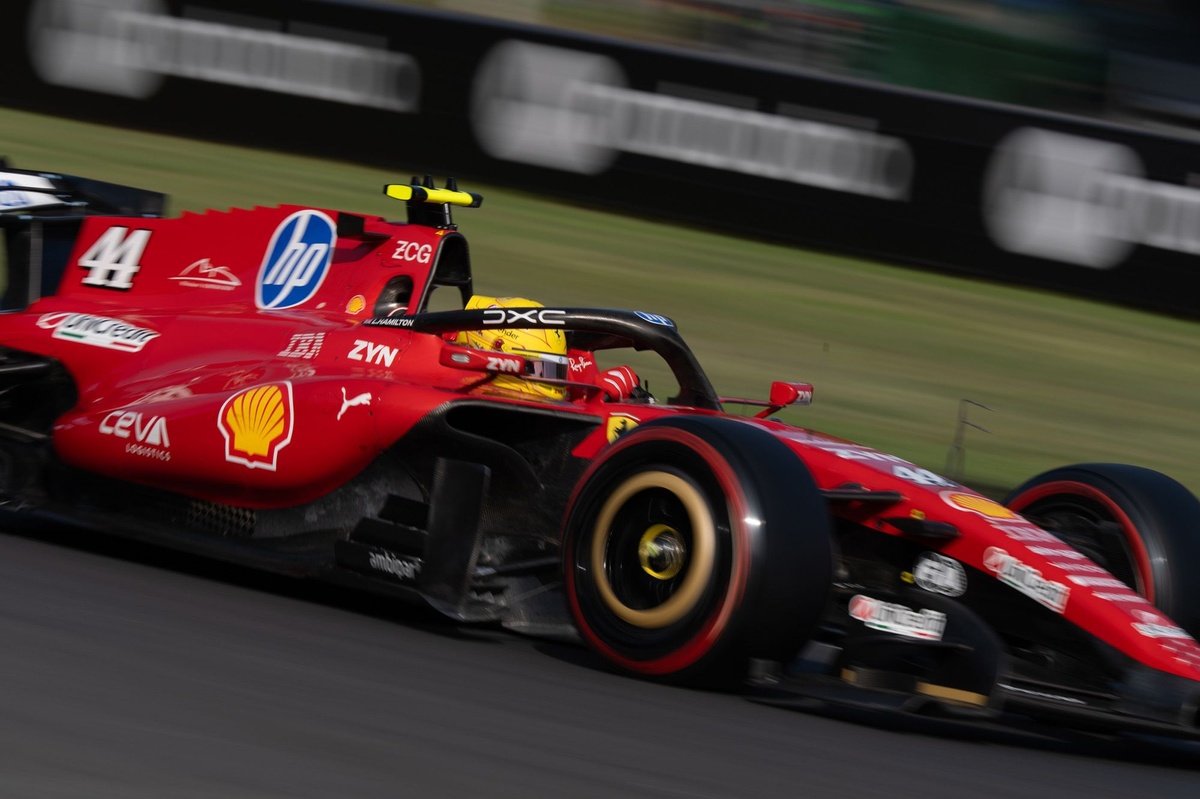
In the court of public opinion, Ferrari and strategy make for uneasy bedfellows.
This has been the perception for many years, certainly after Ross Brawn left the team, and it’s easy to remember moments such as Kimi Raikkonen’s way-too-early switch to wets in 2009’s Malaysian Grand Prix, Fernando Alonso’s stop timing in the 2010 Abu Dhabi finale that left him stuck behind Vitaly Petrov (and thus cost a world title), and the decision to leave Sebastian Vettel on super-softs during the 2016 Australian GP red flag underlined a spell of poor decisions across that season.
In more recent memory, its timing of its stops at the 2022 Monaco Grand Prix cost Charles Leclerc a certain victory in a wet-dry race. Thus, Ferrari’s strategic planning and apparent penchant for pitwall howlers have been memes for a considerable stretch of time; perception is everything, even if the truth isn’t as disastrous as some would have you believe.
Let’s not forget that this was the team that successfully converted a three-stopper into Lewis Hamilton’s first win in Rosso Corsa at June’s Barcelona race. There, it demonstrated that it can – albeit with a surplus of pace – make a slightly ambitious plan work. Yet, it’s also simultaneously true that, in the coin-flip moments during a race, Ferrari will invariably drop a clanger – and the decision to keep Hamilton on-track during the Italian Grand Prix’s virtual safety car might be another entry into the Prancing Horse’s difficulty in judging the VSC and safety cars correctly.
Barcelona is something of an outlier here, in that Hamilton did his final stop under the VSC when Alonso stopped on-track, but he had such pace on the three-stopper that Ferrari’s VSC call might have been irrelevant. Its macro-level strategy was good enough to win, while the micro-level timings – on this occasion – made his race easier.
Since then, Ferrari hasn’t got those micro-level decisions right. Hamilton was pulled into the pits during the late safety car at the British Grand Prix, ceding second position to George Russell (although Ferrari had perhaps assumed the race would restart), and then ended up being pitted under the VSC once more in Hungary in an effort to keep hold of a podium place. This led to him losing positions to Max Verstappen and Kimi Antonelli, conceding the benefit of track position at a narrow circuit. Sure, Hamilton might have lost a place to Verstappen regardless, but he certainly would have finished fourth without the resulting pitlane speeding penalty.
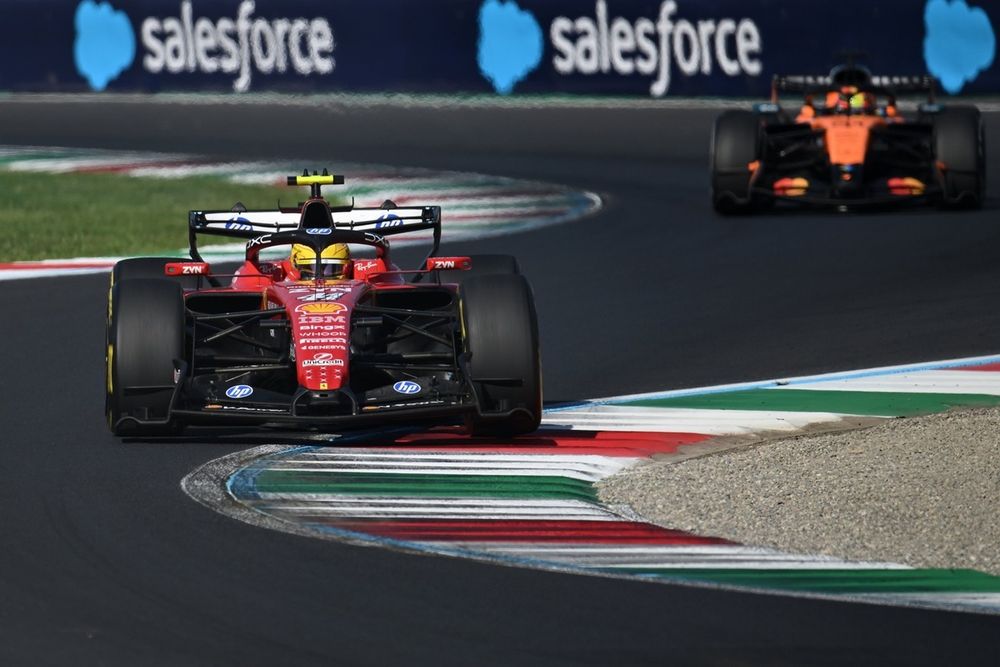
Would Hamilton have beaten at least one McLaren with a VSC stop?
Photo by: Sam Bagnall / Sutton Images via Getty Images
Twice bitten, three times as shy, then. When a VSC presented itself mid-way through the Italian Grand Prix, Ferrari chose to leave Hamilton out on the medium tyre, rather than stop again. A 50-lap stint on the medium was a significant ask, even with the low levels of degradation present through the weekend, and those who took the hard tyre a similar distance encountered a steady drop in pace through the course of their stints.
Hamilton disagreed with the decision to a) run the mediums instead of the hard, and b) to stay out on the mediums. Thus, he slipped behind Verstappen (who took hard tyres during the VSC) and Lando Norris (who stayed out on hards) in the final 17 laps of the race, and dropped pace to the extent that Pierre Gasly had got to within 2.8s at the flag.
“I felt like we should have probably been on the hard tyre, but we also had to be overtaking people because we were further back than we were supposed to be,” Hamilton told Sky Sports in the aftermath of the race. “I thought they were going to stop us and then they didn’t, so I just ran out of tyres.”
The VSC period ended as Verstappen had left the pitlane; with Hamilton over six seconds behind the Red Bull driver, he would have been due to exit the pitlane as the green flag was shown, costing him a couple more seconds
Should Hamilton have stopped under the VSC? For that, we’ll need to analyse the pit window available and assess the time gain possible from a new set of mediums.
First, let’s calculate the average gain in lap time either side of the VSC for Antonelli and Verstappen to present the improvement in time with fresh mediums and hards respectively. Antonelli’s average time from laps seven to 27 was a 1m25.847s, and Verstappen’s average from the same laps was a 1m26.058s. Hamilton’s average lap, for comparison, was a 1m26.307s.
In laps 30-53, this was up to a 1m24.615s for Antonelli, a 1m25.176s for Verstappen, and a 1m25.930s for Hamilton. With new tyres, Antonelli saw an average 1.232s gain per lap, Verstappen a gain of 0.882s, and Hamilton’s laps improved by 0.376s without stopping.
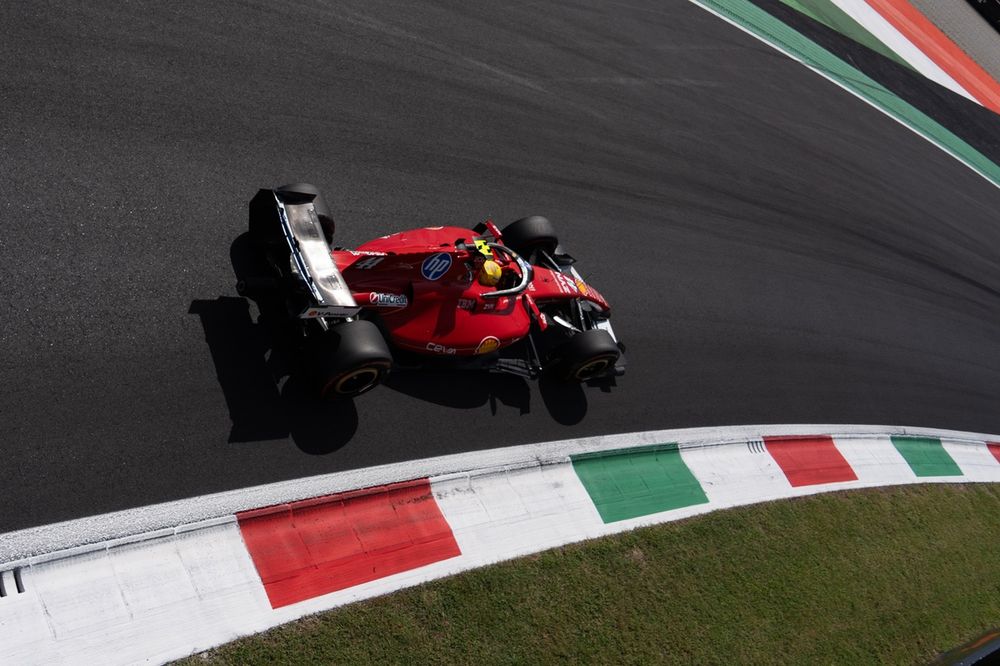
Hamilton disagreed with Ferrari’s Monza strategy, feeling he should’ve taken the hard tyre
Photo by: Alessio Morgese
So let’s make a conservative estimate that Hamilton actually gains an average of a full second per lap as a result of stopping, which would be an additional 0.623s gain per lap if we account for that 0.376s uptick in pace as the fuel burned off. We’ll pull that 0.623s out of his times from lap 30-53, but add in the time lost in stopping under the VSC. Versus Hamilton, Verstappen lost 14.9s by taking the VSC stop, and Antonelli lost 15.1s, so let’s take it as a 15-second time loss for a VSC stop. We’ll add that to Hamilton’s lap 29 time as well to account for a stop.
Now, let’s recalculate the time delta for Hamilton versus Antonelli to see if this made a difference, taking the gap to the leader as of the end of lap six and continuing from there.
Lap
ANT
HAM
HAM (P)
6
4.563
3.099
3.099
7
86.503
86.663
86.663
8
86.300
85.931
85.931
9
85.749
86.176
86.176
10
86.352
86.082
86.082
11
86.101
86.738
86.738
12
85.721
87.104
87.104
13
85.469
85.929
85.929
14
85.828
86.415
86.415
15
86.118
85.869
85.869
16
85.615
86.218
86.218
17
85.203
86.489
86.489
18
85.224
86.839
86.839
19
85.729
86.587
86.587
20
85.589
86.324
86.324
21
85.833
86.171
86.171
22
86.536
86.002
86.002
23
86.685
85.300
85.300
24
85.994
86.047
86.047
25
85.287
87.168
87.168
26
85.402
86.493
86.493
27
85.544
85.897
85.897
28 (P)
108.661
109.638
109.638
29
109.136
93.044
108.044
30
84.595
85.912
85.289
31
84.816
85.964
85.341
32
84.672
86.065
85.442
33
84.976
85.904
85.281
34
84.669
85.730
85.107
35
84.421
86.929
86.306
36
84.684
85.543
84.920
37
84.463
85.925
85.302
38
84.860
85.443
84.820
39
84.725
85.895
85.272
40
84.613
85.750
85.127
41
84.577
86.421
85.798
42
84.347
86.718
86.095
43
84.478
85.463
84.840
44
84.344
85.612
84.989
45
84.037
85.636
85.013
46
83.861
85.469
84.846
47
84.128
85.750
85.127
48
84.572
85.601
84.978
49
88.582
86.632
86.009
50
84.124
86.063
85.440
51
84.398
85.659
85.036
52
84.305
86.244
85.621
53
83.504
85.997
85.374
Delta
+24.655
+24.703
Without stopping, Hamilton crossed the line 24.633s behind Antonelli for sixth place. Using our above 0.623s gain per lap estimates with a stop for mediums, Hamilton would have…finished very slightly further behind, to the tune of 0.05s. Note that we’ve taken a somewhat conservative estimate, using a somewhat averaged gain from Antonelli and Verstappen despite their difference in tyre compound.
Taking a less conservative estimate and raising the 0.623s to a full one-second improvement over his real race times, this brings Hamilton’s race gap down to 15.6s, which would imply that he would have been in with the McLaren duo at the end. Thus, you’d presume that he’d get ahead of Norris owing to his now-improved pace and have potentially battled with Piastri until the end. That’s the best-case scenario here.
But if Hamilton’s average improvement of 0.376s per lap either side of the VSC can be used as a baseline, and if we can also suggest that Antonelli’s laps would have seen the same effect without stopping under the VSC, then the Italian actually saw a net improvement of 0.855s.
If Hamilton pitted under the VSC, it would have made very little impact to his race
Photo by: Sam Bagnall / Sutton Images via Getty Images
Assuming that and plugging that into Hamilton’s post-VSC lap times, Hamilton’s final delta to Antonelli would sit at 19.135s, which would slot him right between the two McLarens.
On the face of it, Hamilton could have potentially secured a fifth place had he pitted, rather than sixth – but that’s not quite the whole story. The VSC period ended as Verstappen had left the pitlane; with Hamilton over six seconds (at full speed) behind the Red Bull driver, he would have been just due to exit the pitlane as the green flag was shown, costing him a couple more seconds compared to Verstappen and Antonelli’s efforts. This would have put him behind both McLarens anyway.
Unless Hamilton had been able to accrue a massive advantage on new tyres, the maths does show that it probably wouldn’t have made too much difference to his final finishing position.
Fundamentally, Ferrari made a choice to stay out; it looked for all the world like the wrong one but, whichever way you cut it, it does not change a great deal. The SF-26 simply lacked top speed, and that would have continued to hurt.
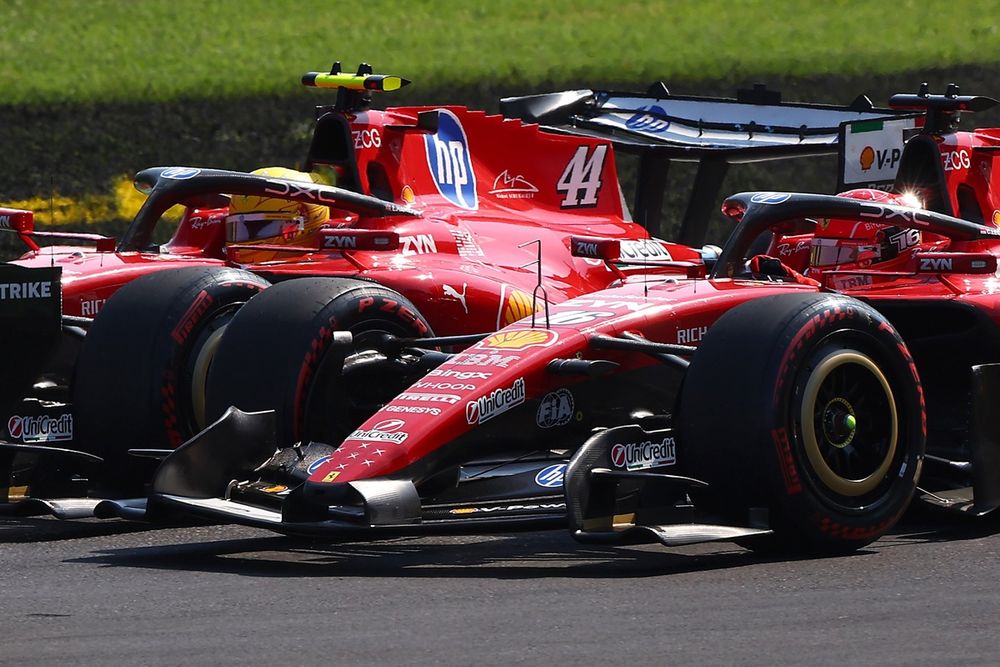
Hamilton’s race had been made more difficult after his tangle with Leclerc on the first lap
Photo by: Andy Hone/ LAT Images via Getty Images
We want to hear from you!
Let us know what you would like to see from us in the future.
– The Autosport.com Team