
ⓘ NASA – Unsplash
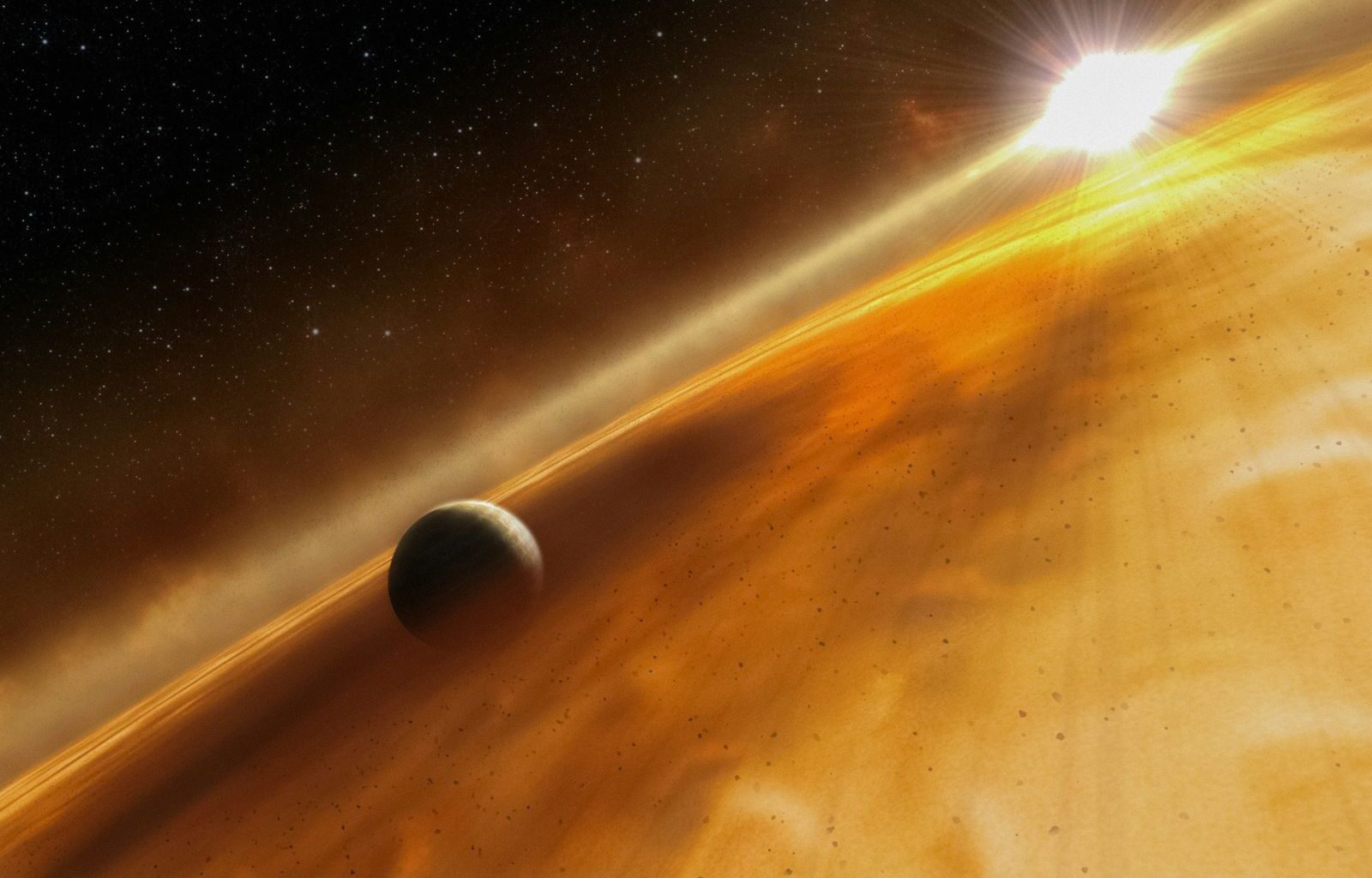
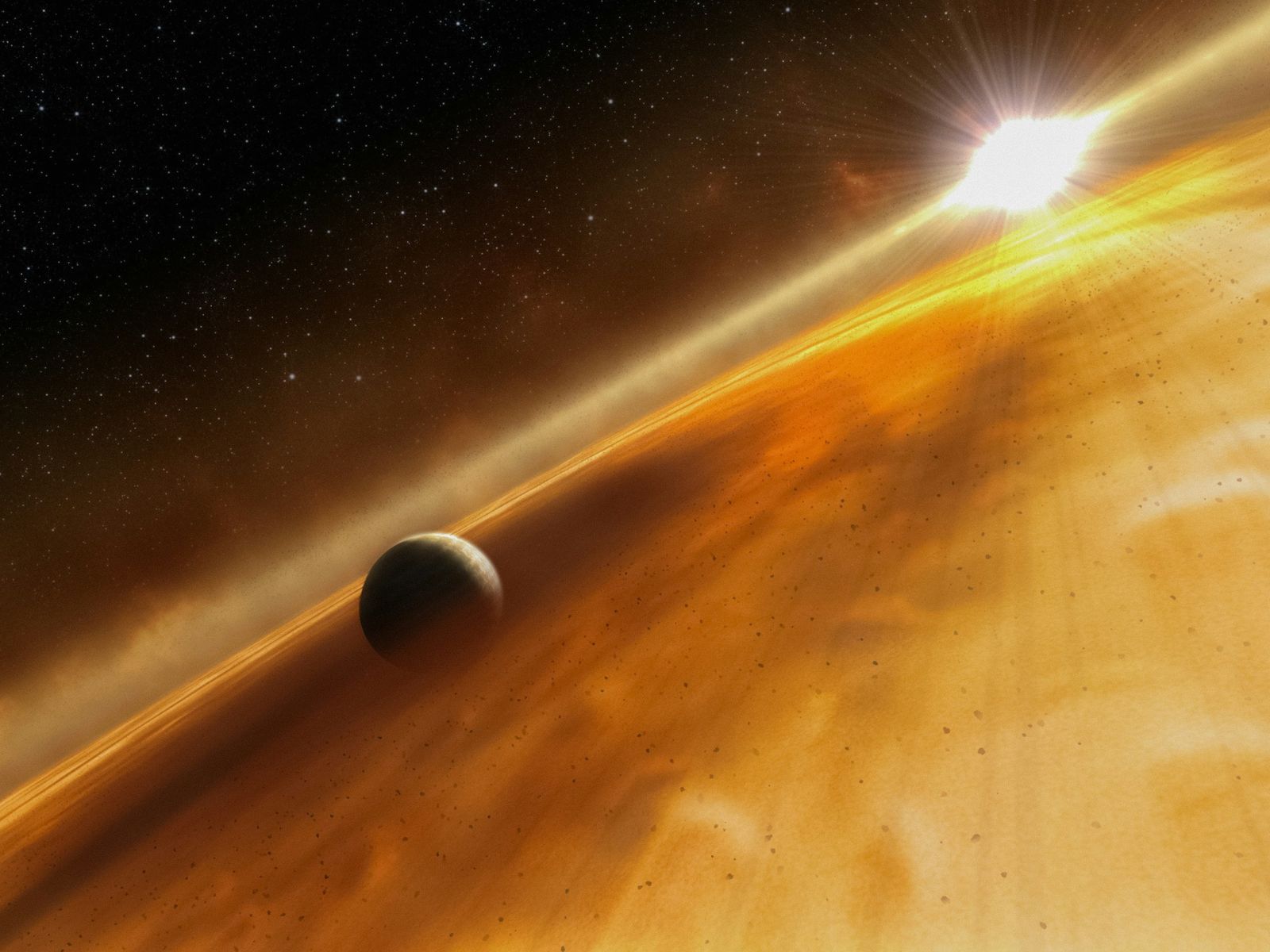
An artist’s illustration showing a star and a planet.
Astronomers have detected a new supernova in the galaxy NGC 7331. And in just a few days, its brightness has increased significantly, allowing astronomers to study the early stages of this phenomenon in order to better understand it.
Supernovae are not rare in the universe. However, observing a supernova shortly after its discovery and tracking its evolution provides an interesting opportunity for astronomers.
Thus, this is what recently happened in the galaxy NGC 7331, located in the constellation of Pegasus. The Asteroid Terrestrial-impact Last Alert System (ATLAS) detected this supernova on September 1, 2026, with a magnitude of 17.3 at the time of its discovery.
But now, it seems to be getting brighter. Indeed, new observations have been made, particularly by amateur astronomers, and its magnitude is estimated at around 13. Given that it was discovered only recently, its brightness could still increase in the coming days or weeks.
As for the origin of this supernova, further study will be needed, but it has been classified as a Type Ia supernova. This type of supernova is associated with binary systems containing at least one white dwarf. In some scenarios, when the white dwarf approaches the Chandrasekhar mass limit of about 1.4 times the mass of the Sun, conditions can trigger a thermonuclear explosion.
But while this event, named SN 2026aaiv, is very interesting, NGC 7331 had already hosted a similar phenomenon last year. Indeed, SN 2025rbs was discovered on July 14, 2025, and was also classified as a Type Ia supernova.
 Alexis Stegmann – Tech Writer – 757 articles published on Notebookcheck since 2025
I’ve been working in the field of web writing for several years, and I’m passionate about keeping readers up to date with the latest news on astronomy, technology, the world of video games and other exciting subjects. In particular, I’ve had the opportunity to work on a number of websites, which has enabled me to cover a wide range of subjects. In my personal life, I’m passionate about a wide range of subjects, including astronomy, video games, history and science. I’m also drawn to psychology, which is a subject that deserves greater documentation and recognition.