
The European Space Agency (ESA) deployed an observation aircraft to track the reentry of two decommissioned satellites over the South Pacific. While satellite disposal itself is routine, this mission stands out because it directly measured the metal particles released into the atmosphere as the satellites burned up. The effort comes as the rapid expansion of low-Earth orbit satellite constellations, led by Starlink, intensifies the need for scientific verification of how satellite reentries affect the atmospheric environment.
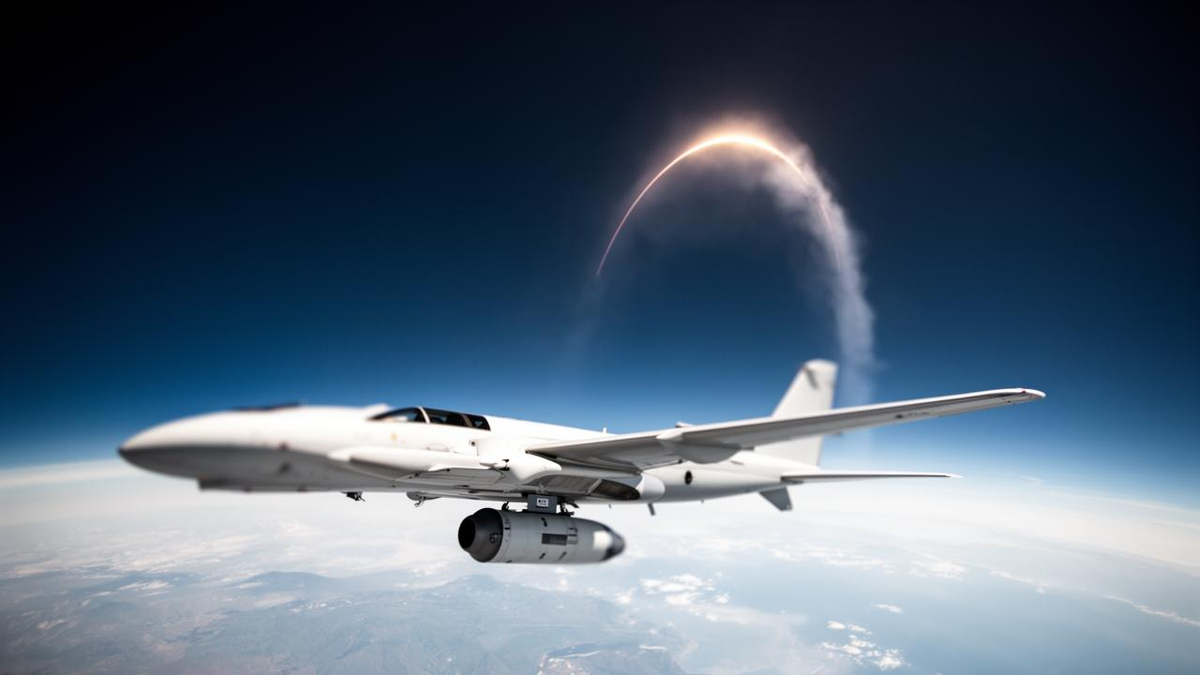
ESA guided the Cluster satellites “Samba” and “Tango” into the atmosphere on August 31 and September 1 of this year. Launched in 2000 to observe Earth’s magnetosphere, the satellites broke into dozens of fragments and burned up upon atmospheric entry. An observation aircraft that took off from Tonga carried 30 instruments, 29 of which captured the reentry process, measuring which materials melted and vaporized as the satellites burned.
The ‘Metal Particulate’ Created by Reentry
Satellites enter the atmosphere at speeds of several kilometers per second. During this process, the air in front of the satellite is rapidly compressed and heated, causing surface temperatures to soar and structural materials to melt or vaporize. Aluminum, widely used as a satellite structural material, is of particular concern: after vaporizing, it can react with oxygen to form aluminum oxide (alumina), a type of metal particulate.
These particles are mostly created in the upper atmosphere, tens of kilometers above the ground, and range in size from nanometers to micrometers. Particles generated during reentry remain at high altitudes and gradually descend into the stratosphere over time.
The presence of metal particles in the actual atmosphere has already been confirmed through observation. Researchers at the U.S. National Oceanic and Atmospheric Administration (NOAA) collected stratospheric aerosols using NASA high-altitude aircraft and published their findings in the Proceedings of the National Academy of Sciences (PNAS) in 2023. Approximately 10% of stratospheric sulfuric acid particles larger than 120 nanometers in diameter contained metal components—including aluminum—consistent with spacecraft origins. Analysis of the ratios of more than 20 elements matched the composition of specialized alloys used in rockets and satellites.
In 2024, researchers at the University of Southern California (USC) published simulation results in the international journal Geophysical Research Letters (GRL). They found that a 250-kilogram satellite with 30% aluminum by mass could generate approximately 29.8 kilograms of aluminum oxide particles upon reentry.
Human-Made Materials Entering the Atmosphere Hit Record High
The total amount of human-made material entering the atmosphere through reentry is also growing rapidly. According to an analysis published in January in the international journal Acta Astronautica, the mass of human-made objects that reentered Earth’s atmosphere in 2024 reached approximately 490 tonnes—the highest on record. The researchers estimated that the amount of aluminum entering the atmosphere from satellites and rockets that year exceeded, for the first time, the aluminum reaching Earth through natural pathways such as meteoroids.
Scientists are focused on aluminum oxide because these particles may catalyze ozone-depleting reactions in the stratosphere. Stratospheric chlorine compounds—hydrochloric acid and chlorine nitrate—can react on the surface of aluminum oxide particles to form molecular chlorine. When molecular chlorine is exposed to sunlight, it produces highly reactive chlorine atoms, which repeatedly break down ozone.
However, the extent to which this reaction actually occurs in the stratosphere remains uncertain. A study published in May in the international journal Earth’s Future calculated atmospheric changes through 2029 based on actual rocket launch and satellite reentry data from 2020 to 2022, assuming current growth trends in space activity continue. The researchers estimated that global stratospheric ozone depletion from rocket launches and space object reentries would be approximately 0.02% by 2029—negligible. Their conclusion: at currently projected levels, the impact is not sufficient to significantly alter the overall ozone layer.
Instead, the researchers identified chlorine from solid rocket propellants and nitrogen oxides produced during rocket launches and reentries—rather than aluminum oxide—as the primary drivers of ozone depletion. However, they noted that direct measurement of the physical and chemical properties of metal oxides is needed, given the scarcity of actual observational data. This means measuring what chemical compounds reentered aluminum transforms into, the size of the particles, and at what altitudes they form and how long they persist.
Stijn Lemmens, ESA’s acting head of space debris, said, “We need better data on exactly when and how reentering satellites heat up and break apart, and which materials survive.” He added, “This will allow us to design satellites that burn up completely while also preventing atmospheric pollution.”
Why Observational Data Matters
ESA’s observation campaign is an attempt to address the limitations of existing research, which has relied on simulations and indirect measurements. By directly capturing the moment satellites break apart and vaporize from an aircraft, researchers can obtain empirical data on which materials are released, at what altitudes, and in what quantities.
The importance of this issue is expected to grow given the pace of low-Earth orbit constellation expansion. Starlink alone operates thousands of satellites, and deorbiting end-of-life satellites through atmospheric reentry is standard practice. A single satellite can weigh hundreds of kilograms, a significant portion of which is aluminum alloy. As reentry frequency increases, the total amount of metal particles accumulating in the upper atmosphere is structurally bound to rise.
ESA plans to use the data collected from this campaign to analyze reentry processes and their atmospheric impact. As Lemmens noted, designing satellites that burn up completely could reduce atmospheric pollution while also lowering the risk of debris reaching the ground.