
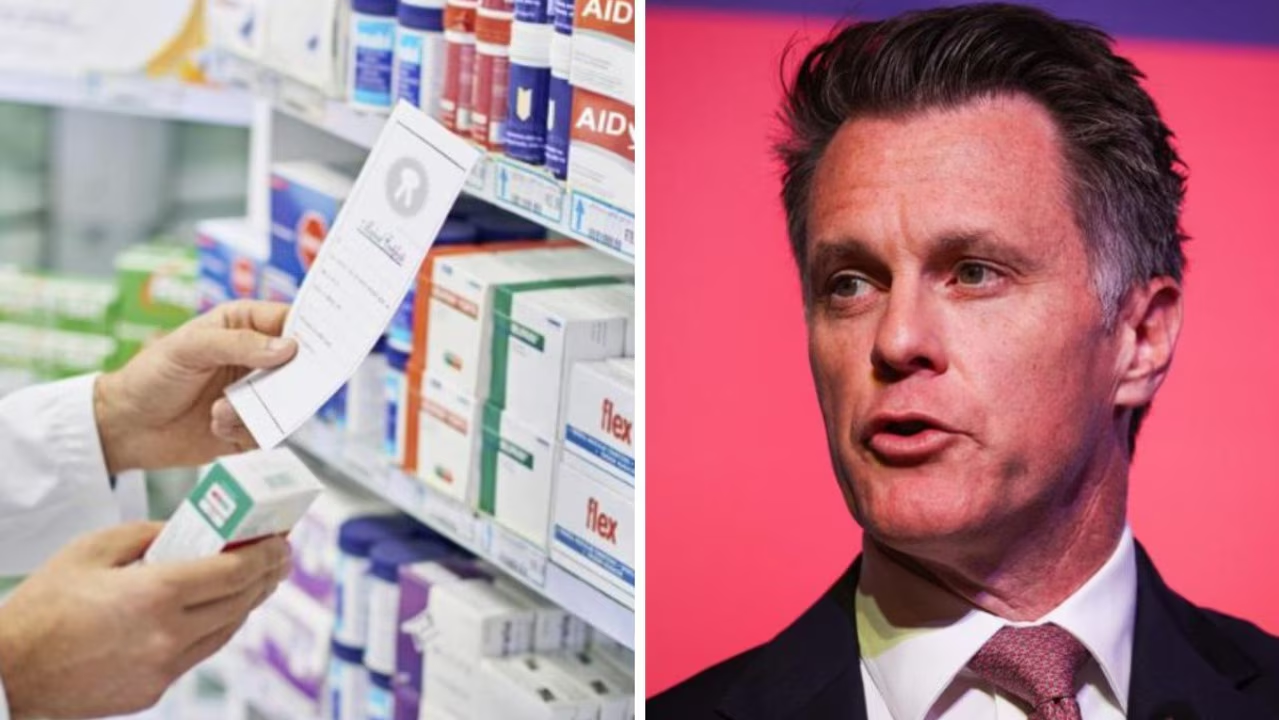
People in NSW will be able to skirt around the usual GP clinic wait times to seek treatment for everyday health conditions at a pharmacy.
The new trial announced by the Minns Labor government on Thursday will give pharmacies permission to treat ear infections and wounds and help patients deal with chronic conditions like high blood pressure and chronic obstructive pulmonary disease.
As well, 250 additional pharmacies across the state will become qualified to provide the oral contraceptive pill and treat conditions like nausea and vomiting, reflux, rhinitis, and musculoskeletal pain and acne.
NSW Premier Chris Minns said the changes meant “more options for patients, more care available in local communities and more GP appointments available for people who really need them”.
“For most people, their local pharmacy is one of the easiest parts of the health system to access, and we’re making better use of the skills and training pharmacists already have,” he said.
Speaking to the Pharmacy Guild of Australia on Thursday, Mr Minns said his government had inherited a health system on its knees.
“If you turned up to any big public hospital on a Sunday afternoon, our doctors and nurses were getting hit hard, with thousands of patients every week, and many were getting up and walking out before they got treated at all,” he said.
“If it means more people get effective healthcare while taking pressure off our public hospitals, if it means more innovative ways of delivering lifesaving treatments to the people of NSW, we will not put our cue in the rack and say mission accomplished.”
NSW Health Minister Ryan Park said pharmacies were “an important point of care for members of the community” and the proposed reforms would “ensure they can deliver more health services for people”.
The government said regular GP visits remained an essential part of childhood healthcare and shouldn’t be completely supplemented by trips to the pharmacy.
The announcement builds on previous reforms that allow trained pharmacists to treat urinary tract infections, resupply hormonal contraception and provide care for minor skin conditions including eczema, shingles, impetigo and psoriasis.
Despite Mr Minns’ optimism, the Australian Medical Association came out firing, calling the announcement a “slap in the face” to general practitioners.
NSW AMA president Fred Betros said the move would “expose patients to an increased risk of harm”.
“Treating ear infections and wounds, acute vomiting and high blood pressure and chronic obstructive pulmonary disease are not extensions of dispensing. They can all be masking much more serious conditions,” he said.
“An earache in a child is common, but it is not always an ear infection and most do not need antibiotics. A wound that will not heal can be the first sign of diabetes or vascular disease.”
Dr Betros said most of the conditions being handed over to pharmacies by the Minns government were often symptoms of much more serious illnesses that require diagnosis from a doctor.
“Vomiting is not a diagnosis. It is a symptom, and it sits in front of appendicitis, bowel obstruction, diabetic ketoacidosis, meningitis, ectopic pregnancy and heart attack. An antiemetic treats none of those,” he said.
“It settles vomiting while the cause keeps going. The patient feels better, goes home, and then their appendix bursts.
“Fund general practice properly, and the queue (NSW Health Minister Ryan Park) is trying to solve starts to disappear.”
ASMOF NSW President Dr Nic Spooner gave Minns a similarly-worded lashing, accusing his government of “looking for shortcuts rather than addressing the chronic understaffing and under-resourcing of primary care and public hospital services”.
“Pharmacists play an important role in our health system. However, expanding their responsibilities is no substitute for ensuring patients have timely access to doctors with the training and expertise to diagnose complex conditions, coordinate care and provide appropriate specialist referrals,” he said.
“The people of NSW deserve better.”