
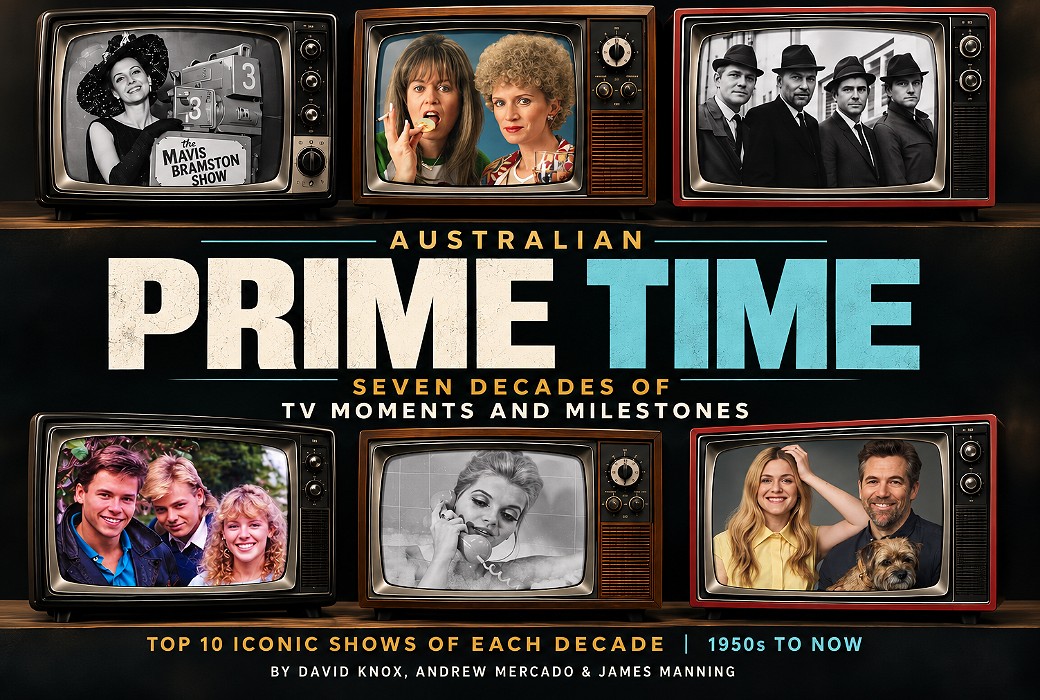
To celebrate 70 Years of Australian Television, TV Tonight and TV Gold join forces to choose 10 top shows from each decade.
As Australia celebrates seven decades of television from 1956 to 2026, TV Tonight has joined forces with the TV Gold podcast for a list of the most iconic programs from the last 70 years.
Together with TV Gold’s Andrew Mercado and James Manning, we trawled through memories, archives and a few TV guides, and chose 10 programs from each of the past seven decades.
TV Tonight is publishing the list of 10 programs for each decade weekly starting with 1956-1969 (the first list covers 13 years so we could then keep each subsequent decade starting on a round number).
The criteria for selection were programs we all thought were the most “iconic”. There was much debate over what was in and what was out – there are many good shows that, alas, didn’t make the list.
This list is not aiming to be the definitive word on the best Australian TV programs, but merely a starter to the discussions to be had around what deserves to be called iconic.
Still to come will be a separate list for Kid’s TV and another with noteworthy shows which were based on international formats (Play School ticks both those boxes, for example).
TV Gold / TV Tonight podcast:
Across seven separate podcasts, Andrew Mercado, James Manning & David Knox discuss the shows chosen across the decades. There are further insights into which shows we fought for and some honourable mentions of those we regrettably had to leave off.
You can listen to the first podcast here.

1956 – 69: The Pioneers
In Melbourne Tonight (1957, Nine)
A nightly variety show may have had as many as 50 different presenters over its 13 year run, but it is forever synonymous with Graham Kennedy, who was just 23 when he began. Live to air, with orchestra, dancers, live commercials and sketches, IMT symbolised what the advent of television meant to Australia: trekking into GTV9 aka Television City to sit in the studio and watch magic in the making, or crowding around new sets at home. The goggle-eyed, elfin-like Kennedy was a master of comic timing, superbly matched by his announcer and hosting ‘understudy’ Bert Newton. Together with Joff Ellen, Panda Lisner, Evie Hayes, Mary Hardy, Rosie Sturgess, Patti McGrath (later Patti Newton), Toni Lamond, Philip Brady, Buster Fiddess, Jack Little, Denise Drysdale, Pete Smith, it remains the defining Tonight show in Australia, succeeded by The Graham Kennedy Show, The Don Lane Show, Tonight Live with Steve Vizard, Rove Live. DK

Pick a Box (1957, Seven)
The format started life as a radio game show that launched in 1948 and presented by husband and wife Bob and Dolly Dyer. A TV version was broadcast from 1957 until 1971. The program was initially broadcast on ATN-7 in Sydney and GTV-9 in Melbourne, later moving to HSV-7 in Melbourne in 1963 as the stations formed the Australian Television Network. A sponsorship deal saw the program rebranded BP Pick a Box for a time. The format featured two contestants in a trivia battle with the winner picking a box from a shelf without knowing the contents. Bob Dyer also offered a cash prize, with the climax of the show Dyer asking the winner, “The money or the box.” The program’s most famous contestant was Barry Jones who won a staggering 208 episodes. It was rebooted as Superquiz with Bert and Patti Newton in 1981. JM
Four Corners (1961, ABC)
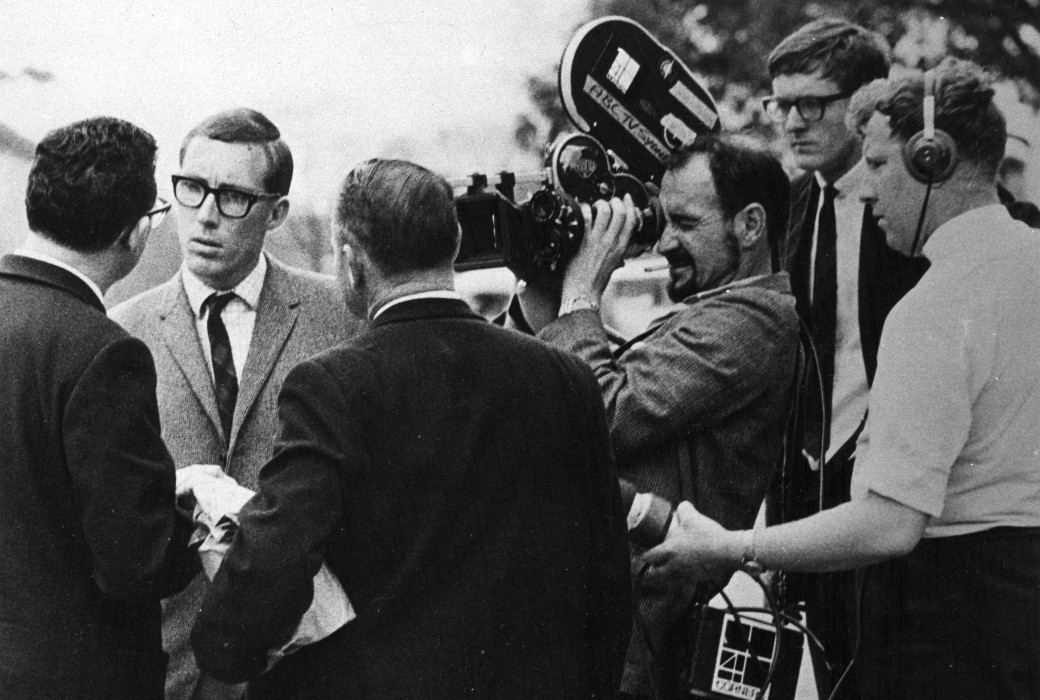
Four Corners began life on Saturday 19 August, 1961 at 10pm with ‘urbane’ host Michael Charlton, the compere from ABC’s first night of transmission. At first, the magazine style show jumped between politics, arts and sport and its first two producers, Robert Raymond and Alan Ashbolt, are credited with establishing its harder hitting tone. During the 70s, it moved into single issue stories and by 1987 Chris Masters’ explosive ‘Moonlight State’ report led to a Royal Commission about Queensland corruption. Hosted over the years by Michael Willesee, Caroline Jones, Andrew Olle, Liz Jackson, Kerry O’Brien and Sarah Ferguson, Four Corners is the longest running show in Australian TV history. And, as always, it is still controversial. JM / AM
Homicide (1964, Seven)
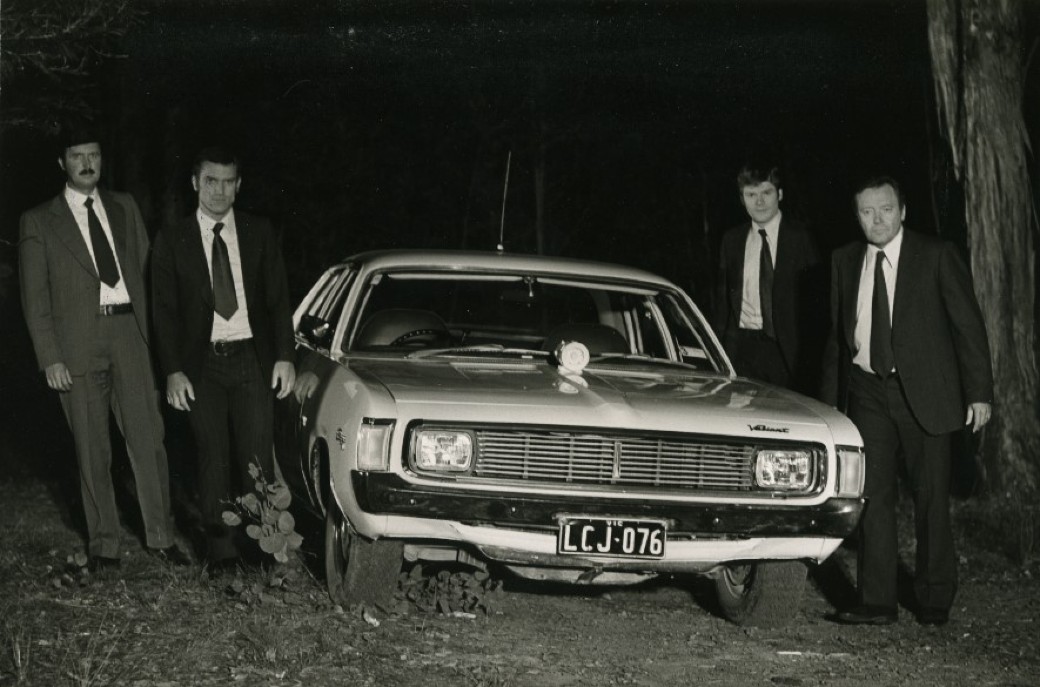
Hector Crawford was so determined to prove that Australian audiences would watch locally made drama, he self-financed the pilot for Homicide and then spent a full year trying to sell the police drama. Melbourne’s HSV7 finally signed on but without any support from Sydney’s ATN7. Hector was proved right when Homicide became a national Top 10 hit within a few weeks, but it took his production company over a hundred episodes to just break even on it. Based on real cases as supplied to them by Victorian Police, Homicide opened the gate to more original Aussie drama while making household names of actors like John Fegan, Alwyn Kurts, Leonard Teale, George Mallaby, Norman Yemm and Charles Tingwell. AM

The Mavis Bramston Show (1964, Seven)
British actress Carol Raye was Australian TV’s first ever female executive and her first ptich was for a local version of David Frost’s The Week That Was. Raye only did the pilot because nobody else was available, but the combinaton of her alongside Gordon Chater and Barry Creyton was too irresistible not to continue. The Mavis Bramston Show made Maggie Dence infamous for playing the horrendously untalented ‘international star’ who was supposedly essential for any Australian production. With this biting takedown of the entertainment business, Mavis then went on to tackle supposed sacred cows such as politics and religion. Hugely controversial but also wildly popular, it would become required viewing and highly influential for a generation of future Aussie comedians and satirists. AM

My Name’s McGooley, What’s Yours? (1966, Seven)
Strictly speaking, this was not Australia’s first sitcom, but at three seasons it was the first to enjoy such success. Set in the working-class suburb of Balmain, it starred Gordon Chater as the eccentric patriarch Dominic McGooley who enjoyed irritating his son-in-law (John Meillon), when not fishing with his mates in prohibited areas of Sydney Harbour. With its comedy driven by two generations living under one roof, the cast included Judi Farr, Noeline Brown, Stewart Ginn. Created by writer Ralph Peterson, the show even spawned a spin-off series, Rita and Wally, with guest stars Spike Milligan and Chips Rafferty. DK

Bellbird (1967, ABC)
Aunty’s first soap was just four episodes a week, at just fifteen minutes per night. And when the show finished at 6.55pm, water boards across regional Australia all noted a huge surge in water usage as viewers of Bellbird made a cuppa or rushed to the loo before the 7pm News began. Set in a Victorian country town, it was must-see TV in the bush, and some viewers never got over Charlie Cousens’ shock death form the top of a wheat silo. Being popular, however, was a problem for some in the the ABC, which is why they refused to co-operate with the making of a feature film (then re-named Country Town) and eventually killed it off by fiddling with the format and timeslot. Director James Davern would cleverly rework the show into A Country Practice for commercial TV. AM

This Day Tonight (1967, ABC)
Often referred to as Australian TV’s first daily current affairs program. This Day Tonight was actually the second, but with the same host. Bill Peach briefly left the ABC to make Telescope (1965) for the fledgling new 0-10 Network, but it was considered “dull” and was gone within a year. Nobody, however, would ever say that about TDT, as it became better known, when it launched in 1967. Its team of young reporters, including Gerald Stone, Peter Luck, Michael Willesee, George Negus, Mike Carlton, Peter Couchman and arguably the most revered of all, Richard Carleton, were all out to shake up the establishment. Every government complained about its influence and they loathed the comedy skits that sent them up, but the audience loved it. It was once overwhelmingly voted Sydney’s favourite TV program, despite ratings suggesting Bobby Limb’s Sound Of Music was the timeslot champ. The program was axed in 1978 three years after Bill Peach signed off. It was replaced by Nationwide, then The 7.30 Report and 7.30, and it laid the groundwork for commercial copies including A Current Affair, Today Tonight, Willesee, and Hinch. JM / AM

Skippy the Bush Kangaroo (1968, Nine)
The adventures of a young boy and his pet kangaroo would become Australia’s first TV export hit -at the height of its success watched by 300 million viewers around the world. Co-created by producer John McCallum and shot in colour on 16mm film, it was originally a primetime series for Nine. At the heart of the series was the preservation of Australian wildlife, endorsed by an ensemble including Garry Pankhurst, Ed Devereaux, Ken James, Tony Bonner and Liza Goddard. To finance the show McCallum made a deal with Nine’s Frank Packer, agreeing it could be run in perpetuity -years before video and DVD sales were ever conceived. To this day Nine still benefits from that deal, rerunning Skippy license-free at 4am daily. DK

Division 4 (1969, Nine)
With Homicide a bonafide hit on Seven, Nine got in on the action by commissioning Divison 4. Crawford Productions gave them more of the same, but with an inner-city police station setting (and two years later, the 0-10 network would get cops in a country town). Alongside former newsreader Chuck Faulkner and Terence Donovan, Nine wanted Gerard Kennedy, who had played a baddie in their 1967 spy drama Hunter. As Detective Frank Banner, Kennedy’s popularity soared even further and he won two Gold Logies. When he finally tired of the grind and left after seven years, Kerry Packer was furious and after just one episode with John Stanton as his replacement, Division 4 was unceremoniously axed. AM
Next: 1970s