
Just as health providers faced the impending removal of US support, many European governments also reduced their assistance to people in Sudan. European and multilateral aid budgets are also shrinking globally. OECD preliminary data show that aid from EU institutions fell by 13.8 per cent in 2025, while several major European donors also reduced their overall aid spending.
Globally, humanitarian aid fell by 35.8 per cent. These figures do not represent equivalent cuts to Sudan, where some European donors have maintained or increased their support. But they point to a sharply contracting international funding environment. In Sudan, that wider squeeze is compounding an already severe health crisis, as specific funding withdrawals and programme closures reduce access to healthcare.
“Closing a clinic does not remove a single patient. It just sends them to the next facility,” says Sebastián Traficante, MSF emergency coordinator in Darfur. “After a longer and more expensive journey, patients often arrive in a much more serious condition, and the hospital may already be full. MSF can reinforce some services, but we cannot absorb every closure.”
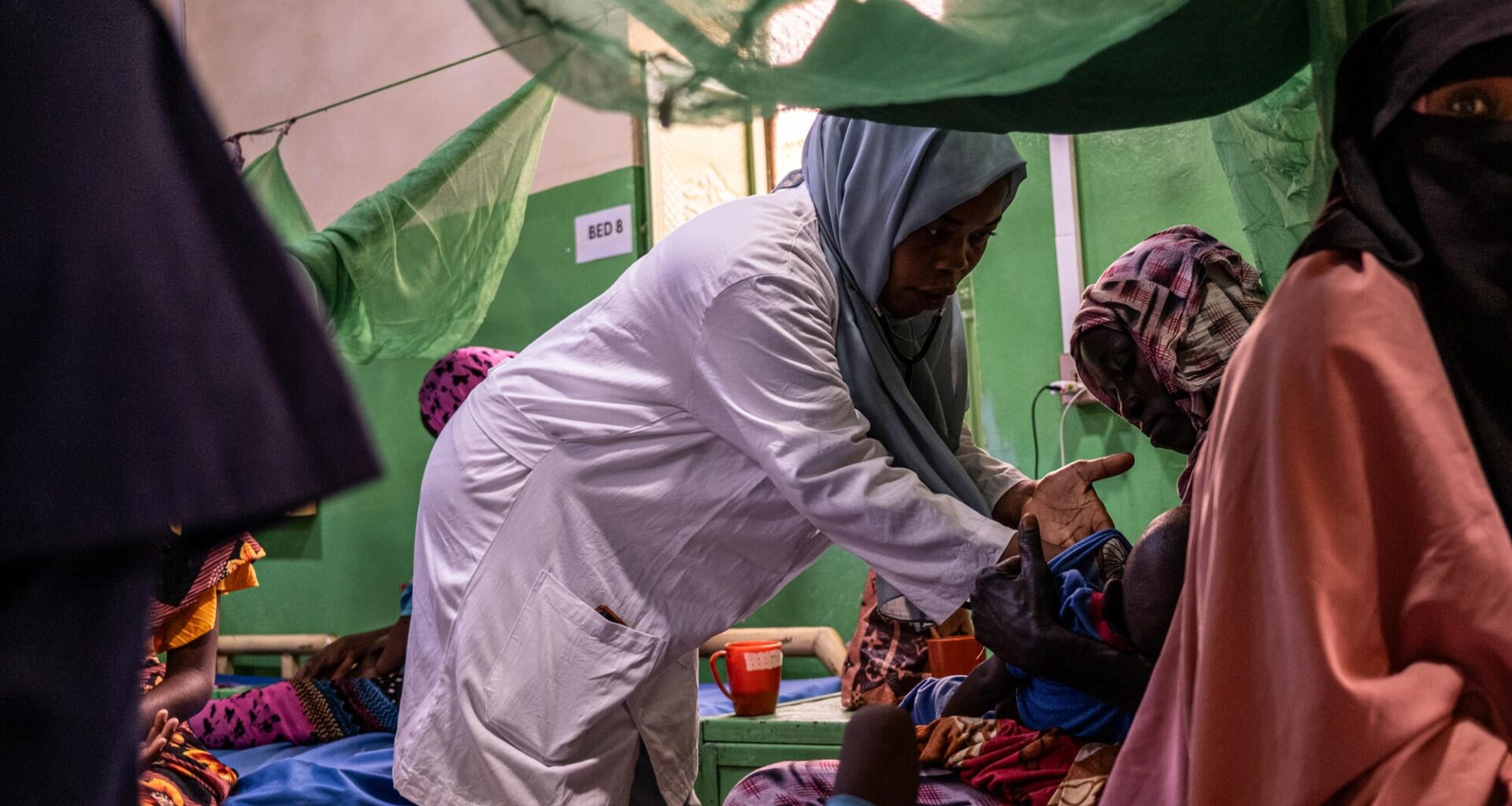
In Central Darfur’s Hamidiya displacement camp, a health centre that previously provided maternity, paediatric, and mental health care is now operating at sharply reduced capacity after an international aid organisation ended its support. Daily patient visits have dropped from 200 to barely 40, and vaccinations have stopped. The fall was not a sign that people had become healthier. They had stopped making the journey to a centre that could no longer treat them. A labourer in Darfur earns roughly US$1, a day. The US$2 transport fare to reach a working clinic therefore costs about two days’ wages, leaving residents to choose between healthcare and food.
“That money could buy food instead,” a patient told MSF. “If there is no food, there can be no health.”