
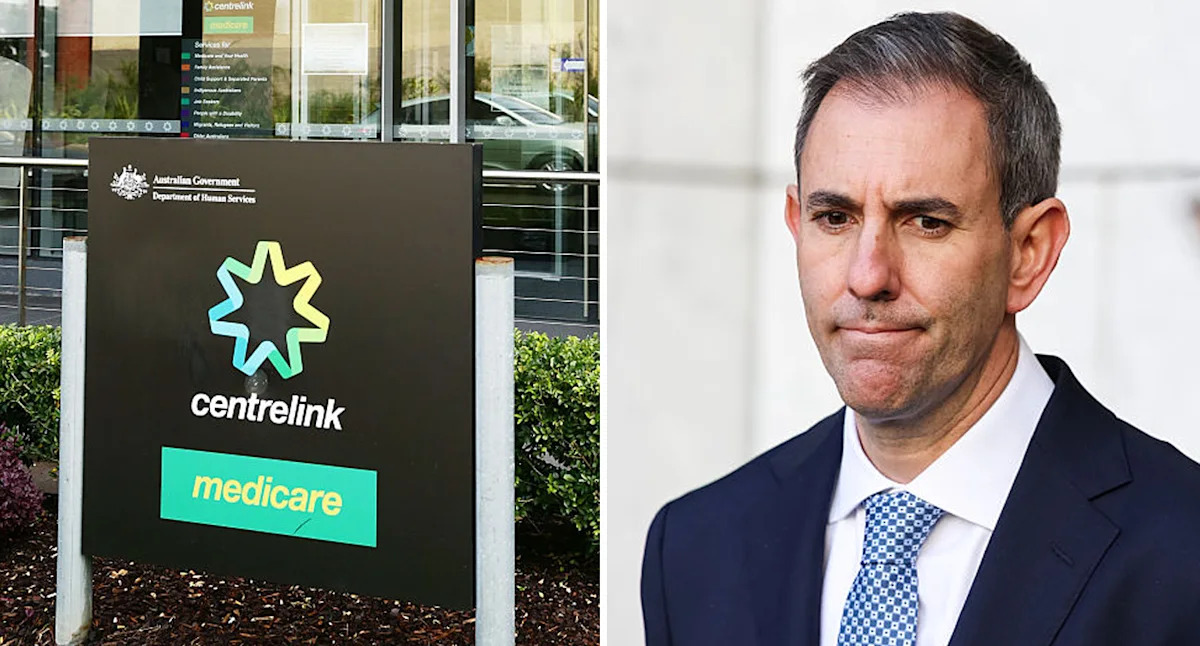
Millions of Australians are being reminded to make sure their details up to date if they receive a Centrelink payment as a more than $4 billion boost will start hitting accounts from next week. From September 20, more than 5 million Australians will see their support payments increased.
It’s a good time to check your eligibility for certain entitlements like the Age Pension as well, says Peter Hogg, the GM of Guidance & Advice at Aware Super. He said some older Australians wrongly assume they won’t be eligible due to the level of their super.
“We encourage people to double check, to make sure they’re not missing out,” he told Yahoo Finance.
“And also make sure you keep your assets and income up to date with Centrelink as well, because we do find that if you don’t, you might actually be missing out on a higher entitlement and give yourself your own little increase just by making sure your details are up to date.”
RELATED
As part of the changes coming into effect next Sunday, the government is also increasing the deeming rate, inching it up after years of keeping it at very low levels after the Covid pandemic.
The social security deeming rate is used to determine how much income an individual’s financial assets would earn as part of the income test. The rate will be raised to 1.75 per cent for financial assets up to $66,800 for singles and $110,600 for couples, and 3.75 per cent for any financial assets above the threshold.
The level is still below the official cash rate of 4.35 per cent. But it will mean some asset rich pensioners could see their payment affected.
“There’s this nuance of the deeming rate change which means that for some, they might find themselves tipping over from the assets test to the income test, or if they are income tested today, it might impact them in a slightly different way,” Hogg said.
“It’s relatively minor but it’s one for people to get their heads across so they know the impact of them from September 20.
“We still find that most people are assets tested, but that starts to shift over time as it increases. And certainly, further increases to that deeming test will start to impact more people.”
Hogg urged anyone to take advantage of online calculators to understand their eligibility.
Debate over pension rules
The way means testing currently works for the Age Pension, and it’s “extremely favourable” bias towards homeowners with expensive houses has been a topic of heated debate amid calls for reform.
Story continues
This week, Treasurer Jim Chalmers was keen to tout the success of the nation’s superannuation system in reducing the dependence on the government pension.
“New projections from the Intergenerational Report show how important superannuation is in delivering a decent retirement and a more sustainable budget,” he said.
 Treasury is projecting the amount of people receiving no pension at all will rise to nearly half of Aussies by 2059. · ASFA
The median retirement age balance is set to more than double to about $450,000 in the next decade, the report showed.
“Thanks to super, even as Australia’s population ages and retirement incomes go up, spending on age and service pensions is projected to fall as a share of GDP over the next 40 years,” Chalmers said.
Should Australia’s Age Pension be universal?
Reacting to the treasurer’s public pronouncements, CPA Australia Superannuation Lead Richard Webb said the Australian government risks focusing too much on the federal budget over actual outcomes for retired Australians.
He pointed to New Zealand, where the government pension is universal. It is also considering an equivalent rise in its super equivalent, KiwiSaver.
“New Zealand is moving towards the same compulsory savings rate as Australia, but its pension system operates very differently. Unlike Australia, they don’t subject most retirees to complex means testing before they can access the state pension,” he said on Wednesday.
 CPA Super Lead Richard Webb says Australia could perhaps learn from New Zealand. · CPA
As a result, our counterparts across the ditch have a greater level of certainty heading into retirement, he argued.
“In Australia, retirees can spend decades building their superannuation balances only to face a complex interaction between superannuation, income tests and asset tests when they retire. By contrast, New Zealand retirees have greater confidence about the level of government support they’ll receive alongside their retirement savings.
“A sustainable budget is important, but retirement policy should be judged on whether it provides adequate incomes and financial security for older Australians,” he said.
“The objective shouldn’t simply be reducing pension spending. It should be ensuring Australians can retire with confidence and maintain their standard of living.”
Get the latest Yahoo Finance news – follow us on Facebook, LinkedIn and Instagram.