
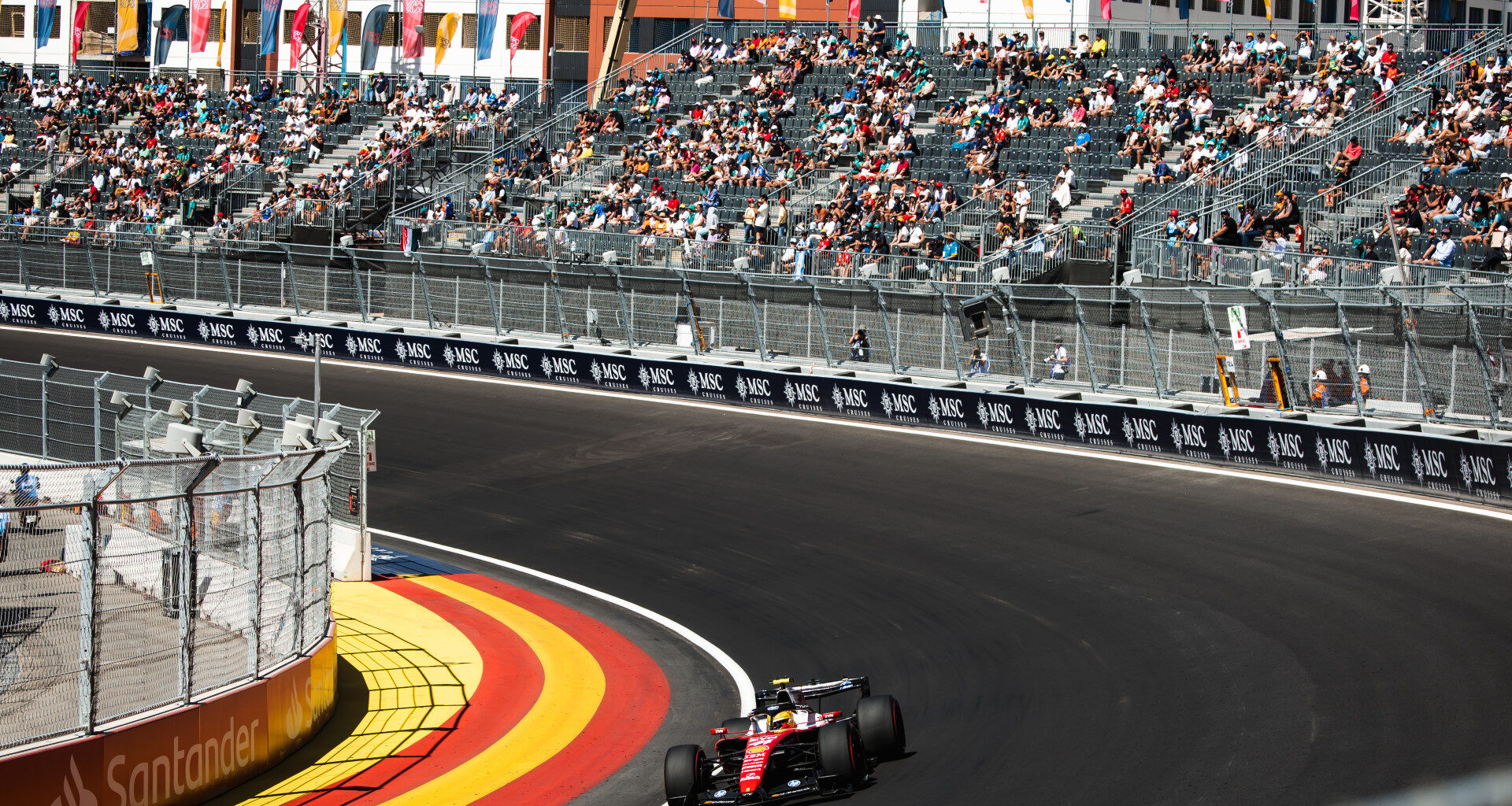
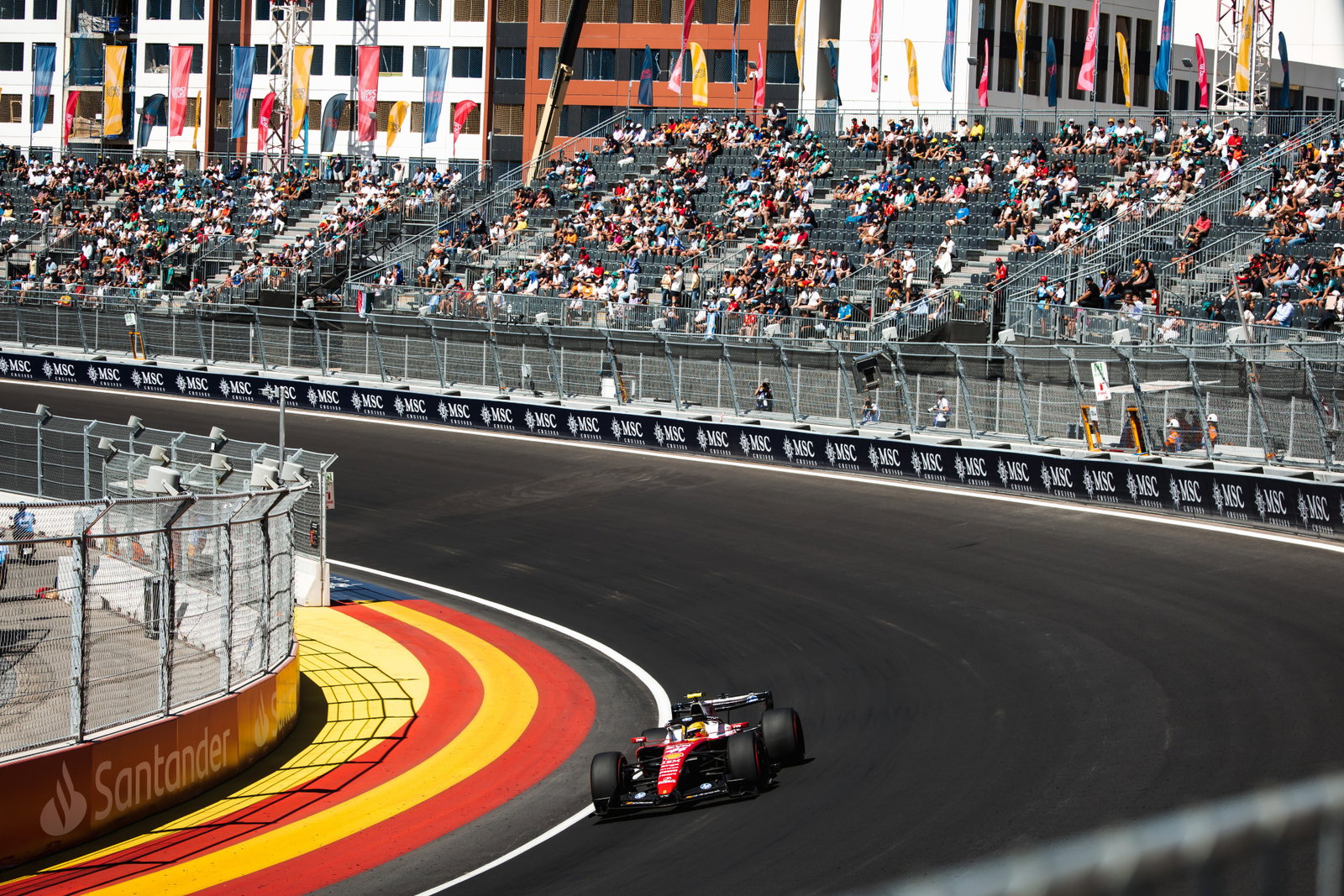
 F1 drivers are already calling for changes to the Madring circuit after the first race at the venue. Image: XPB Images
The 5.416km, 22-corner circuit had entered the weekend with a fearsome reputation following a Formula 3 test featuring 19 red flags and warnings that its unforgiving layout could punish even minor mistakes.
Yet the anticipated chaos never truly arrived.
Arvid Lindblad, Oliver Bearman and Lewis Hamilton all crashed during practice, but Sunday’s grand prix ran without a red flag and was interrupted only by a Virtual Safety Car when Lance Stroll stopped with a brake failure.
Instead, the strongest criticism after the race surrounded the difficulty of actually racing around the new Madrid venue.
The outcome also vindicated concerns raised before the race, with Max Verstappen warning after qualifying that Madring offered virtually nowhere to make a move.
“There are no corners where you can pass, so you need to rely on people degging very aggressively, so it’s going to be tough,” he said.
“The long runs here have been very tough, a lot of deg for everyone, so that will probably be the key point tomorrow, but even with that, I still need to figure out a corner where to pass.”
Those fears were realised on Sunday as drivers repeatedly found themselves unable to attack despite following cars they believed they had the pace to beat.
Asked whether the grand prix had been as uneventful from inside the cockpit as it appeared from outside, Gabriel Bortoleto offered a blunt assessment.
“Yeah, I almost fell asleep as well,” the Audi driver said.
Kimi Antonelli, who won the race after the timing of the VSC swung the contest in his favour, also believed the layout discouraged drivers from attempting moves.
Antonelli takes Spanish GP win after Norris VSC misfortune
“It definitely doesn’t create overtaking opportunities and it doesn’t push you to try and make a move, because 80% of the time you might have contact,” Antonelli said.
“So, I think there are some corners that need to be changed to create more overtaking opportunities, because right now, yes, it’s nice over one lap, but for sure in the race you’re just stuck behind.”
Lando Norris was even more forceful after seeing victory slip away despite leading comfortably from pole before the VSC.
The McLaren driver pointed to the final sector as one obvious area for improvement.
“I think there are some obvious changes they should make. They should get rid of Turn 18, 19, useless.”
“I don’t know how someone looks at this design and goes, ‘Mint.’ Yeah, I think there’s a lot of opportunity.”
Norris suggested bypassing Turns 18 and 19 in favour of a longer approach into a wider hairpin, believing a braking zone similar to those found at the Circuit of the Americas would create a more realistic chance to attack.
Turns 5 and 6 also emerged as a major target for criticism.
The chicane combines a narrow entry with aggressive kerbs and an awkward braking approach, leaving drivers with few options when attempting to move alongside another car.
George Russell raised another fundamental concern, arguing Madring’s longest run does not finish with the kind of straightforward heavy braking zone normally associated with overtaking.
The circuit’s headline feature, La Monumental, also failed to entirely live up to expectations.
Fernando Alonso suggested the banked Turn 12 demanded little from drivers in the current generation of cars despite the attention it attracted before the weekend.
“Michael [Clayton, Aston Martin’s press officer] can drive in Turn 12 because you go flat with no deployment,” Alonso said.
Drivers were nevertheless broadly positive about the Madrid event itself, with the atmosphere, facilities and challenge of qualifying earning praise throughout the weekend.
The concern is whether Madring can become equally effective on Sundays.
Changes are already expected to be considered before Formula 1 returns in 2027, with Mercedes team principal Toto Wolff saying he had spoken with organisers and found them receptive to possible revisions.