
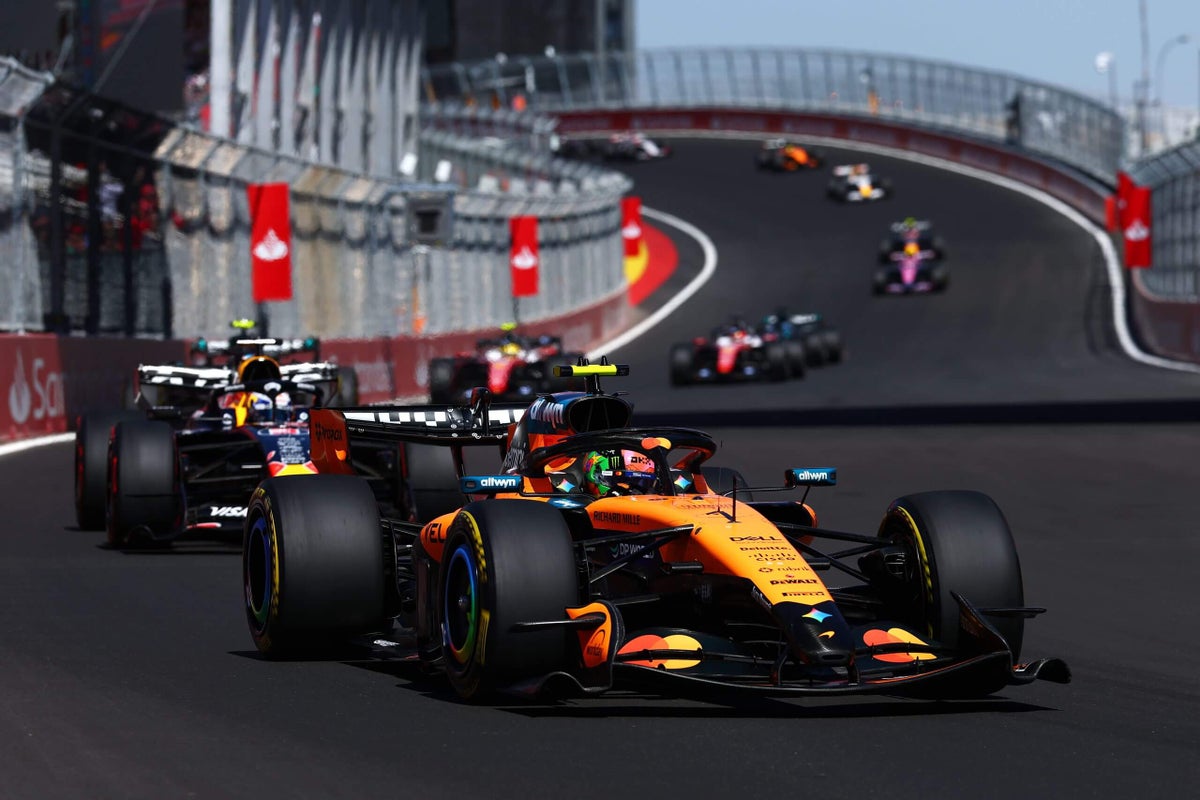
MADRID, Spain — Gabriel Bortoleto didn’t mince words after the 2026 Spanish Grand Prix in Madrid, deadpanning that it was just as boring behind the wheel as it was to watch on TV.
“I almost fell asleep as well,” said the Audi driver.
Madring, as the circuit is called, is the first new track to join the Formula 1 calendar since Las Vegas was added in 2023, and the paddock didn’t quite know what to expect. Ahead of the weekend, the drivers seemed braced for chaos because of the track’s high-speed stretches, tight corners, and narrow surface.
“I’ll put my money on the red flag,” Alpine’s Pierre Gasly said on Thursday. “Driving-wise, in the sim it was very enjoyable and very exciting. I got a good read and feel of pretty much every single wall at every single corner, so I know what to do and what not to do. But I think it’s going to be very challenging.”
A two-day Formula 3 test held here in August featured 19 red flags (though not all were due to crashes). And just a few hours before F1’s first practice session of the weekend on Friday afternoon, a Formula 2 car went up in flames after colliding with the barriers.
Drivers had, understandably, used the phrase “car killer” to describe Madring. But little of this sort occurred in the race, as a near-fully clean contest unfolded. It was largely a procession on Sunday, highlighting the need for more overtaking opportunities at this venue, and driver input when creating new circuits.
“Driving on a track like this,” Bortoleto said, “it’s like faster Monaco — but as boring as Monaco.” The Monaco GP, another street track, regularly comes under intense scrutiny for its processional races.
If it wasn’t for the virtual safety car activation triggered by Lance Stroll stopping his Aston Martin, the Spanish GP looked set to finish similar to how it started, at least at the front of the pack. Instead, the VSC handed Kimi Antonelli the win, with Lando Norris having led comfortably from pole until the VSC timing went against him.
The VSC was activated on Lap 14 of 57, and those who didn’t start on the more durable hard tire could swap to that compound and run to the end of the race. The majority of the grid did a one-stop race, with 10 drivers stopping on Lap 14 to take advantage of the time saved by stopping with the VSC active (as speeds on track are capped during such a period).
It became a tire-management game after that, and drivers found themselves stuck in traffic, with some trapped behind slower or lapped cars.
From a pure on-track pass perspective, overtaking appeared to be quite limited, at least with what was shown on the main world feed broadcast. The Athletic has approached Formula One Management for the data from the Spanish GP regarding how many overtakes actually happened. But it was a pain point the drivers highlighted after both qualifying and the race.
“I don’t think you need a driver necessarily to help (design tracks), but even for non-drivers, it doesn’t take a genius to make a track layout that lends itself to overtaking,” Haas’ Ollie Bearman said post-race, adding, “In that sense, it’s been a bit of a disappointment.”
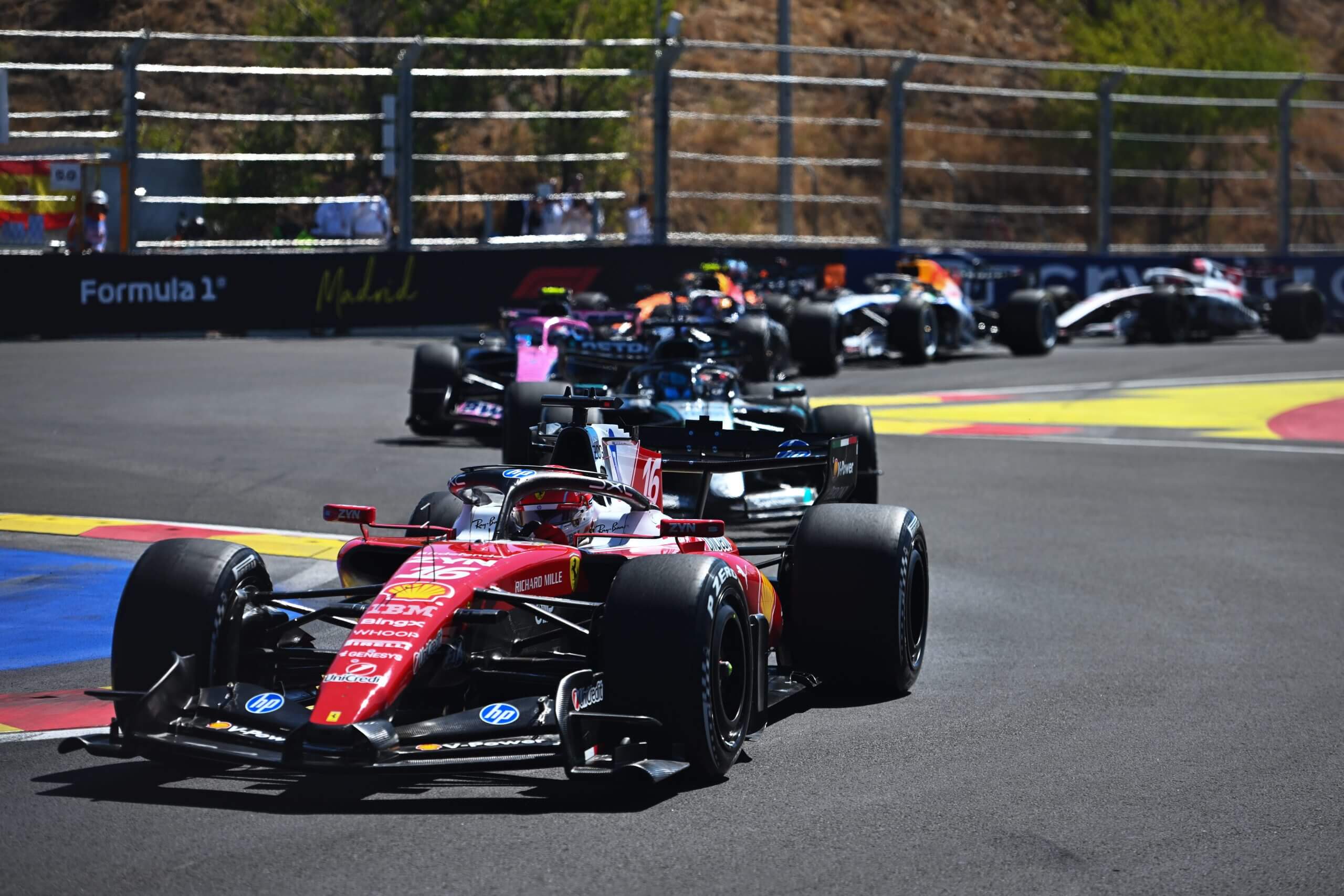
Overtakes were few and far between at Madring’s narrow confines (Rudy Carezzevoli/Getty Images)
George Russell of Mercedes said: “They need to make a change because every track needs to have an overtaking opportunity. After a bit of a straight, this one has a tight chicane. It’s a real challenge, but it’s not pleasant. After (nearly) 60 laps, smashing curbs, my head was a bit sore by the end.”
Red Bull’s Max Verstappen had said after qualifying on Saturday that he felt F1’s track design process should consider driver input. During Madring’s design, no driver feedback was gathered.
Russell also feels their feedback should be considered; however, the Mercedes driver added, “We’re all quite selfish, and nobody can be bothered to give their time. We’re quite busy with our schedules and there’s a lot of limitations.
“Here, when you actually look at the layout, there’s not really much you can do,” he continued. He noted the compact grounds and the highway overpass that the track goes underneath twice.
Several drivers had ideas for changes to improve racing at Madring. Norris said the track is “great in qualifying” and can become “a track that’s good for racing.” He reckoned sections that take a straight into a hairpin, similar to Austin’s Circuit of the Americas Turn 1 or Turn 12, should be added where possible.
“You’ll create much better opportunities for everyone, and you’ll be able to enjoy the race,” the McLaren driver continued. “There are some simple changes and maybe some trickier ones, like Turn 5, 6, 7. It’s hard to know exactly what’s the best thing. The fact (here) you have to turn and brake basically defeats the whole object of racing.”
Turn 5 was a corner multiple drivers mentioned as a possible point of adjustment, with Bortoleto and Russell highlighting the headache of running over the curbs here for 50-plus laps. Meanwhile, Alex Albon said after the race that most of the changes need to happen around Turns 3-5 and even highlighted Turn 12, La Monumental.
The Williams driver said, “That whole area needs to be redone,” referencing Turns 3 through 5. “Straighter braking zones. I think we need to remove that chicane. Maybe it’s good for quali, it’s challenging, but it’s not good for racing.”
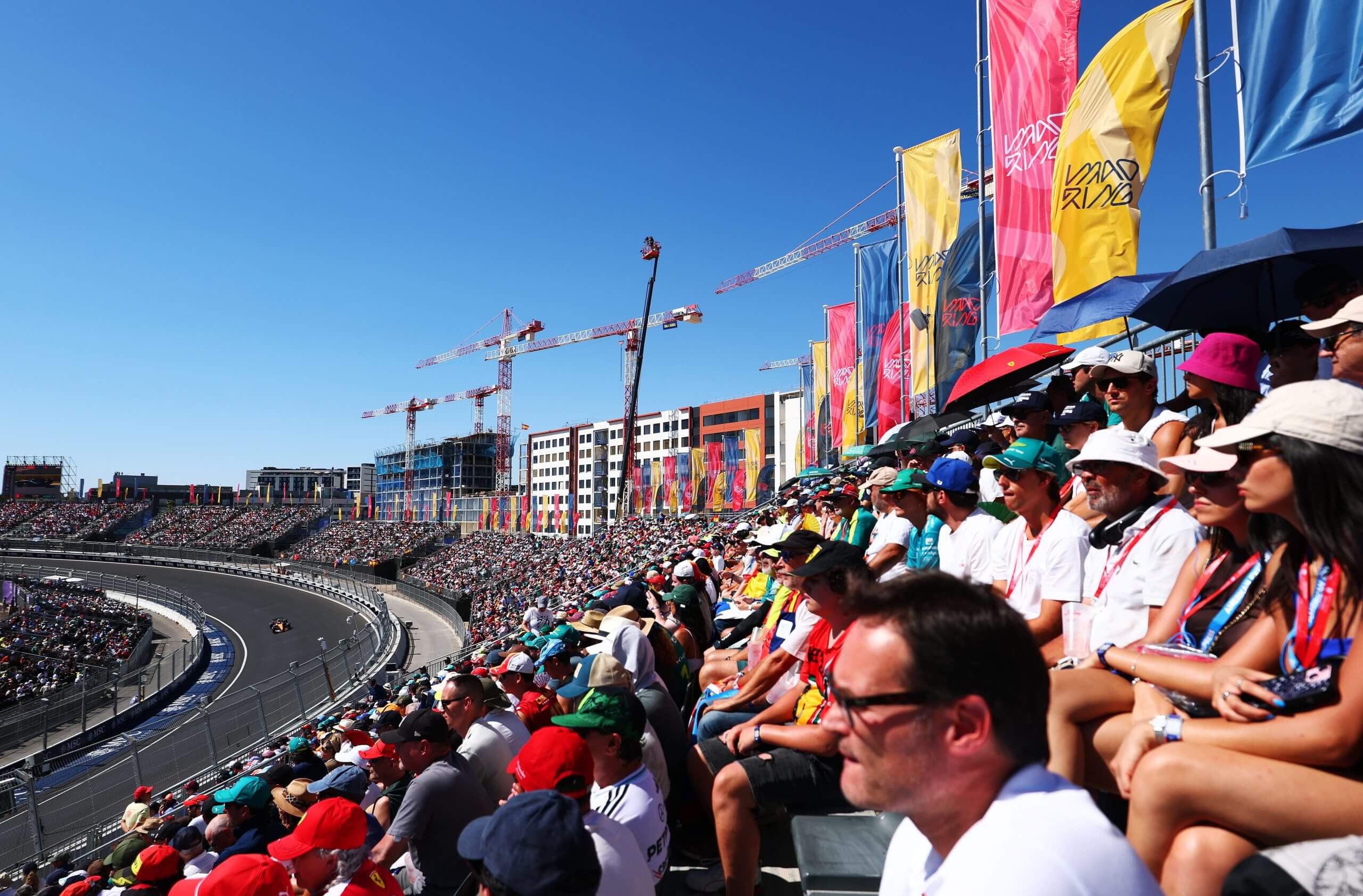
Drivers were optimistic about the track’s future if changes are made (Clive Rose/Getty Images)
As for the sweeping La Monumental (Turn 12), while Albon feels the banking is great, but it “is not really doing a good enough job (for setting up overtaking) in Turn 13,” and a bigger braking zone or a slower corner than La Monumental could be a better solution.
But, as Norris noted, several braking zones around Madring have been labeled as awkward, given they’re not in a straight line (this is particularly noticeable at Turn 5). This limits overtaking possibilities and makes it hard to drive down the inside of another car.
“You cannot dive bomb or send it when you’re already so on the limit,” Bortoleto explained. “The way for us to dive bomb or send a big overtake is just literally braking in a straight line.”
The new sport taking over Madrid
Luke Smith and Rachael Tinde
Racing Bull’s Arvid Lindblad did point out that there’s flexibility to make changes at Madring compared to the likes of Baku or Monaco, street circuits enclosed by buildings. This track is in an industrial park of sorts, with room on the grounds to adjust.
Carlos Sainz, who serves as an ambassador for the track, feels “the circuit needs to be open-minded” when it comes to possible changes. But the Spaniard also highlighted a key point reiterated by multiple drivers over the weekend: Madring is a “great qualifying track,” as the technical layout means drivers can find time taking big risks in the corners.
“We can have a couple of overtaking spots in the future that might put this race even higher on our favorite list of circuits,” Sainz added.
The feedback gathering process has already begun. Mercedes team principal Toto Wolff said he spoke with the race organizers and indicated they are indeed open-minded about changes for the 2027 race.
“It’s a temporary circuit. They build something that is challenging for the drivers, a mini Macau or a mini Monaco, and the location is good,” Wolff said. “We are thinking about how much more can we do next year in terms of the events here because we have the space. And that’s very rare in Formula 1.”