
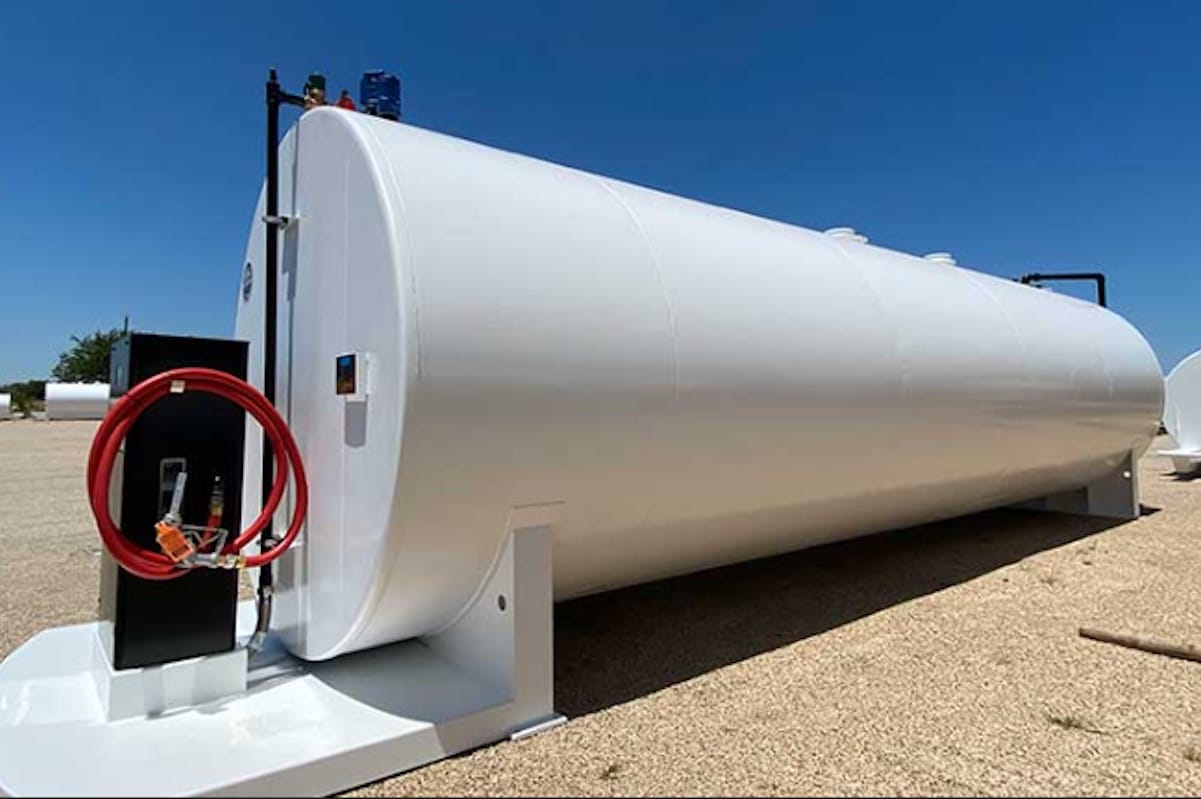
LBRCA’s Regional Fuel Storage Scheme (RFSS) proposal is seeking a dedicated regional component within the AFSR. Image: LBRCA
The Livestock, Bulk and Rural Carriers Association (LBRCA) is proposing a five-year target of 250 million litres of additional, verified diesel storage capacity in the regions.
This comes in response to the Australian Government’s proposed Australian Fuel Security Reserve (AFSR), which LBRCA says will need to deliver diesel where it’s needed: in regional, rural and remote Australia.
LBRCA’s Regional Fuel Storage Scheme (RFSS) proposal is seeking a dedicated regional component within the AFSR.
LBRCA President, Wade Lewis, said LBRCA was taking a pragmatic approach in its response to the government’s consultation.
“Fuel security, particularly for diesel, cannot be measured only by how many litres Australia holds nationally, because distribution of that diesel is key,” Lewis said.
He says the real test for the success of the AFSR will be whether diesel storage in the regions increases, and in the event of disruption, it is available to the people in critical industries such as road transport and agriculture.
“Our proposal does not seek to be reactive to the crisis in the Middle East. We are focused on building resilience for regional communities and rural supply chains that can be isolated by floods, bushfires, road closures, damaged bridges, power outages or disruption to terminal and distribution networks,” Lewis explained.
“Fuel sitting at a major coastal terminal is of limited value if it cannot reach a livestock carrier, farmer, processor or one of the many other key industries relying on diesel.”
LBRCA says national and centralised reserves remain important, but they do not solve the final distribution problem. Distributed regional storage would place fuel closer to essential users and reduce reliance on emergency resupply during major disruptions.
The LBRCA has proposed that regional carriers, agricultural businesses, fuel distributors, processors, councils, cooperatives and shared depots be able to participate in the scheme, with funding targeted toward areas with high diesel use, limited alternative supply routes and vulnerability to natural disasters.
“Australia does not have genuine diesel fuel security unless it is available in the regions and on the key freight networks when it is needed,” continued Lewis.
“There is an opportunity through this consultation to get the settings right, build storage in strategic locations and facilitate the involvement of small, medium and large organisations.
“We are making a very simple and clear ask of government, investing a quarter of the strategic reserve in the regions and you are investing in economic resilience, food security and national preparedness.”