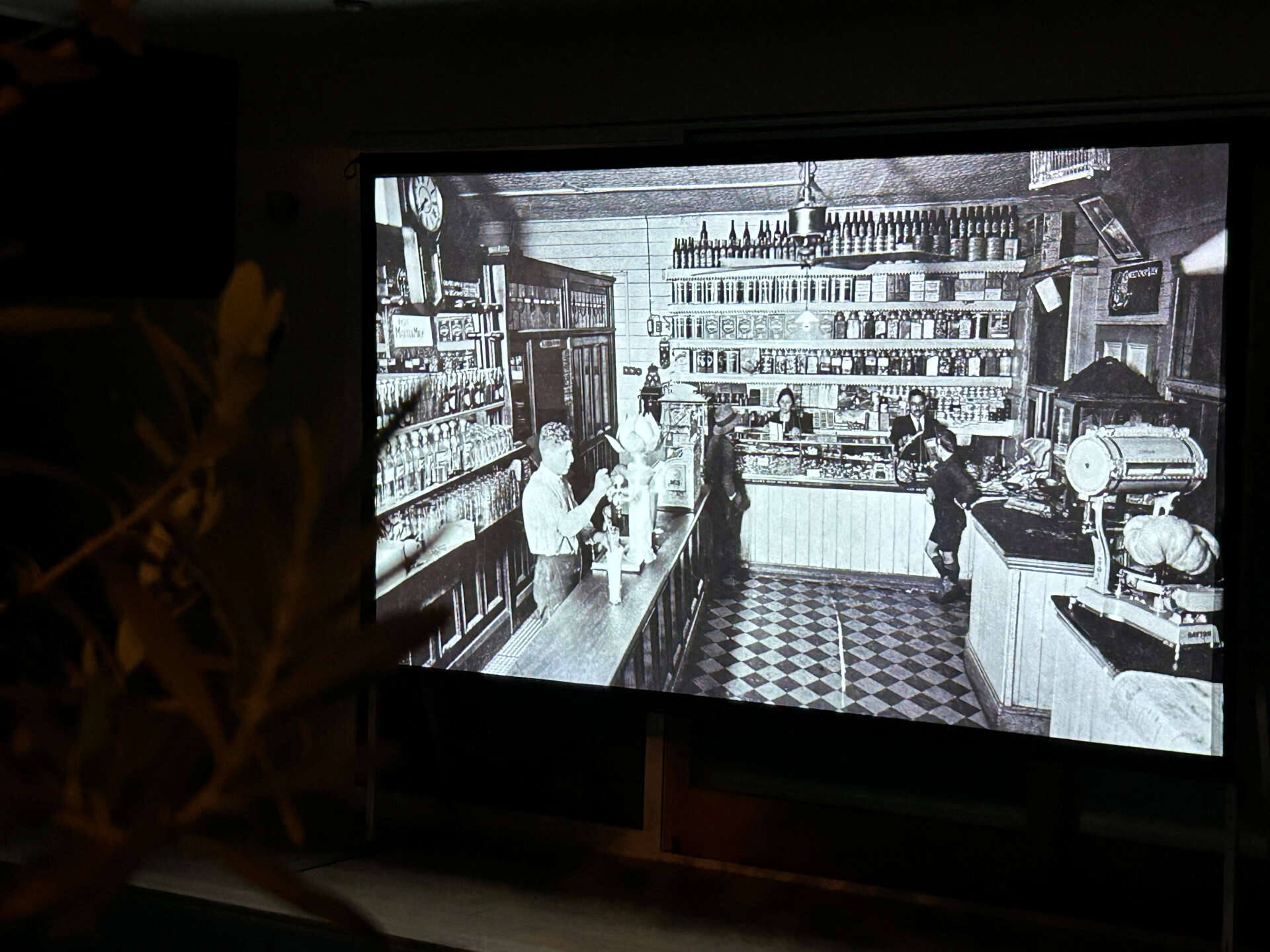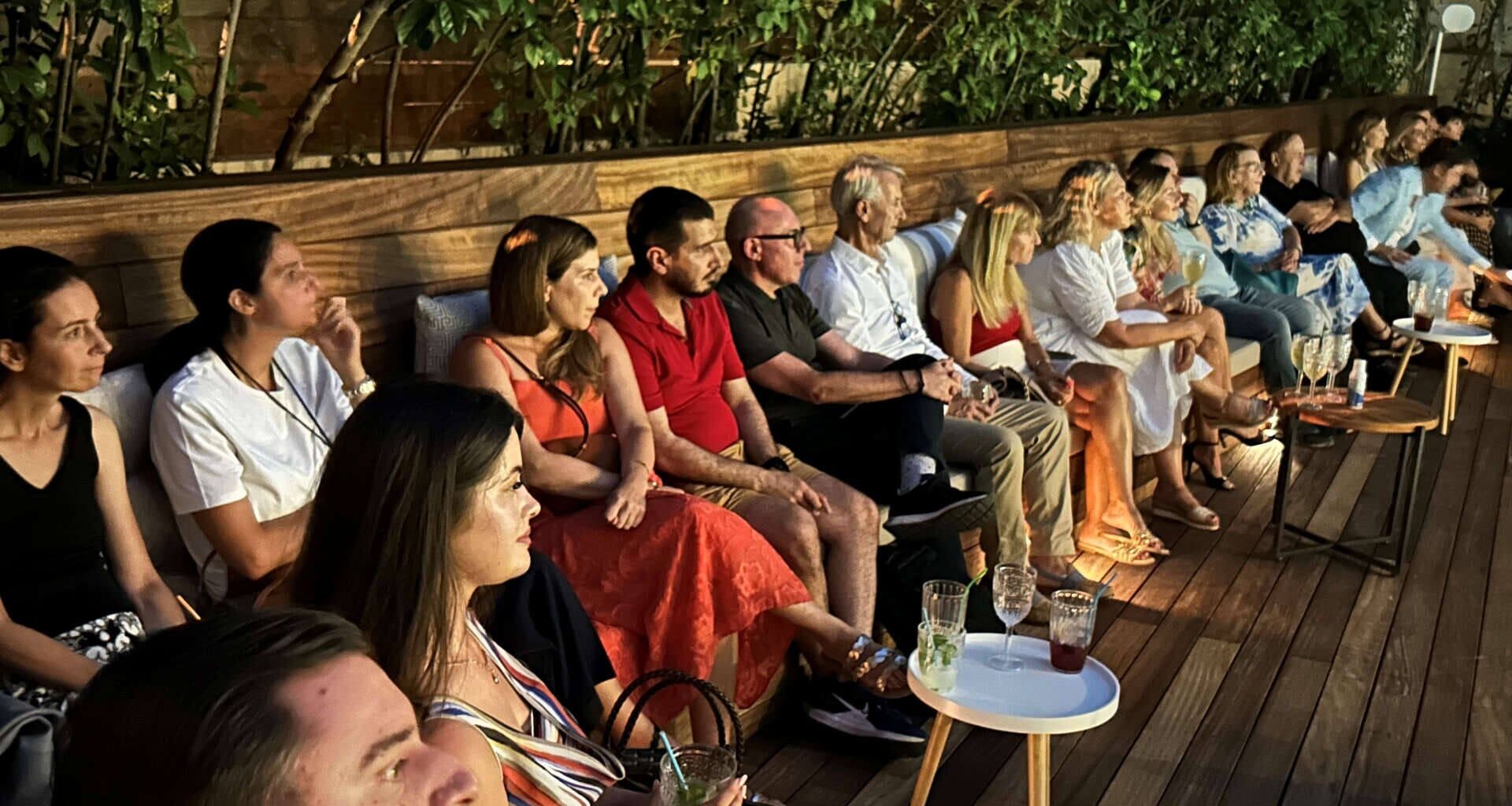
On a warm evening in Athens, the welcoming residence of Australia’s Ambassador to Greece, Alison Duncan, became an open-air cinema for the first Athens screening of the acclaimed diaspora documentary Australia’s Greek Cafés & Milk Bars, directed by Pria Viswalingam.
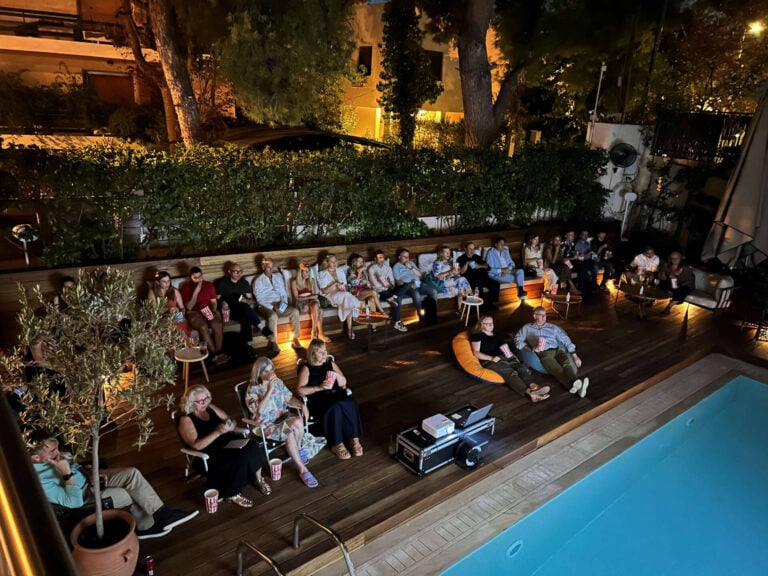
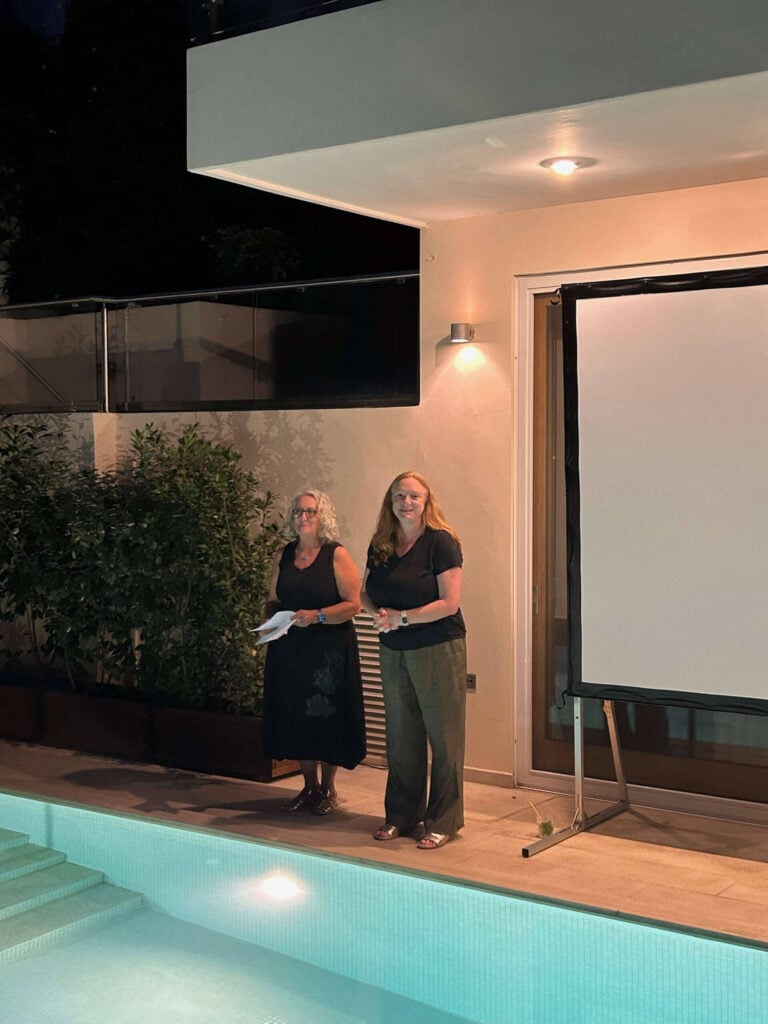
At the residence in Paleo Psychiko, a large portable screen had been set up beside the swimming pool, transforming the outdoor space into an improvised summer cinema. Popcorn and virgin mojitos completed the atmosphere, while Ambassador Duncan herself welcomed guests alongside embassy staff.
Before the screening began, guests mingled and shared stories – many of them reflecting, in their own way, the ties between Australia and Greece.
Among those I met was a Greek Australian who had left Sydney three years earlier to settle permanently in Greece following the death of his father. It was one of those life events that forces us to reconsider where we are and, sometimes, choose an entirely different path.
I also met a recently arrived diplomat from Canberra preparing for the 42-kilometre Athens Marathon on 8 November.
“Are you a runner?” I asked her.
“No, it’s my first time,” she replied. “One day, I suddenly decided to do it and started training.”
She added with humour that her knees and feet had already begun protesting against the training.
A story born inside the Greek milk bar
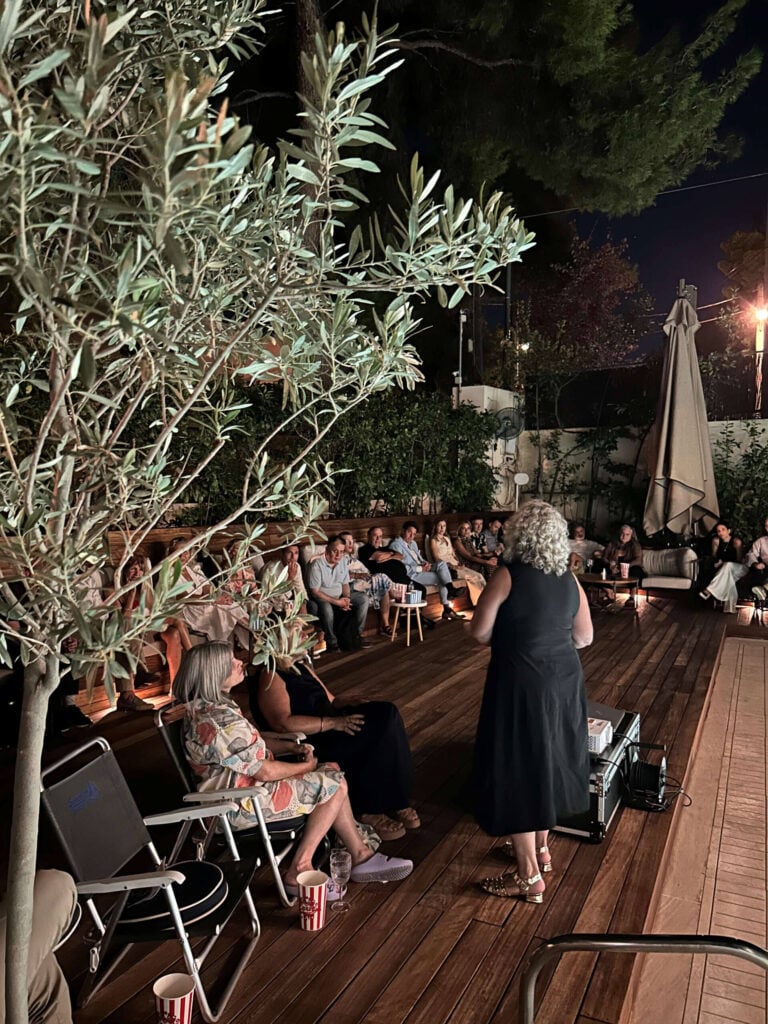
In front of the pool stood the large screen. Guests settled onto built-in outdoor lounges, small blue deckchairs and two enormous bean bags.
Ambassador Duncan introduced the film before handing over to its producer, Elizabeth Kaydos, who is currently in Greece.
For Kaydos, the history explored in the documentary is deeply personal.
Her family ran a milk café, and she grew up in a space that was simultaneously a family business, a meeting place and part of the rhythm of everyday Australian life.
Australia’s Greek Cafés & Milk Bars draws on the books and decades-long research of Greek Australian photographer Effy Alexakis and her husband, historian Leonard Janiszewski.
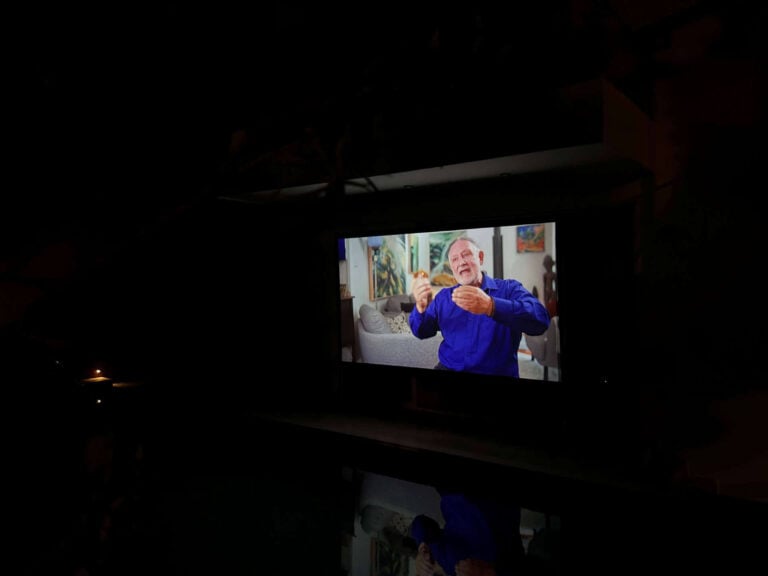
The pair travelled extensively throughout Australia tracking down members of the Greek diaspora who had established and operated the country’s famous milk bars. They photographed the businesses, documented their stories and interviewed owners and their descendants.
“At first, I hesitated to take on producing the documentary because there was an enormous amount of material from the interviews and I found it difficult to decide who would appear in the film,” Kaydos told us.
Eventually, however, she knew the story needed to be told.
“This film had to be made,” she said, reflecting on the place milk bars occupy in Australia’s modern history.
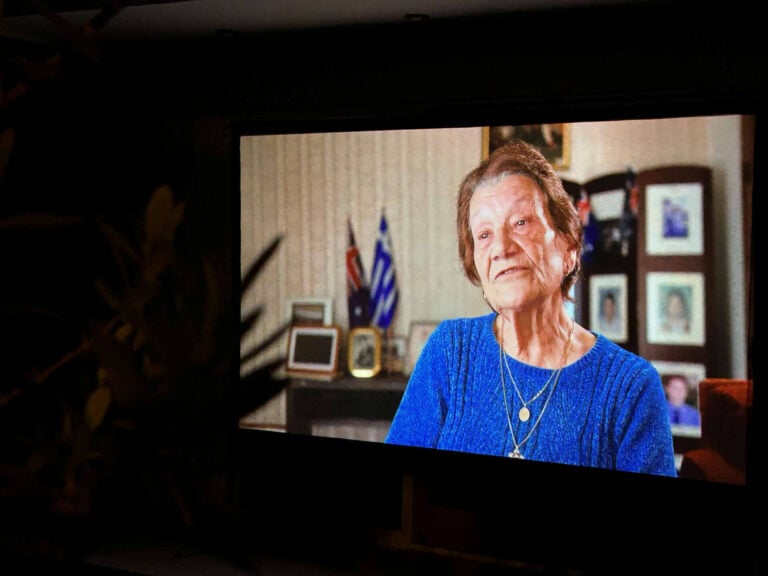
One of the most valuable legacies of the research is almost 200 hours of Greek Australian oral histories, now held by the State Library of NSW and available to researchers and others interested in exploring them.
It is an extraordinary archive – but one which, Kaydos explained, still requires systematic digitisation and cataloguing to ensure it survives for future generations.
When the lights went down
And then the film began. We settled into our seats. Ambassador Duncan stretched out on one of the large bean bags, while Kaydos sat beside me on a deckchair.
I couldn’t resist asking her a question during the screening. Hopefully, I wasn’t too annoying.
A little later, embassy staff moved between the guests handing out popcorn in round paper tubs, just like at the cinema.
The lights dimmed and the story began to unfold.
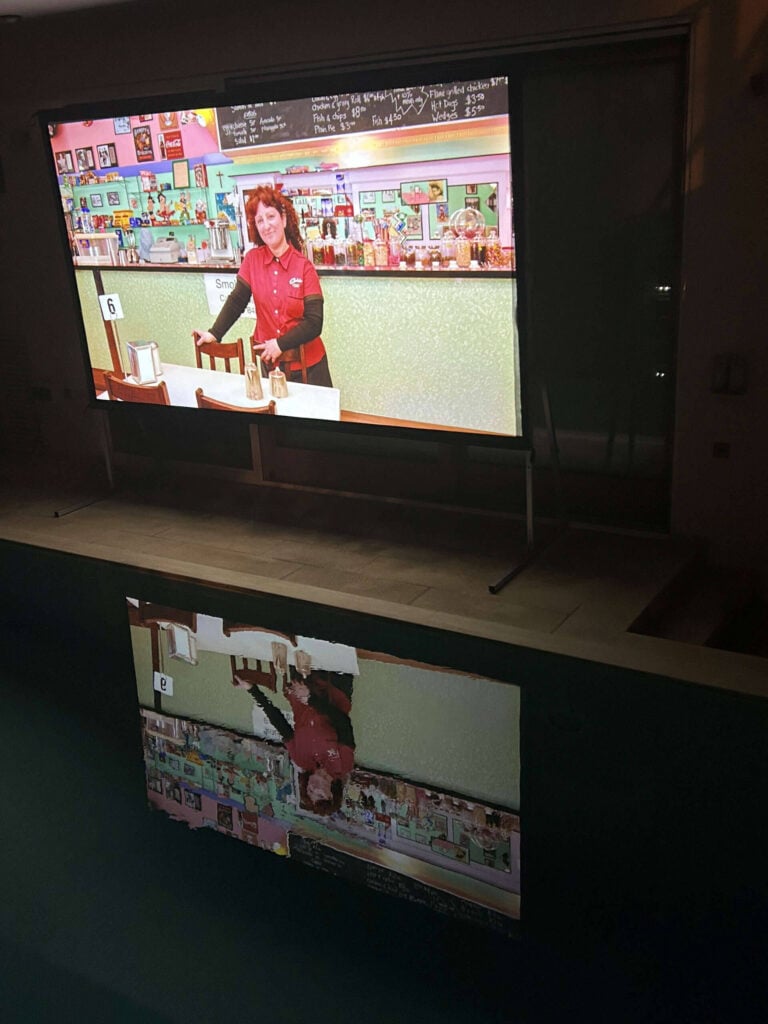
Images from the documentary reflected across the surface of the swimming pool, adding something almost magical to the evening.
What struck me most was that the filmmakers did not simply tell the story of milk bars. Instead, they placed them within the broader history of Australia.
How did those first Greek migrants arrive? Where did they find work? What were they thinking? How did ideas such as the milk bar emerge from the everyday struggle to survive in a new country?
And, of course, what was the secret behind the famous Greek milkshake?
Then there was the aesthetic.
The beautiful Art Deco architecture, distinctive signs, cups, plates and branded linen. Small details that have become fragments of an era which has, sadly, almost disappeared.
More than somewhere to buy a milkshake
The milk bars were generally small or medium-sized family businesses.
Fathers, mothers and children worked alongside one another. They were workplaces, but they were also social spaces where communities gathered.
Unlike pubs, which were traditionally gathering places for working people after their shifts, milk bars served food.
But it wasn’t Greek food. Their menus featured the American-style dishes associated with diners: steak and chips, sausages, eggs, hamburgers and, naturally, milkshakes.
At the time, serving Greek cuisine in such a business was almost unthinkable. Gemista and other Greek dishes belonged at the family table, not on the milk bar menu.
Watching the film, it becomes clear that an entire culture existed behind these businesses.
Their history was even intertwined with Australia’s early cinemas, a number of which were Greek-owned.
But the story also has darker chapters. The documentary recalls periods of racist violence faced by Greek migrants, showing smashed shopfronts and milk cafés that had been set alight.
One Greek owner found his own way of responding. He placed a sign in his window declaring: “We are Naturalized Australians.”
The attacks then stopped.
The disappearance of an Australian institution
Equally moving was the story of the milk bars’ decline. The development of major highways, the spread of department stores and, later, the dominance of fast-food chains transformed the Australian commercial landscape.
But another change was taking place inside Greek Australian families themselves.
The next generation did not necessarily want to follow their parents and grandparents behind the counter.
And often their parents did not want them to.
They wanted their children to study, attend university and become doctors, lawyers and professionals. Gradually, the family tradition of the Greek milk bar began to disappear.
After the screening, Kaydos told me that only a small number of milk bars remain in Melbourne.
It made me wonder why more of these businesses had not been protected as monuments to Australia’s social and migration history.
Why weren’t more of these spaces – places that had served as landmarks for entire communities for decades – preserved?
Then a man dressed in black stood and shared his own memories of working in a milk bar. It was another personal story, bringing a human dimension to the history we had just watched.
A little closer to a shared history
In the end, it was a beautiful evening of cinema, but it felt like much more than a film screening.
For me, it was an opportunity to discover a part of Greek Australian history I had not known before.
And, in a strange way, to understand a little more about a part of myself.
Ambassador Duncan ended the evening with a smile.
“I’ll see you at the next event – although we don’t yet know what it will be or where it will take place.”
Her posting in Greece is due to conclude in around a year. Among the many things she has achieved during her time in the country are the cultural evenings she hosts, opening the doors of the embassy and her residence to people interested in learning more about Australia, its culture and the Australian community living in Athens.
They offer more than culture and entertainment.
They provide something equally important: a chance to meet people, exchange stories and form new connections.