
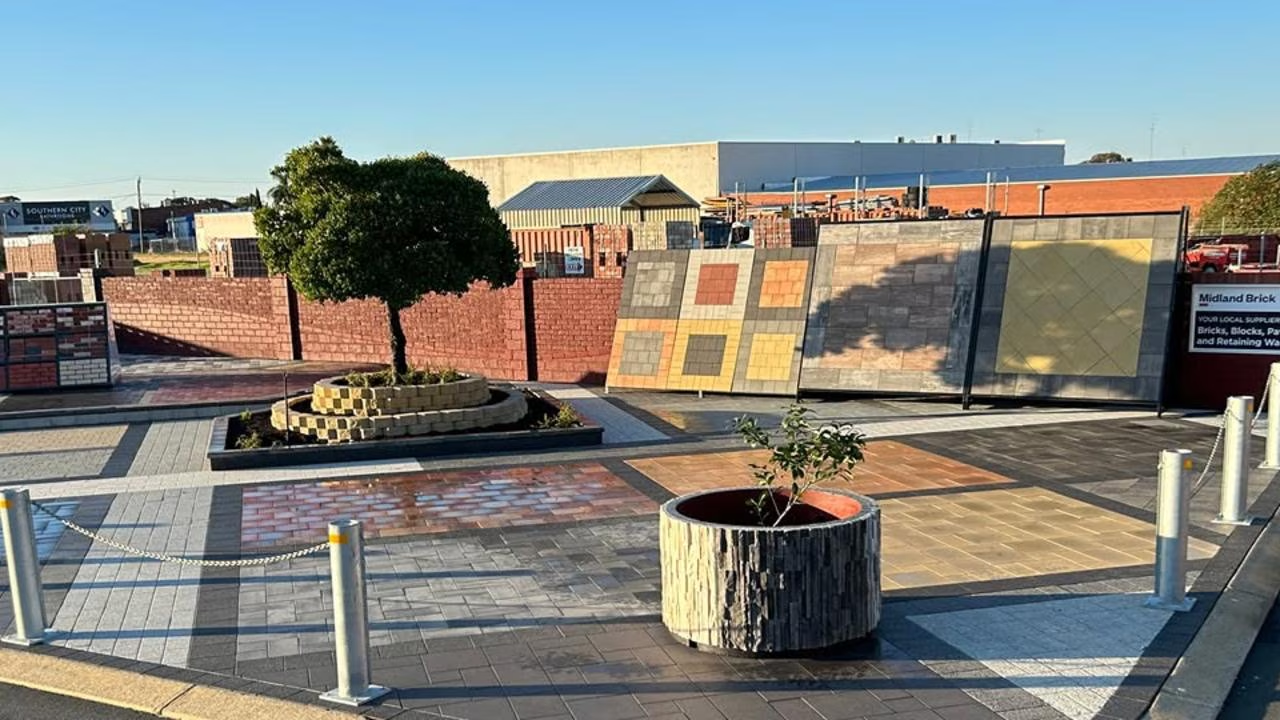
Western Australian builders say uncertainty is piling up as the state’s only brick manufacturer warns of a looming shortage that will force them to ration supplies.
Midland Brick notified builders across the state they will be allocated an annual amount of bricks they can draw from throughout the year as they struggle to keep up with demand.
Home Builders Action Group chairman Jason Janssen said the uncertainty had builders feeling depressed and unsure if they could commit to building clients’ houses.
“We now have a massive issue where the industry is probably going to be forced to change somewhat,” he said.
“If one of my suppliers can’t supply, and the problem is, it’s a critical supplier, then you can’t move beyond that stage.
“You know a house without walls.
“This is going to impact the small building industry. It actually feels like the small builders are being almost pushed out by regulation, government, and industry.
“It’s frustrating and it’s sad. We’ve lost enough builders through the Covid period because of fixed price contracts. Now this is a this is another curve ball that’s come unexpectedly.”
Mr Janssen said the situation also put builders at legal risk due to their inability to produce the house according to their contract.
“Then there’s a cash flow issue, a builder’s life blood is cash flow, if you’re not getting cash flow you will die very quickly.
“Some builders are saying, ‘I’ve got one house allocation per month, but if I don’t use it, I lose it, but I start four units this month, and then I’ve got nothing and in three or four months’ time, I start another four units.
“There’s also other builders have been cut by 70 per cent and have 30 per cent of their supply needs.”
BGC, which has operated Midland Brick since 2021, said capacity in Western Australia had dropped from 11 to five kilns statewide over the past decade.
BGC chief executive officer Michael Allen said demand for its clay products remained above their production capacity, that was being driven by WA’s ongoing growth.
“We have advised (customers) that from October 1 we are phasing in a process where clay product delivery time frames and volumes will be defined for each current Midland Brick account which is aligned to our production capacity so that all customers can plan more accurately and efficiently,” Mr Allen said.
“These changes will apply to all Midland Brick clay sales to seek to ensure fair and proportional product distribution while local demand levels remain elevated.”
Treasurer Rita Saffioti said the government had been approached by builders and were engaging with industry bodies to find a solution.
“The builders are actually very shocked,” she said.
The treasurer said they were looking at ways to support more bricks being produced and alternative methods that supported houses with limited or no bricks as part of their construction.
“But bricks continue to be a key part of construction in WA, we need to make sure we’re producing enough bricks to support the market, and in particular, we don’t want to see any further price increases that then impact the construction price,” she said.
“We need to make sure we can do whatever we can in our powers to support more brick manufacturing on housing.”
Master Builders Association Western Australia chief executive officer Matt Moran said they recently met with Midland Brick and the state government to discuss concerns raised by their members about the proposed allocation arrangement.
“We understand the allocations are intended to be a measured response to current high demand and production constraints,” Mr Moran said.
“The figures provided are indicative planning estimates, with actual orders subject to available production and potential changes to production schedules.”
Mr Moran said the industry had continued to manage a range of supply and capacity pressures, including the availability of brick products.
“It is important to recognise that the building and construction industry in Western Australia and across the country has faced significant challenges since the Covid-19 pandemic,” he said.
“Disruptions to the supply of building materials and products, combined with severe labour shortages and a rapid increase in demand, placed considerable pressure on builders, projects and construction time frames.
“These pressures followed a period of relatively low industry activity before the pandemic and were compounded by government stimulus measures that significantly increased demand for new housing.”