
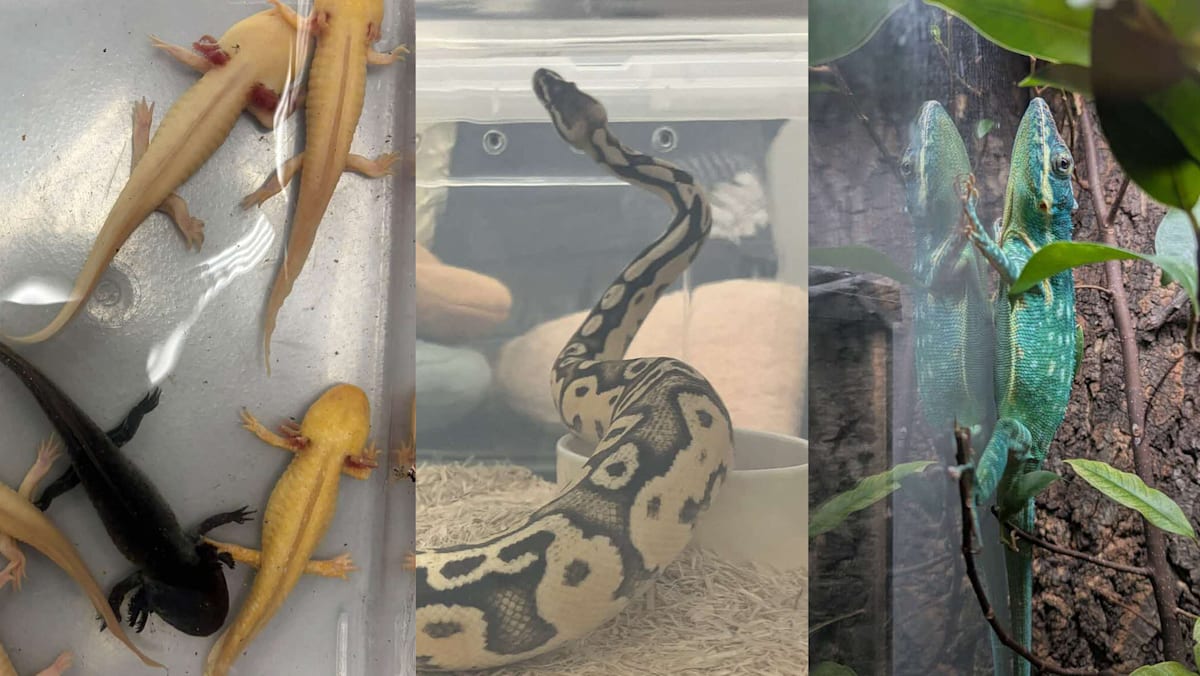
QUARANTINE AND CARE
The animals will undergo mandatory quarantine of up to six months because their origins are unknown and they may carry diseases transmissible to other animals or humans. They will then be assessed for possible repatriation to their native countries.
NParks’ veterinarian at the Centre for Wildlife Rehabilitation Erin Tan said it took about a day to process all the animals from the operation, with each examination taking about five to 15 minutes.
During each examination, the veterinarian would first check each animal for signs of injury and assess its demeanour, including whether it appears lethargic or weak. Its overall body condition, including its weight, would also be assessed.
After the initial examination, each animal undergoes an X-ray to check for other problems such as fractures or internal bleeding.
Apart from the gecko that was euthanised, some of the animals had mild metabolic bone disease, where their bones are weaker due to nutritional deficiency.
Some of the seized animals may be donated to animal establishments, such as zoos. As a last resort, the animals may also be euthanised, said NParks.
“Smuggled animals are also often kept and transported in cramped, poorly ventilated conditions. In some cases, they are heavily sedated to minimise noise and movement to avoid detection by the authorities, and such conditions may cause death,” said NParks.
“Even if the animals survive, they may have to be euthanised on welfare grounds, due to poor health or injury.”
NParks seized 16 wildlife specimens from six premises across Singapore in a similar operation in 2025. In 2022, the agency seized around 60 wildlife specimens.