
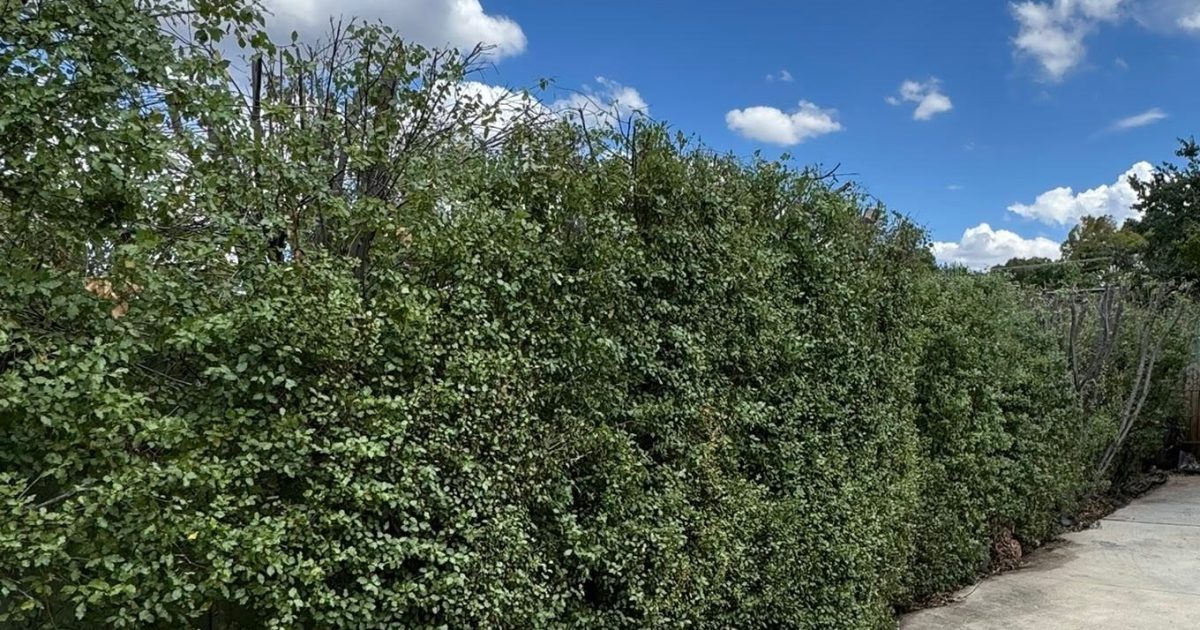
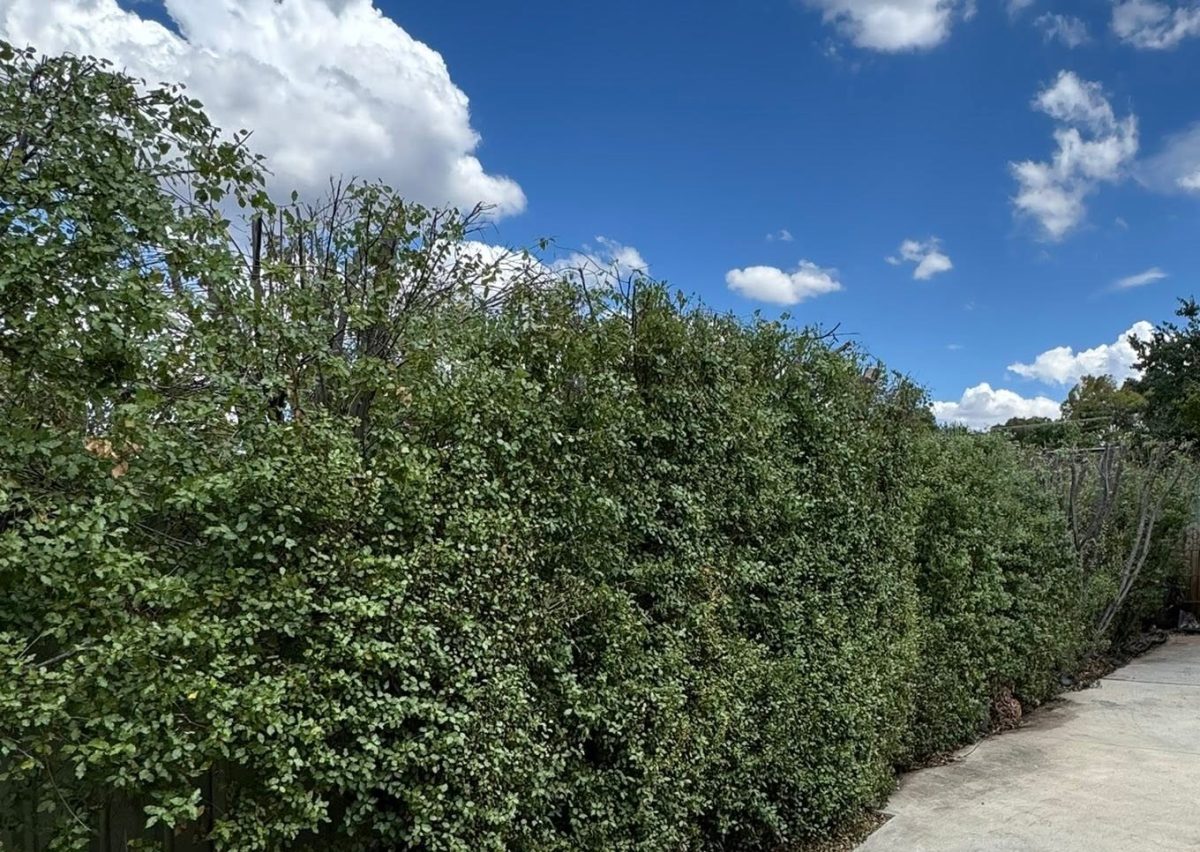
Pittosporum plants are a popular choice in Canberra for a hedge. Photo: Facebook.
Fences make good neighbours but hedges, it appears, can stretch the relationship to breaking point, as a recent ACT Civil and Administrative Tribunal case shows.
An unasked-for and overzealous chainsaw trim made such a mess of a large pittosporum hedge that a townhouse complex owners corporation, represented by owner Joseph Colbert, went to ACAT claiming trespass, negligence and private nuisance, and seeking $1750 – the cost of replacing the plants believed to be damaged beyond repair.
The neighbour, Denys Adams, disputed that he had gone too far and raised the ante, counterclaiming for $12,250 for time and labour, horticultural fees, preparing documents, obstruction and interference with access, and loss of amenity and quiet enjoyment of his backyard.
The setting for this boundary war was the back fence of the townhouse complex along which were 19 well-advanced pittosporum plants, a fast-growing species popular in Canberra for creating hedges.
Mr Colbert’s townhouse is adjacent to the boundary fence, part of the complex’s common property. Mr Adam’s backyard and vegetable garden are on the other side of the fence.
This was round two of the hedge war.
Senior Member Emma Morrison adjudicated on round one last year, which involved the hedge in Mr Colbert’s backyard, and last week finished with the ruling on the owners corporation claim.
This particular battle was fought over five plants, about a quarter of the hedge, at the end of the driveway in the complex’s common garden.
It all started on 20 November 2024 with a simple request to Mr Colbert from the agent managing the property Mr Adams rented for the overhanging plants to be cut back, in response to complaints.
Mr Adams could not do the job because of his age.
Mr Colbert trimmed his side of the hedge to the fence line on 1 December but could not complete the task on the other side of the fence because bird netting needed to be removed.
It was agreed Mr Colbert would do the rest when he returned from a week away.
But on his return, he saw that the plants had been hacked way below the fence line.
Mr Adams admitted that he had stood on a box with a chainsaw and lost control of it, attacking the hedge.
But he denied that the plants had been damaged beyond repair, telling the ACT hearing that they bounced back, describing this as “simple physics”.
Photos showed thick stems cut to about 35 cm behind the fence and 30 cm below the top of the fence.
Mr Colbert supplied a landscaper’s opinion that the plants had been damaged beyond repair, but Ms Morrison preferred the evidence of an arborist and horticulturalist given on Mr Adams’ behalf, who said the plants could handle a “savage pruning”.
They also had health issues that complicated their state, but regrowth could take 12 to 18 months.
Mr Colbert said the hedge was now more sparse and less attractive, causing a loss of privacy, noise protection and visual amenity.
Ms Morrison agreed, also finding that trespass and negligence had been proven. He found that Mr Adams should not have tried to trim the hedge himself.
“A reasonable person in Mr Adams’ position would have foreseen the risk that trimming the hedge with a heavy chainsaw was likely to cause harm, either to himself or the applicant’s property,” he said.

Worried your ads are hitting the wrong crowd? Let’s fix that
Ms Morrison found Mr Adams had no permission to lean over the fence and that the location of the cut stems suggests it would have taken considerable effort to chop them off.
“I do not accept Mr Adams’ argument that the plants ‘bounced back’ after he had trimmed them,” she said.
“Mr Adams’ conduct constituted a direct interference without legal authority, justification or excuse.”
But Ms Morrison limited the owners corporation’s claim to $875 in damages, discounting the fact that four of the plants were not damaged beyond repair and that the fifth appears to be dying, but not solely due to the pruning.
She dismissed Mr Adams’s counterclaim and declined to make an order requiring the applicant to prevent future encroachment.
“If Mr Adams has a concern with his neighbour, this should be raised with his property manager and the lessor at first instance,” she said.
It was a similar ending to round one and a costly exercise for Mr Adams, who was ordered last year to pay $3500 in damages to Mr Colbert.