
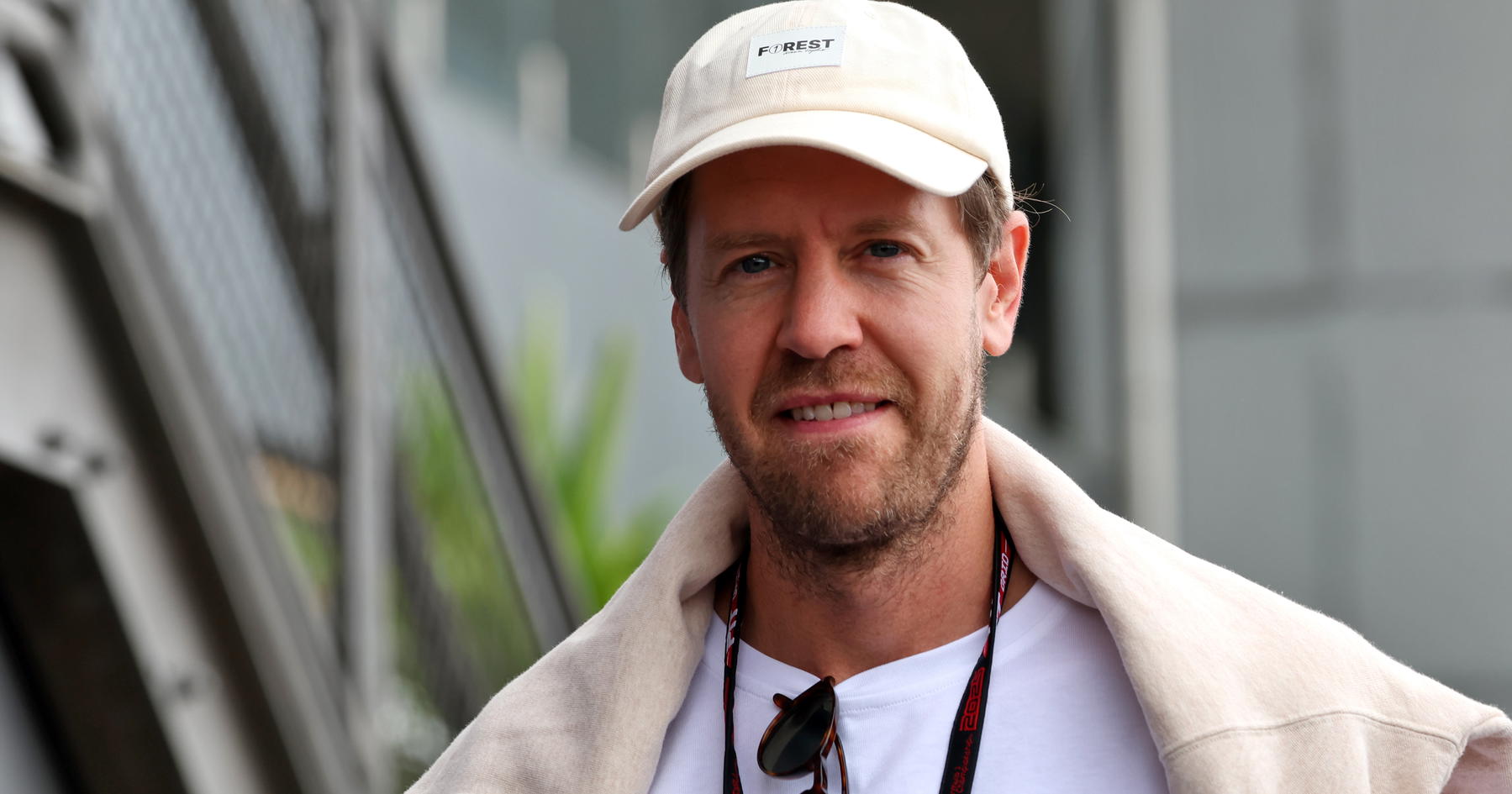
Sebastian Vettel has responded to the criticism that has been directed towards the new cars introduced this year.
F1 underwent a major regulations change for the 2026 campaign, with brand-new aerodynamic and power unit rules coming into play.
The latter element has drawn disapproval from several of the current drivers, who feel that overtaking relies more on the push of a button rather than utilising their skills.
Vettel was speaking in Monza earlier this month after jumping out from behind the wheel of Michael Schumacher’s 2002 Ferrari, and insisted there is still plenty to get excited about in F1 today.
“It is exciting, racing is exciting,” Vettel told media including RacingNews365.
“I know what you mean and I know what the question is, and I think that’s why it’s so exciting, – there’s so much more to unpack when you look at Formula 1.
“Of course, from a driver’s point of view, ‘I want to drive the best car and I want to win races.’
“But then, what is the best car? The car of 2002 has been a state-of-the-art car at that time and a pioneer, and represents so much for what Formula 1 stands for.
“The cars today do the same, and I think it’s about performance, precision, discipline, hard work – but also responsibility and taking that forward. So also caring about the future, which these cars are trying to do.”
[Article continues below]
Vettel admits he ‘doesn’t agree’ with all elements of current rules
The FIA has already confirmed that modifications will be made to the power units over the next couple of years in a bid to improve the experience for the driver.
While Vettel admitted he is also not fond of the engines, he insisted the sport remains in a healthy position.
“I’m probably not agreeing on everything that we currently have in the regulations, from a driving point of view,” he said.
“But looking forward, that’s where there’s a huge chance to take people on board, and maybe also through a moment like today, remind them what the sport was, what the sport is, and what the sport should be and can be in the future, and to do it responsibly.
“One doesn’t have to exclude the other. We need to find practices with everything that we are able to combine things that we love.”