
Looking for what to see in the sky this week? This guide highlights the upcoming astronomical events. Scroll down for sky maps and viewing tips, and use the Sky Tonight app to check when and where each object will appear in your sky.
Contents
Sky Events Tonight: September 19
Upcoming Astronomical Events: September 19-25, 2026
September 20–21: Saturn, Neptune, and Algenib form a triangle
September 21: Comet 169P/NEAT at perihelion
September 22: Venus at its brightest in the evening sky
September 23: Mars, the Beehive Cluster, Jupiter, and Regulus form a line; Mercury, Spica, and Venus form a line
September 24: Pleiades, Uranus, and Aldebaran form a line
September 25: Mars, Pollux, and Castor form a line
September 25–26: Nearly full Moon, Saturn, Markab, and Algenib form a diamond-like pattern; Neptune at opposition; Mercury near Spica
Night Sky Tonight: Bottom Line
Sky Events Tonight: September 19
Moon tonight: Waxing gibbous Moon.
Planets visible tonight: Evening — Venus. Late evening to dawn — Saturn and Neptune. Late night to dawn — Uranus. Before dawn — Jupiter and Mars. Details: Planets Visible Tonight
Constellations visible tonight: Northern Hemisphere — Aquila, Cygnus, Capricornus, Delphinus, Sagitta, Equuleus, Vulpecula. Southern Hemisphere — Aquila, Capricornus, Pavo, Indus, Delphinus, Sagitta, Equuleus, Vulpecula, Microscopium. Details: Constellations in September 2026
Upcoming Astronomical Events: September 19-25, 2026
DateEventBest timeEquipmentSeptember 20–21Saturn, Neptune, and Algenib form an isosceles triangleNightBinoculars/telescopeSeptember 21Comet 169P/NEAT at perihelionMorningLarge telescope/imagingSeptember 22Venus at peak brightnessEveningNaked eyeSeptember 23Mars, the Beehive, Jupiter, and Regulus form a lineMorningNaked eye/binocularsSeptember 23Mercury, Spica, and Venus form a lineEveningNaked eye/binocularsSeptember 24Pleiades, Uranus, and Aldebaran form a lineMorningBinocularsSeptember 25Mars, Pollux, and Castor form a lineMorningNaked eyeSeptember 25–26Nearly full Moon, Saturn, Markab, and Algenib form a diamond-like patternNightNaked eyeSeptember 26Neptune at oppositionNightTelescopeSeptember 26Mercury near SpicaEveningNaked eye/binoculars
Below, you’ll find sky events arranged by date, with quick viewing tips to help you choose the best nights for stargazing. All dates are listed in GMT, so the exact calendar date may differ in your local time zone; however, the times shown on the sky maps are given in local time.
September 20–21: Saturn, Neptune, and Algenib form a triangle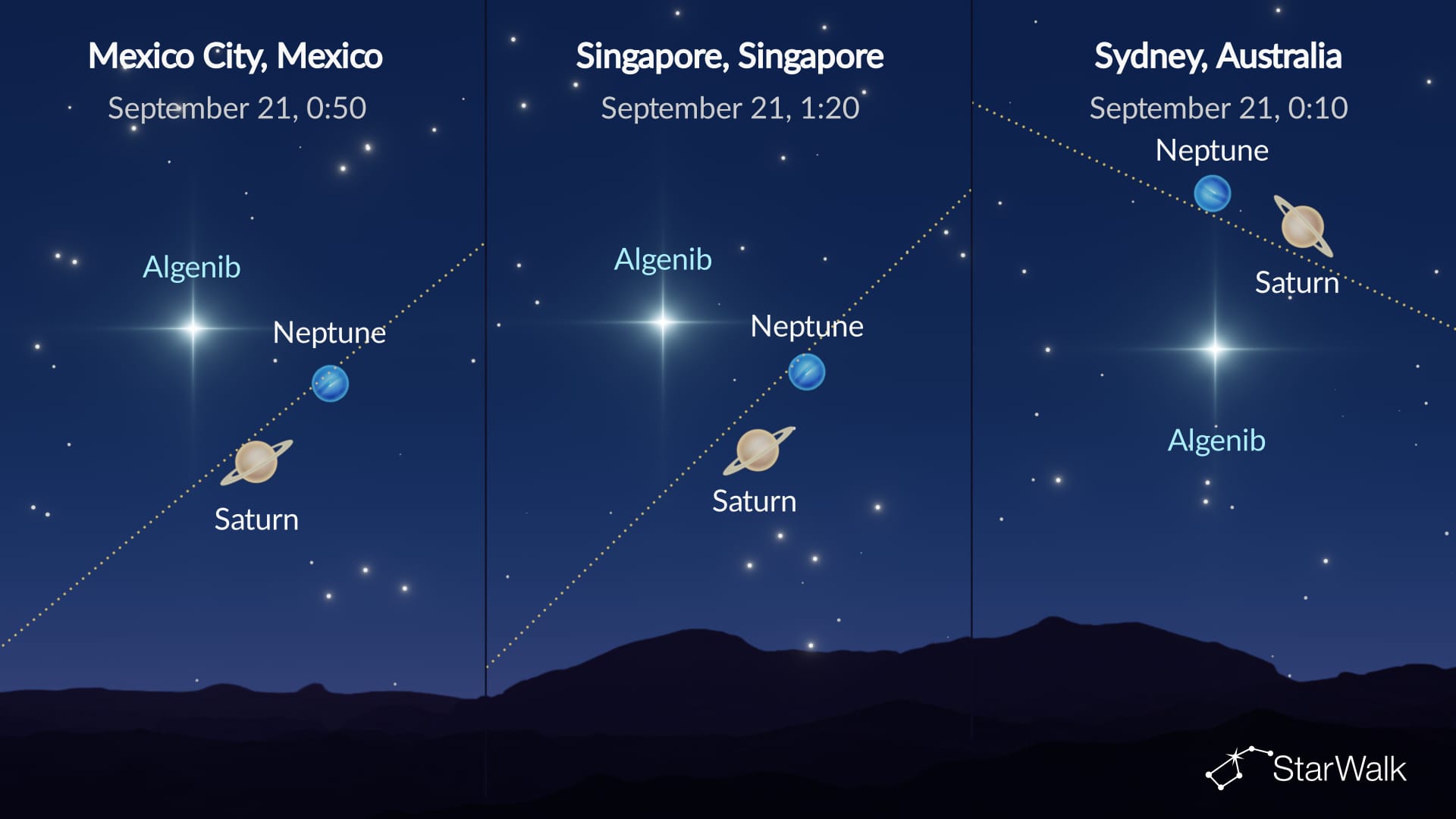 Faint Neptune will join Saturn and Algenib — one of the stars of the Great Square of Pegasus — turning the group into a neat isosceles triangle. Look around midnight, when the objects are near their highest points in the sky. Saturn and Algenib can be seen with the naked eye. To pick out Neptune, you’ll need binoculars or a telescope.September 21: Comet 169P/NEAT at perihelion
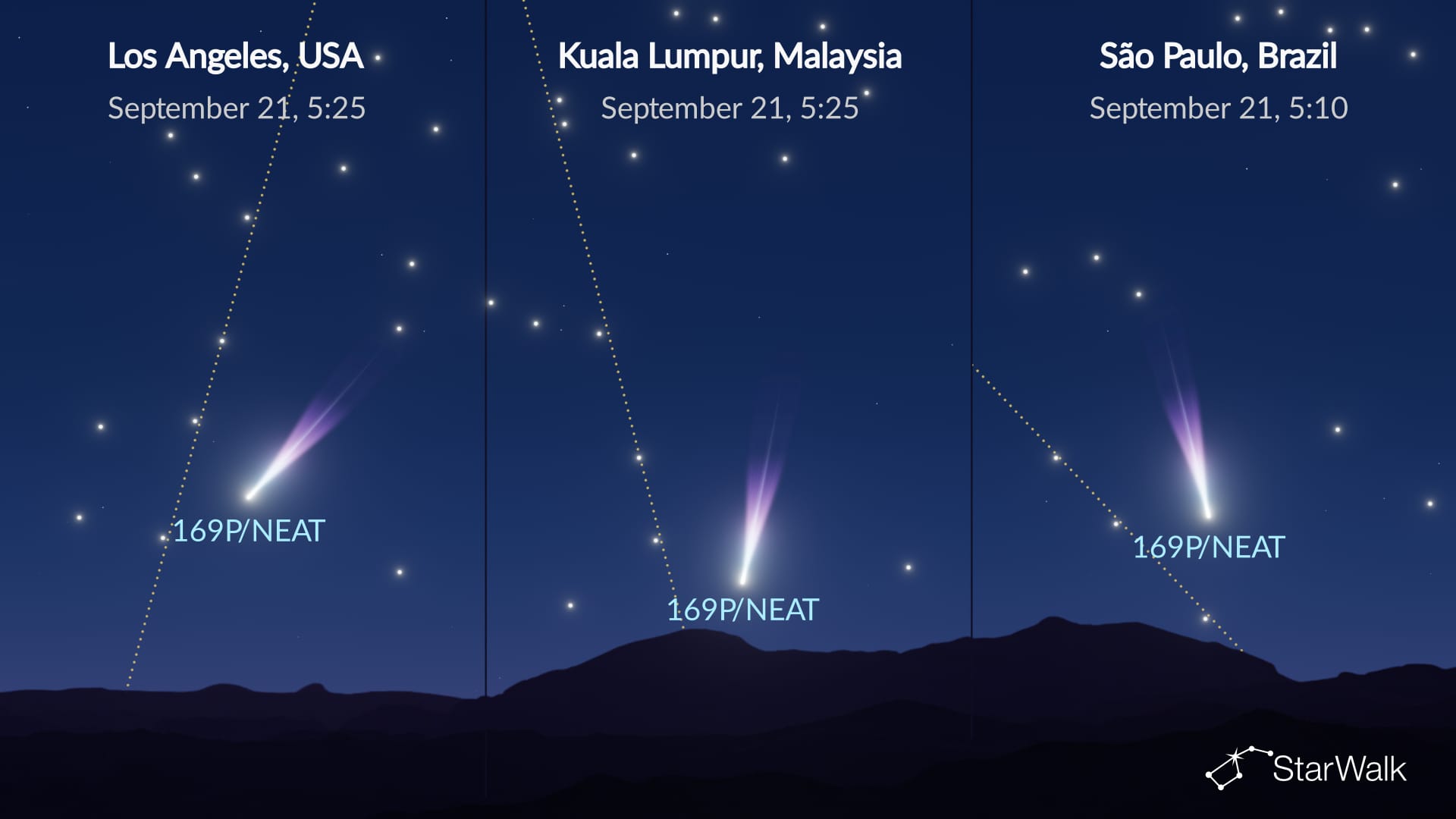 Comet 169P/NEAT reaches perihelion, its closest point to the Sun, on September 21. It is predicted to be around magnitude 14 at perihelion, making it a challenging target for a large telescope or astrophotography. Look for it in the morning sky.September 22: Venus at its brightest in the evening sky
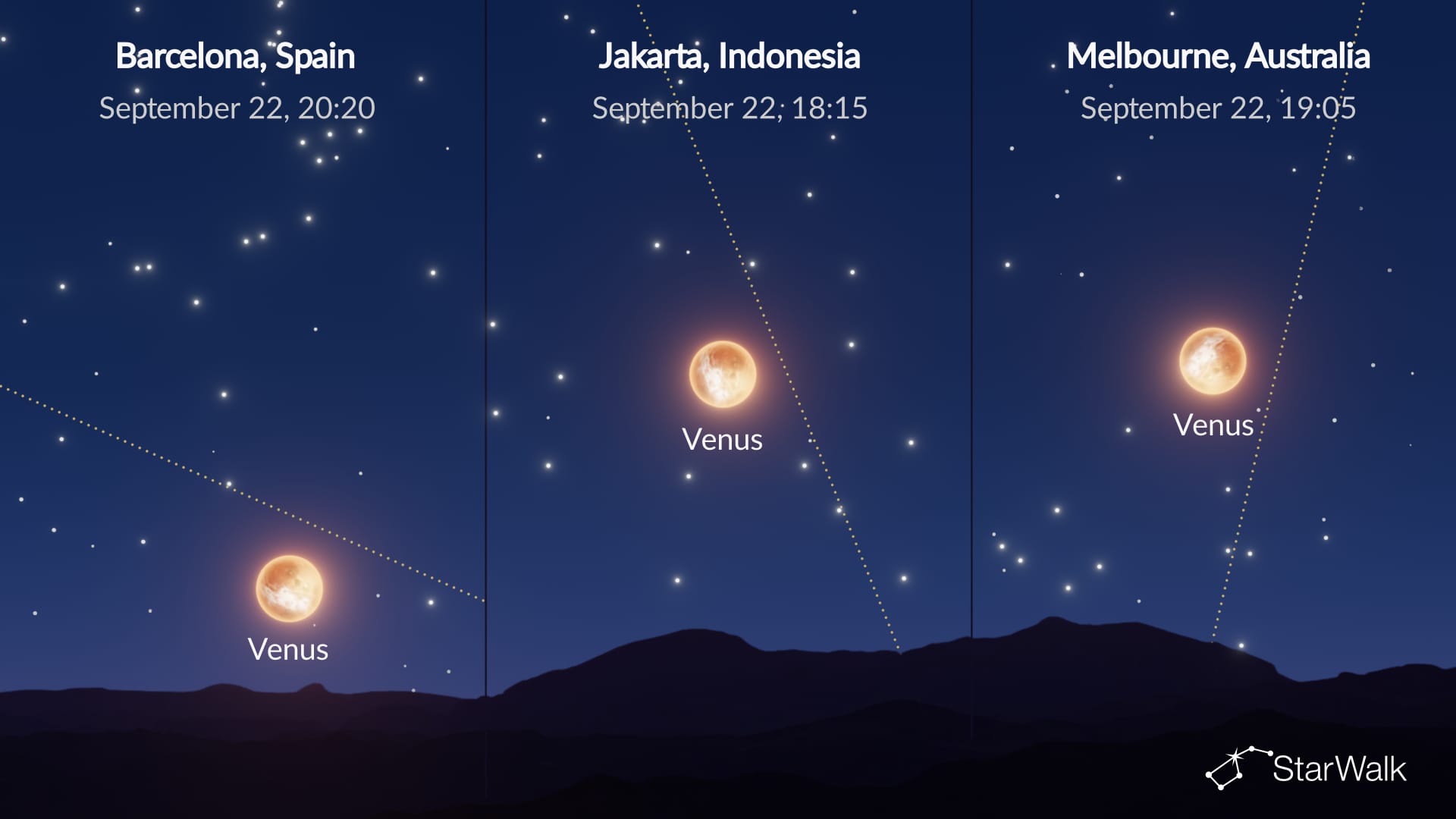 Look west after sunset for Venus blazing in the evening sky. Around this time, the planet reaches peak brightness during its current evening appearance. The view is especially good from the Southern Hemisphere; farther north, Venus stays much lower above the horizon. Through a telescope, there’s a surprise: despite being so bright, Venus will look like a thin crescent rather than a fully illuminated disk.September 23: Mars, the Beehive Cluster, Jupiter, and Regulus form a line; Mercury, Spica, and Venus form a line
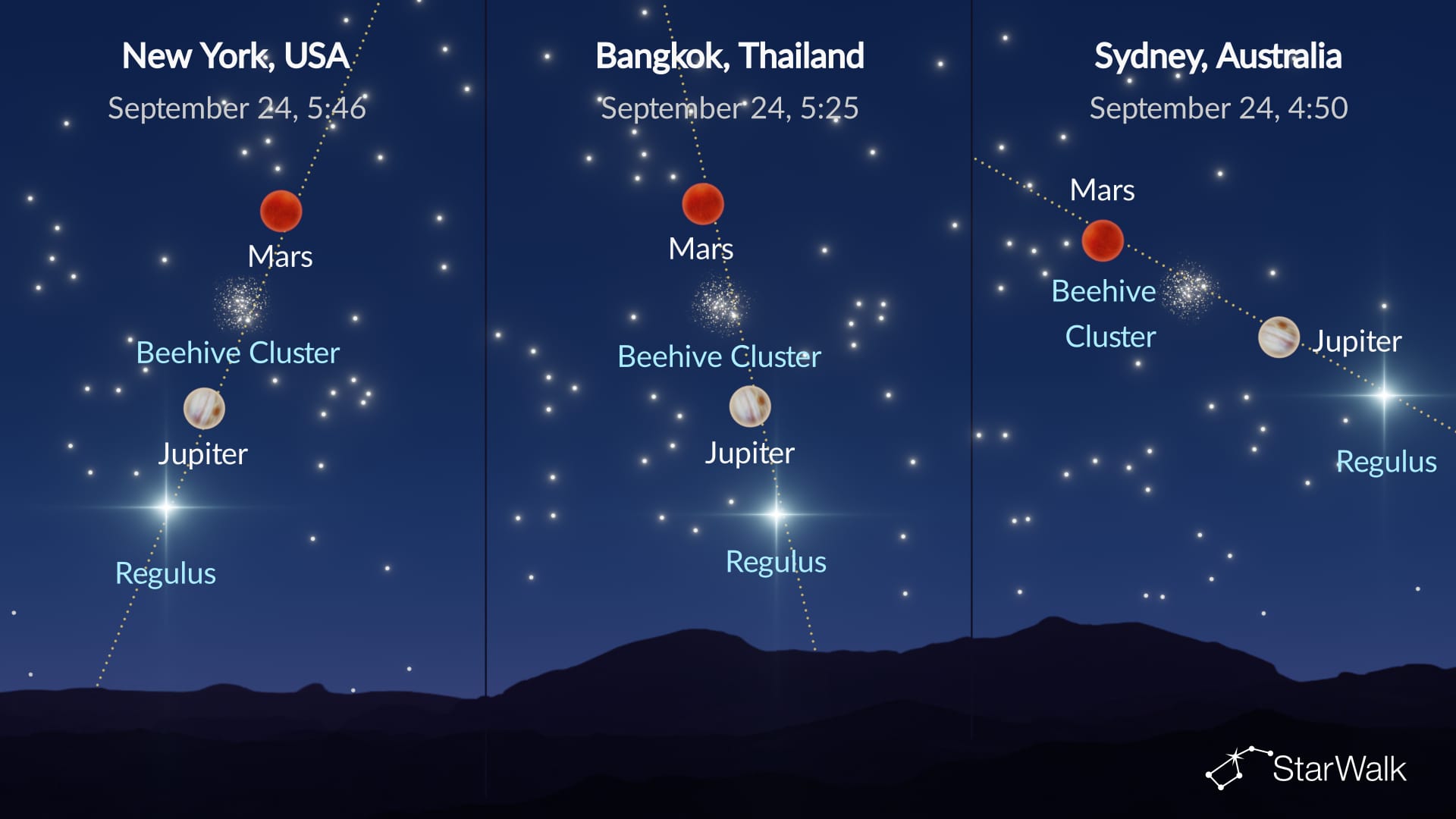 Before sunrise, look east for Mars, the Beehive Cluster, Jupiter, and Regulus stretched out in a nearly straight line about 33° long — roughly three fists held at arm’s length. Jupiter and Mars are easy to spot, while the Beehive is the faint link in the chain, so binoculars will help bring it out.
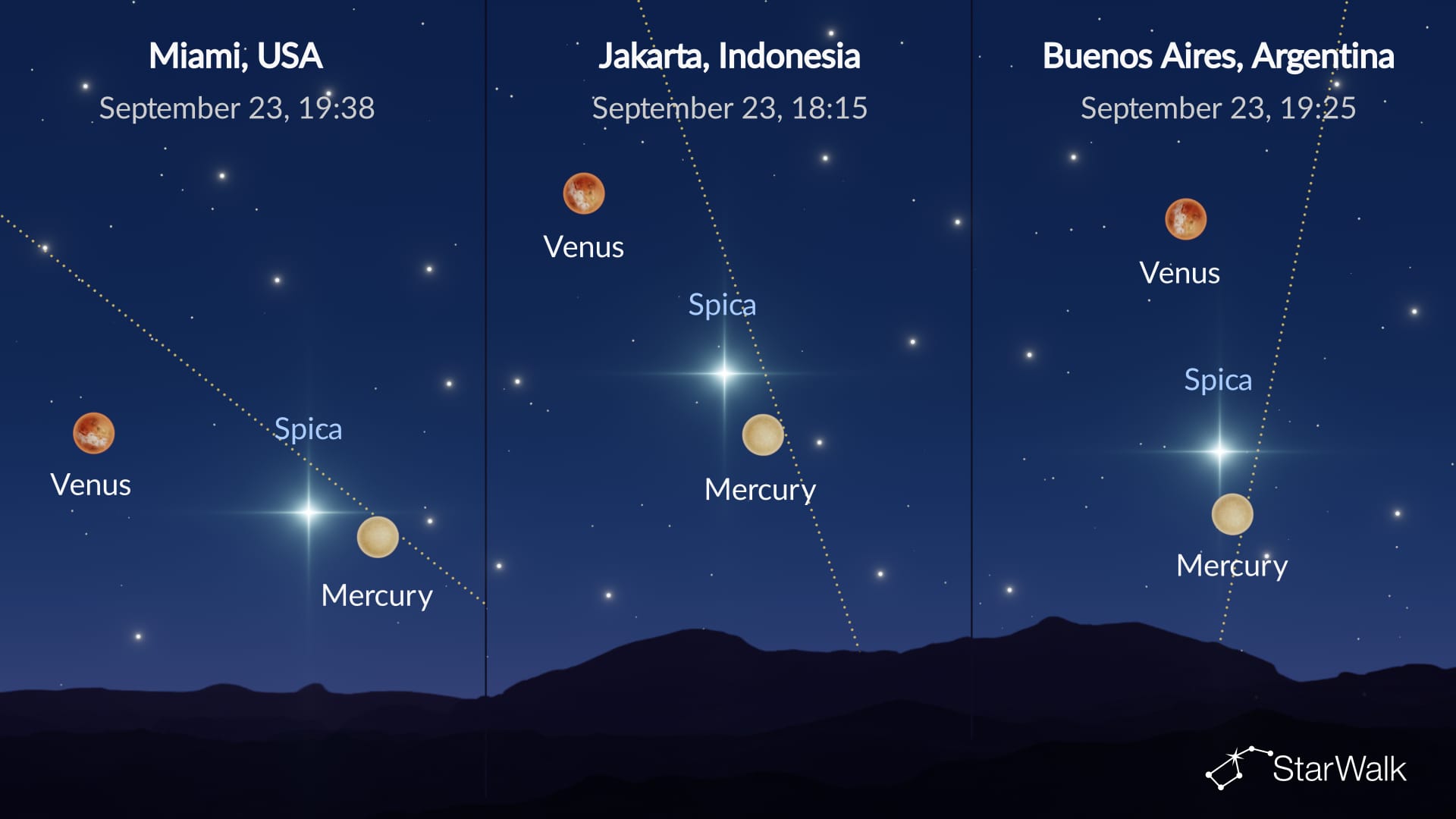 After sunset, look west for Mercury and brilliant Venus with Spica sitting between them. The whole line stretches across about 17° of sky. The view strongly favors the Southern Hemisphere; at mid-northern latitudes, the trio may be lost in twilight near the horizon. Find an unobstructed western horizon; binoculars can help you pick out Mercury and Spica.September 24: Pleiades, Uranus, and Aldebaran form a line
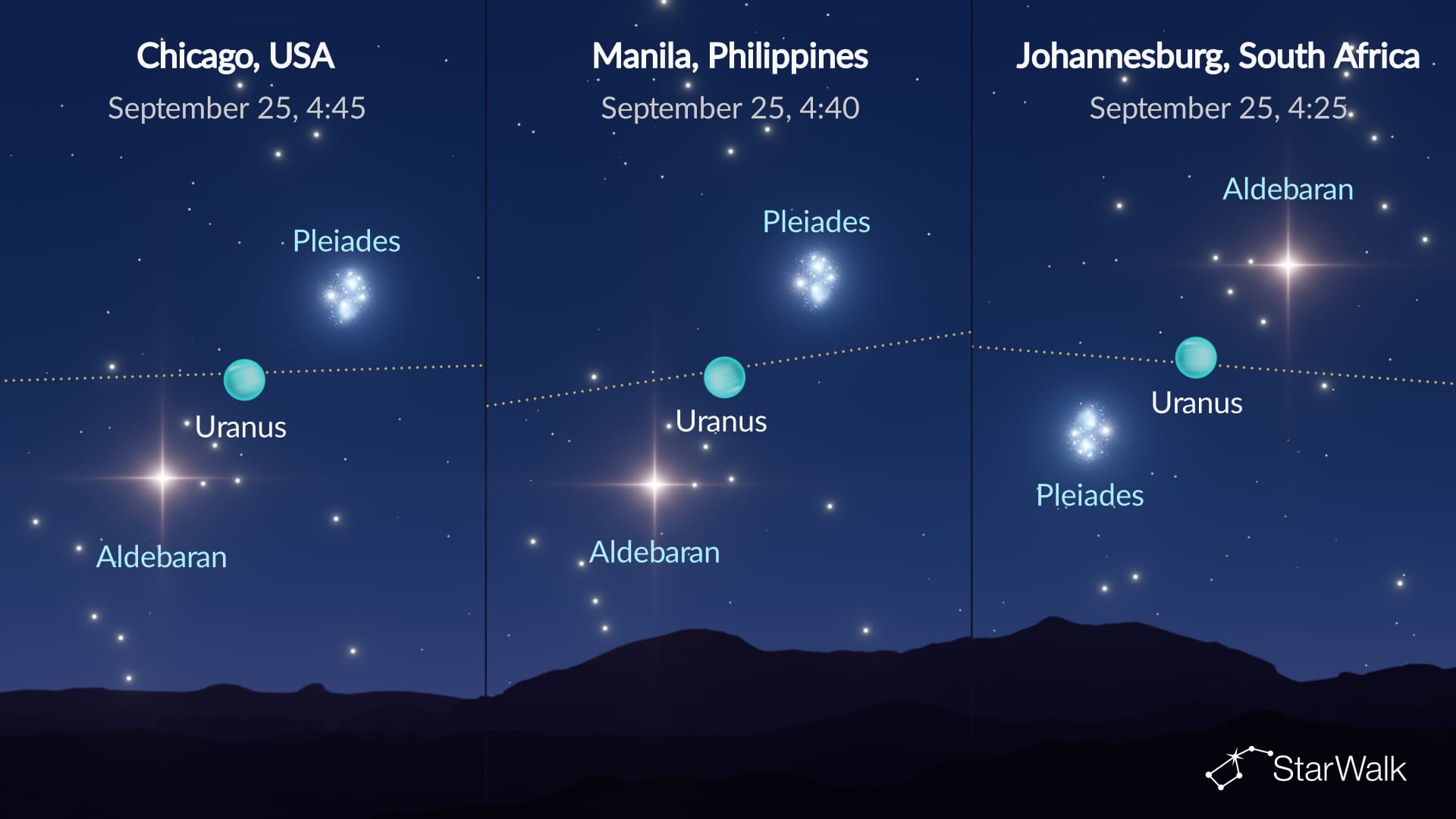 Before dawn, look toward Taurus to see the chain of the Pleiades, Uranus, and Aldebaran stretched across the sky. Under a reasonably dark sky, the Pleiades are visible to the naked eye as a small group of stars, while Aldebaran stands out as a bright orange star. Uranus is the trickiest part of the lineup — use binoculars or a telescope to pick it out.September 25: Mars, Pollux, and Castor form a line
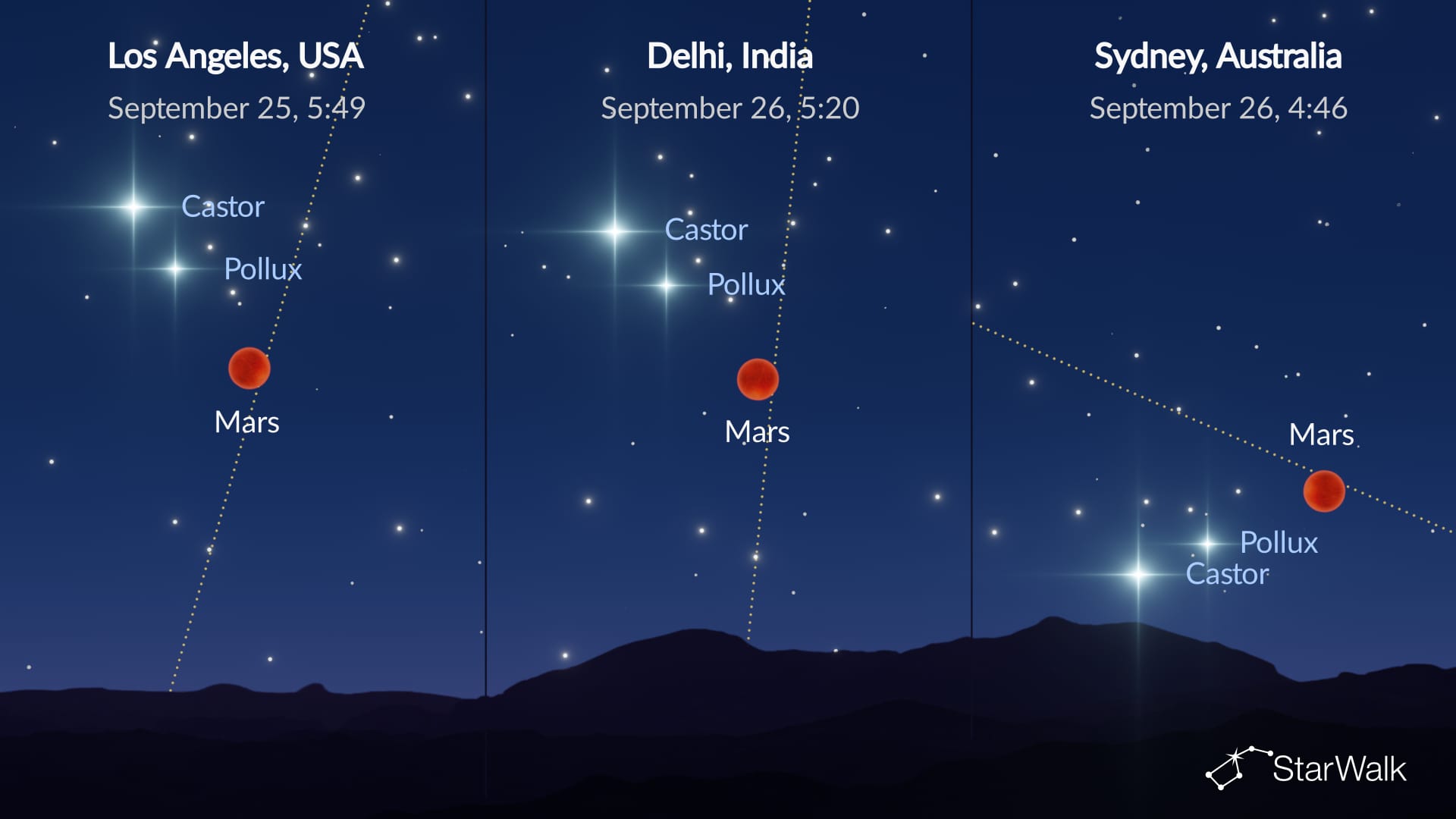 Before sunrise, Mars will line up with Gemini’s Pollux and Castor, forming a compact pattern. Pollux and Castor are both easy naked-eye stars, and reddish Mars makes the lineup especially easy to recognize.September 25–26: Nearly full Moon, Saturn, Markab, and Algenib form a diamond-like pattern; Neptune at opposition; Mercury near Spica
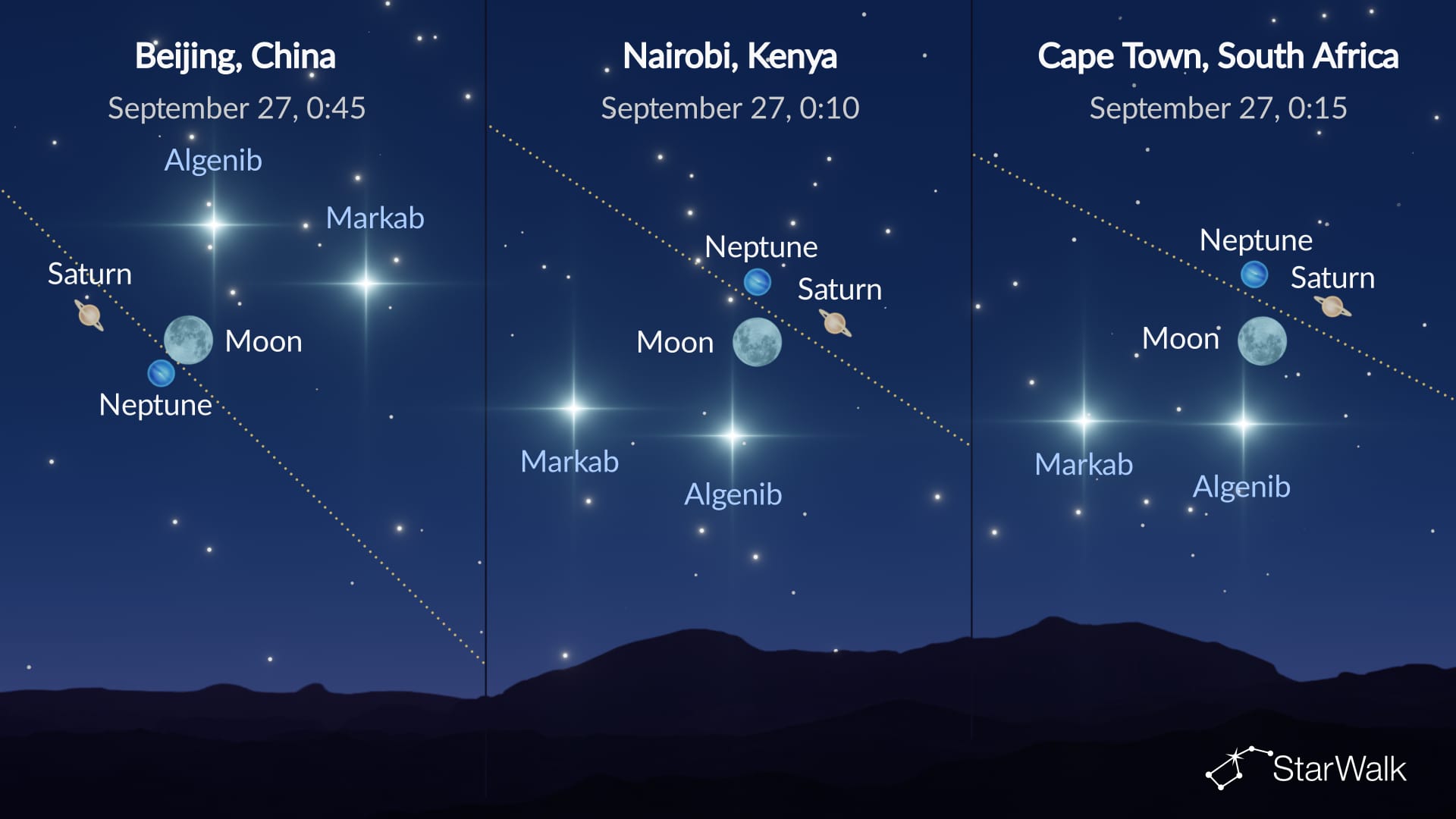 On the night of September 25–26 in Europe and the Americas, the nearly full Moon, Saturn, Markab, and Algenib will form a broad, roughly diamond-shaped pattern. The Moon reaches full phase on September 26, and the pattern will change noticeably by the following evening. Neptune is also nearby and reaches opposition on September 26, so it stays up for most of the night. The Moon, Saturn, Markab, and Algenib can be seen with the naked eye. A telescope and a detailed sky chart are recommended for Neptune; glare from the nearby Moon will make it a challenging target.
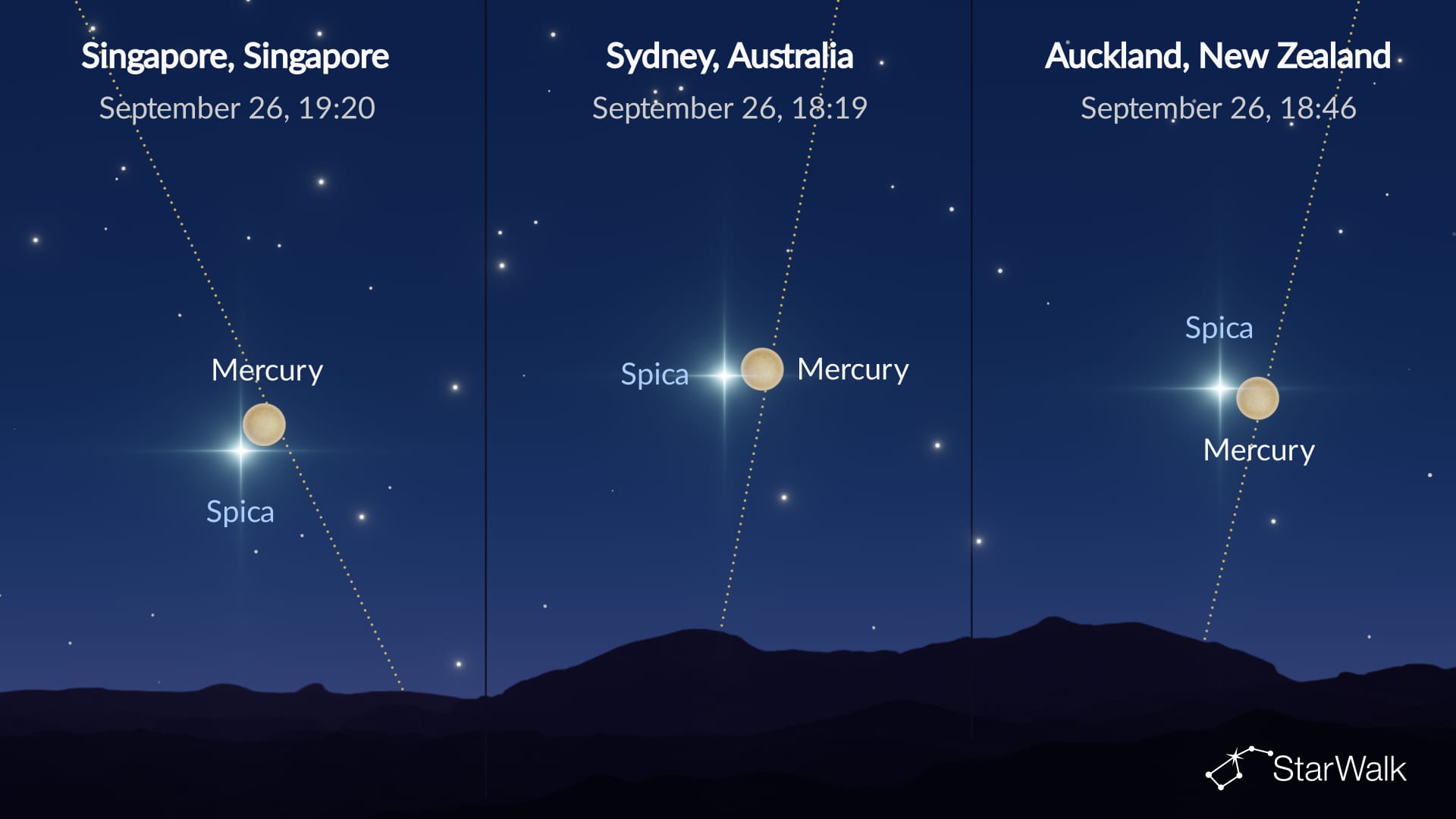 After sunset, look west for Mercury passing close to Spica. The view is much better from the Southern Hemisphere; at mid-northern latitudes, the pair may be lost in twilight near the horizon. A clear western view is essential. Mercury should be easier to pick out first; binoculars can help you find fainter Spica nearby.Night Sky Tonight: Bottom Line
There is almost always something worth seeing in the night sky. Use this guide to choose the best events for tonight and the coming days, but remember that visibility depends on your location, local time, weather, and light pollution. For the most accurate view, check the exact position of each object in the Sky Tonight app before you go outside.
Want to plan beyond the dates listed here? Check the full monthly calendar of astronomical events in September 2026.