
When Mixed Martial Arts (MMA) made its Asian Games debut in Aichi-Nagoya, India entered largely as an outsider. By the end of the competition, however, one name had ensured the country would be part of the history books forever.
That name is Suchika Tariyal.
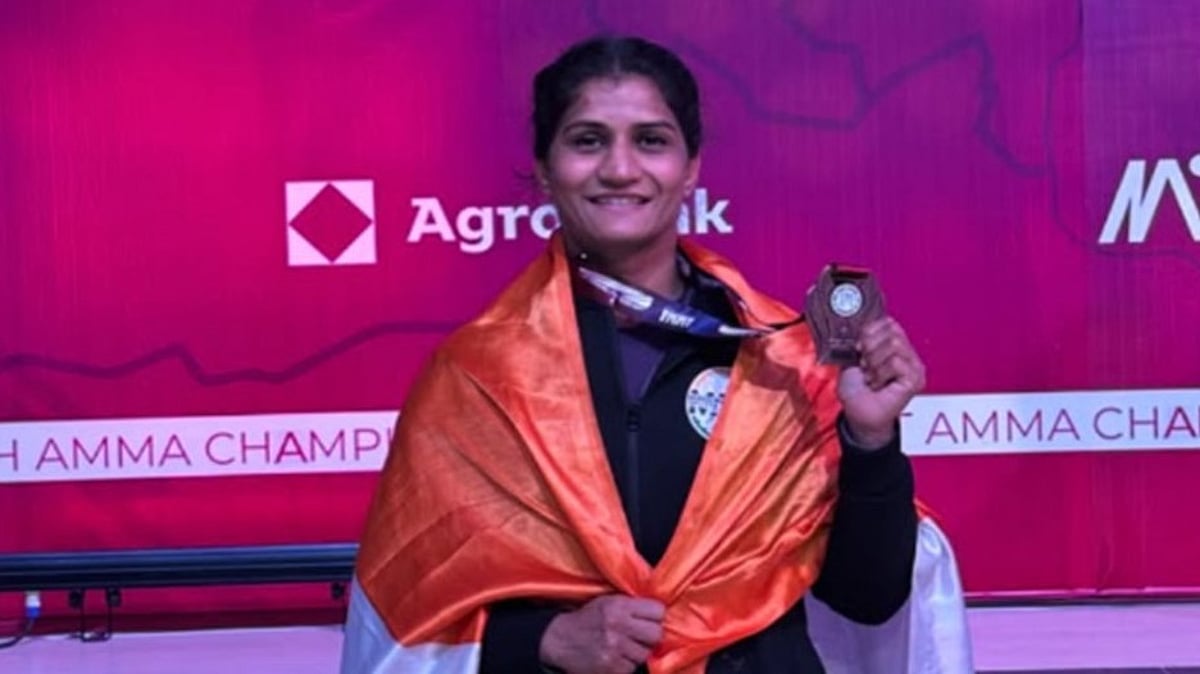
The 36-year-old combat sports veteran secured a bronze medal in the women’s traditional 60kg category on Monday, becoming the first Indian athlete to win an Asian Games medal in MMA. It is a milestone not just for her career, but for a sport that has spent years fighting for recognition in India.
The medal-winning run began a day earlier when Tariyal defeated Mongolia’s Altanchimeg Baigalmaa 2-0 in the quarter-finals, guaranteeing herself at least a bronze medal because both losing semi-finalists receive podium finishes in the event.
On Monday, she faced Singapore’s Hui Hoon Teo in the semi-final. After a fiercely contested bout that went the distance, Tariyal lost and had to settle for bronze. But by then, history had already been made. MMA is featuring at the Asian Games for the first time, and Tariyal became India’s first-ever medallist in the discipline.
The achievement also helped India add a new sport to its growing Asian Games medal portfolio.
Most athletes spend their careers mastering one sport. Tariyal has excelled in several.
She has represented India in judo, kurash, jiu-jitsu and now MMA, making her one of the country’s most versatile combat sports athletes. She competed for India in judo at the 2022 Commonwealth Games and later represented the country in kurash at the 2023 Asian Games. She also won a world title in jiu-jitsu in 2024 before shifting her focus to MMA when the sport was added to the Asian Games programme.
At 36, she is significantly older than many athletes entering a new discipline, making her achievement even more remarkable.
One reason Tariyal’s story has resonated so widely is what inspired her to enter combat sports in the first place.
Several interviews published by Times of India and other Indian media outlets recount how an incident of harassment during her childhood pushed her towards self-defence training. What began as a way to protect herself eventually evolved into a professional sporting career spanning multiple martial arts disciplines.
Over the years, she battled injuries, funding challenges and multiple career transitions before finding a place in MMA.
For years, Indian MMA existed largely on the fringes of the sporting ecosystem. Tariyal’s podium finish changes that conversation.
The Asian Games is the biggest multi-sport event after the Olympics, and an Indian medal in MMA instantly gives the discipline greater visibility. Her success arrives at a time when Indian fighters are increasingly competing on international stages, but have lacked a breakthrough moment at a major continental event.
In many ways, Tariyal has become the bridge between India’s traditional martial arts pathway and the country’s growing MMA ambitions.
The bronze medal may not have been the colour Tariyal wanted, but it has already secured her place in Indian sporting history.
Three years ago, she was representing India in a different combat sport. Today, she is the woman who delivered India’s first Asian Games MMA medal.
For a discipline making its debut and a nation still finding its footing in the sport, that bronze could prove to be worth far more than its place on the podium suggests.