
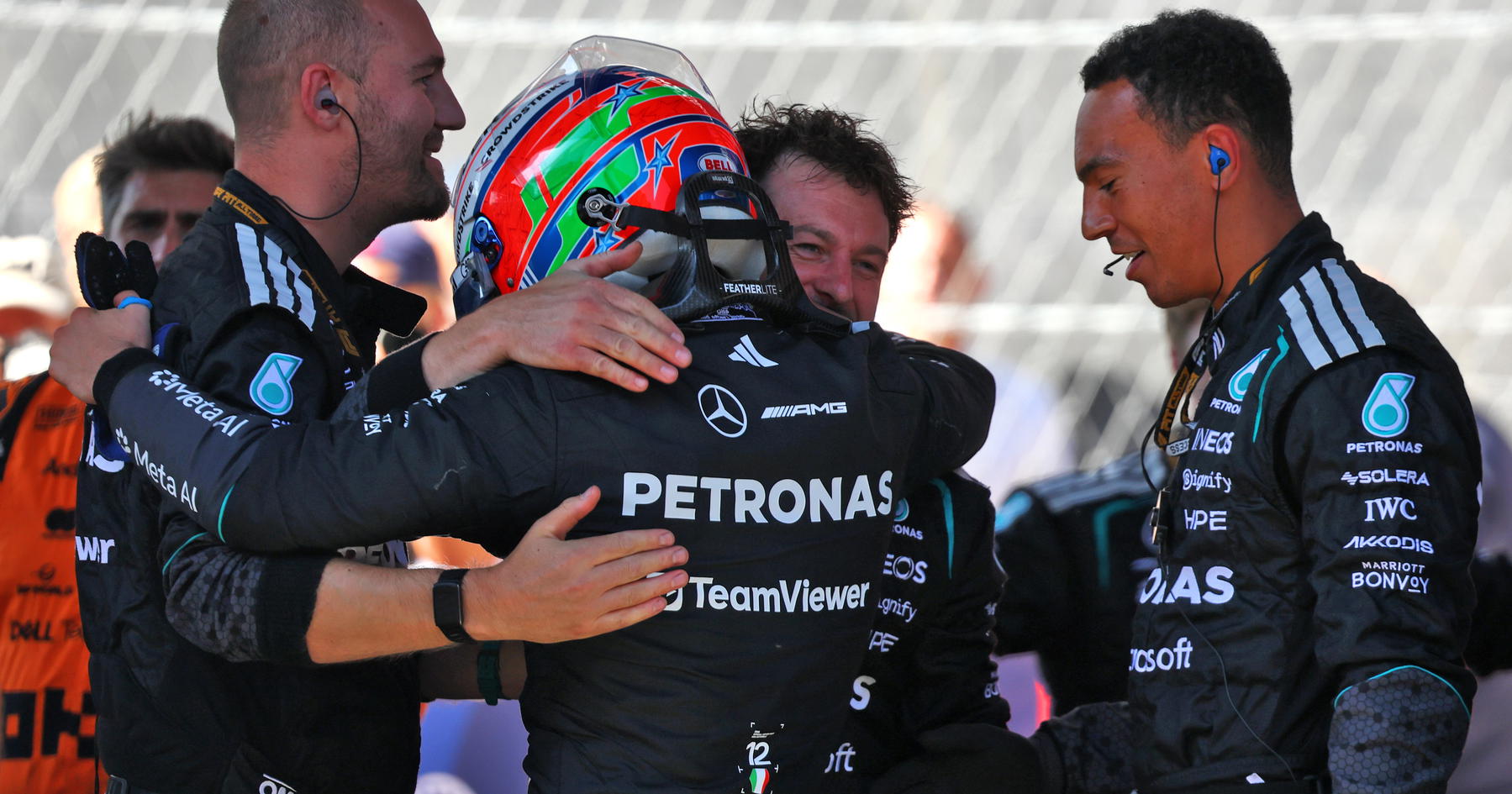
Mercedes has stated that it uses “secret codes” when in communication with their drivers, so as to not give away its strategies during grands prix.
Such codes were in play at the Spanish Grand Prix earlier this month, where Kimi Antonelli prevailed for his eighth race victory of the campaign.
Antonelli was able to benefit from the timing of a virtual safety car, making a cheap pit stop when it was deployed following an issue for Lance Stroll.
When race leader Lando Norris pitted, he emerged behind Antonelli, gifting the advantage to the championship favourite.
Mercedes race-side engineering director Andrew Shovlin stated the team had discussed all possible interruptions in the build-up to the race.
“On Sunday morning, we focused on being ready to react to any incident,” Shovlin told the Silver Arrows Radio Show.
“At every stage of the race, you need to know what you will do if there is a VSC or Safety Car. Every team operates that way.
“Even with a plan, however, discussion can begin when the moment arrives: ‘Do we really want to do this?’ What was pleasing in Madrid was that the plan was clear.
“Kimi knew he was inside the VSC window, and Bono confirmed the instruction as soon as the incident occurred.”
[Article continues below]
Mercedes change secret codes ‘every week’
F1 drivers are in constant communication with their team during the grand prix, with the race engineer serving as the direct line of contact.
However, all the conversations are able to be tracked and listened to by other teams, meaning deceptive tactics come into play.
“Well, we will use secret codes to give them an idea of whether they might want to come in on a Safety Car during the race,” Shovlin said.
“But we try not to let all the other teams know what those codes are.
“So we change them every single week.”