….as inflation risks rise
South Africa is expected to raise interest rates on Wednesday as renewed oil price pressures from the war in Iran and tighter global financial conditions prompt major investment banks to turn more hawkish on monetary policy.
Bank of America expects the South African Reserve Bank (SARB) in Africa’s biggest economy to raise its benchmark repo rate by 25 basis points to 7.25 percent at its September meeting, before delivering another increase in November that would take the rate to a peak of 7.5 percent.
“We now expect two additional 25 basis point hikes, in September and November, taking the repo rate to a 7.5 percent peak,” Tatonga Rusike, Bank of America’s sub-Saharan Africa economist, wrote in a note.
Morgan Stanley has also shifted its forecast, moving from an expectation of no change to a 25-basis-point increase. Analysts Andrea Masia and Arnav Gupta said the hike would provide “insurance” against a series of supply shocks delaying inflation’s return to the SARB’s three percent target.
The bank expects the repo rate to remain at 7.25 percent through 2027 after the increase.
Goldman Sachs, however, had maintained a call for the SARB to keep rates unchanged through year-end as recently as August, according to Bloomberg. Economist Andrew Matheny said the bank expected cuts to begin in the first quarter of 2027 as inflation falls sharply.
The divergence among the major investment banks highlights the uncertainty facing the SARB as it weighs a sharp rise in global oil prices against easing domestic inflation.
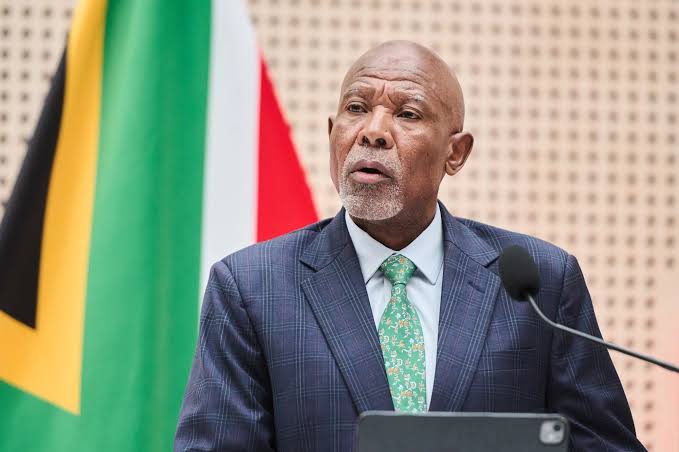
Governor Lesetja Kganyago is scheduled to announce the Monetary Policy Committee’s decision shortly after 3 p.m. on Wednesday, with most economists surveyed by Bloomberg expecting a 25-basis-point increase to 7.25 percent.
The expected increase comes despite a significant moderation in South Africa’s inflation rate.
According to Statistics South Africa, annual consumer inflation slowed to 4.3 percent in July from five percent in June, marking the first slowdown in five months and coming below analysts’ median estimate of 4.5 percent. August inflation data is expected to be released the same day the rate decision will be announced.
The moderation was partly driven by lower transportation costs. Transport inflation fell to 8.9 percent in July from 12.7 percent in June, mainly reflecting lower fuel prices. Petrol prices fell 7.1 percent between June and July, while diesel prices declined 11.7 percent.
Food inflation also eased sharply, with annual inflation for food and non-alcoholic beverages falling to 0.9 percent, its lowest level in more than 16 years.
The softer inflation print had initially strengthened expectations that the SARB would leave rates unchanged in September. Goldman Sachs maintained its hold call after the July data, while Bloomberg economists also expected the central bank to look past near-term price pressures.
But the outlook has since changed as oil prices rose again amid the Iran conflict.
BofA, which previously expected only one rate increase, now sees two hikes this year. It forecasts South African headline inflation averaging five percent in the fourth quarter and reaching 5.3 percent in the first quarter of 2027. The bank expects the SARB’s easing cycle to be delayed until the second half of 2027.
The SARB has also acknowledged the renewed upside risks to inflation. At its July meeting, the MPC left the repo rate unchanged at seven percent, but two of its six members favoured a 25-basis-point increase. The central bank said inflation expectations had risen and that there were upside risks to the inflation outlook.
The central bank’s own projections at the July meeting had pointed to a broadly stable policy rate through the rest of the year, but the central bank stressed that the outlook was uncertain.
If the SARB raises rates on Wednesday, it would take the repo rate back to 7.25 percent, its highest level since May 2025. The increase would come after the central bank raised the rate by 25 basis points to seven percent in May, its first hike since the previous tightening cycle.
The potential September hike marks a significant shift from the easing cycle that characterised much of African monetary policy last year. Ghana, Egypt, Kenya and several other African economies cut borrowing costs as inflation declined, while South Africa adopted a more cautious approach.
For South Africa, however, the latest oil shock has complicated the disinflation story. The July inflation data showed that domestic price pressures were easing, but higher energy costs could reverse some of those gains and make it harder for inflation to settle at the SARB’s three percent target.

Bunmi holds a degree in Economics from the University of Lagos and has over eight years of experience in content writing and journalism.
Her career spans roles as a financial and business journalist at BusinessDay Media and TechCabal, and as Head of Research at SBM Intelligence, an Africa-focused market intelligence and strategic consulting firm.
She also served as Editor at Finance in Africa, a subsidiary of Businessfront and is currently Assistant Editor, Finance (Africa), at BusinessDay.