
(Bloomberg) — Battery-storage startup EnerVenue Holdings has signed its first major commercial contract with a Chinese oil and gas producer, marking a key step in scaling its nickel-hydrogen technology.
The US company will install 11 megawatt-hours of storage capacity at an oil field in northern China, Chief Executive Officer Henning Rath said in an interview with Bloomberg Television. He declined to disclose the customer’s identify and value of the contract.
EnerVenue’s batteries use nickel-hydrogen cells with a water-based electrolyte and are designed for 30,000 charge cycles. The technology is similar to the aqueous metal cells that powered the Hubble Space Telescope and the International Space Station for decades. EnerVenue has redesigned the battery with low-cost materials for wider use.
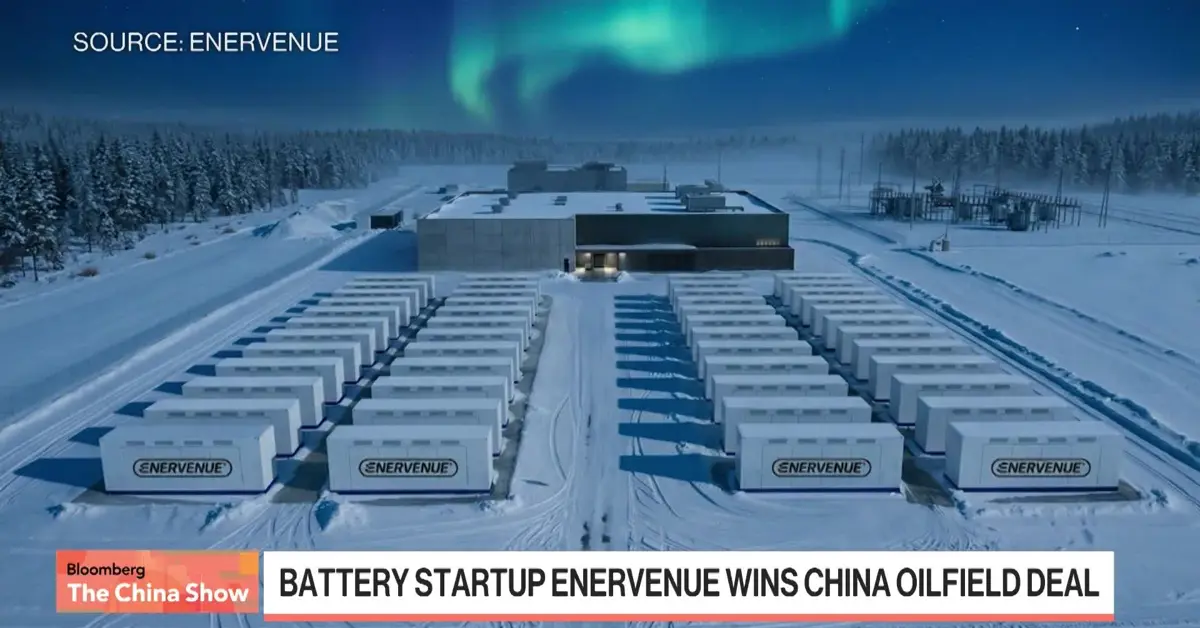
Henning Rath, CEO at battery startup EnerVenue, tells Bloomberg TV the company’s water-based nickel-hydrogen battery cells will be installed in an oilfield in northern China. Bloomberg: The China Show.
China’s energy-storage demand has surged in recent years as a rapid deployment of renewables increased the need for grid flexibility. The country is expected to add 223 gigawatt-hours of storage this year, 21% more than in 2025, according to BloombergNEF.
The cells will be produced in the company’s new factory in Changzhou, eastern China, with an initial capacity of 250 megawatt-hours. The plant will start operations on Sept. 24 and its capacity will be increased to 1 gigawatt-hour in 2027, Rath said. EnerVenue is pursuing more deals, including in the Middle East and Canada.
“We see right now really huge demand, especially in countries in the Middle East where we have very high temperatures,” Rath said, adding that the technology has no fire risk and can withstand high temperatures, making it suitable for mines and oil fields.
Founded in 2020 by Stanford professor Yi Cui, Fremont, California-based EnerVenue has raised more than $700 million so far, part of which has funded the Changzhou factory.
©2026 Bloomberg L.P.