
In the autumn sunshine, Harrison Gardner walks out of his house to move a yellow digger. He’s in the process of installing a biodigester to turn food waste into cooking gas. It’s so cool, he says. These are the things he gets excited about now. The biodigester will be stored in the first building anyone sees coming up the drive to the house he shares with his wife, their two daughters and a ginger cat, so the plan is to make it look beautiful.
Tall and dark, Gardner’s handsomeness has become a gag on the RTÉ show he presents, Build Your Own Home, where he mentors people undertaking self-build projects. “He’s got a different hold on the girls,” says one Clare Island resident, arms folded but grinning, as the community awaits his arrival in season two. Cue a shot of a wax-jacketed Gardner strolling up to meet the islanders, who by the end of the episode are claiming him as a descendant of the Pirate Queen Gráinne Mhaol, the island’s most famous ruler.
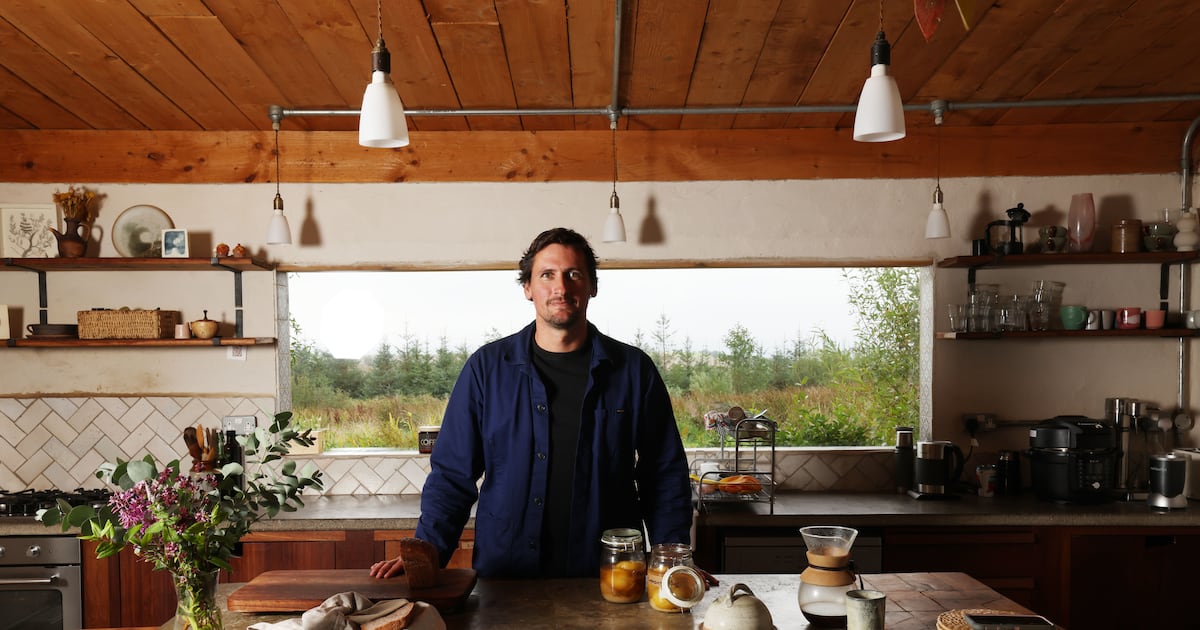
“I’m just a builder,” Gardner often says. He is also an author, TV presenter, podcaster and co-founder of Common Knowledge, the social enterprise skills-sharing centre in Kilfenora, Co Clare. Digger moved and jobs done outside, he makes pour-over coffee and sits down at his kitchen table.
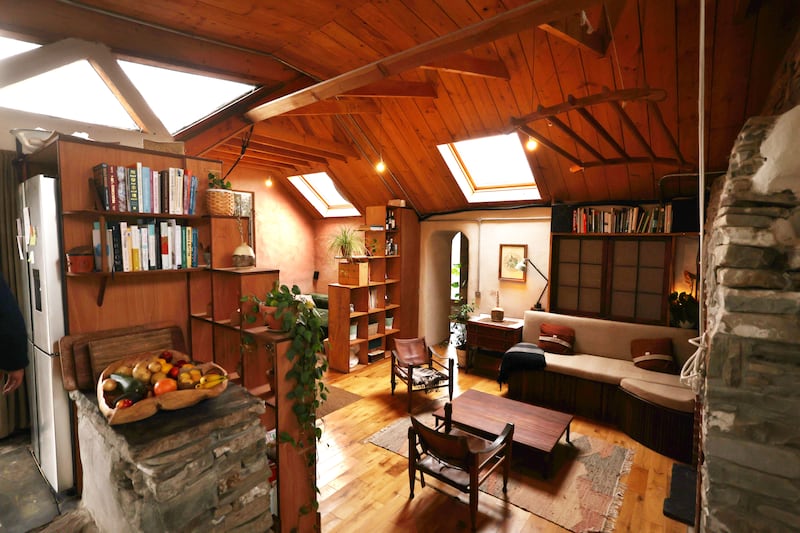
The 200-year-old stone cottage, a 10-minute drive from Ennistymon, was bought for €81,000 in 2016 and originally renovated for €40,000. It’s unlikely Mickey and Mary Mackey, the farmers who once lived here, would recognise the property and its surrounding five acres. Light comes in from triangular windows flush with high ceilings. Lime plastering purposefully ends with a corner to go, exposing the stone walls that first attracted him to the cottage, and buying it.
Every room is built using a different technique and furnished with flair. In the bathroom, a green velvet chaise longue is squeezed in beside a freestanding tub, and the room can be warmed either by a radiator or a cast-iron stove. Marrying self-sufficiency with the necessities of modern living, Gardner, who hates reading instruction manuals and cares about how things look, calls the ever-evolving house a “metaphor for his life”.
It’s been a steep rise for this Australian builder, who arrived in Ireland a dozen years ago with two bags of tools and few connections. He’d been on the road for years, but stayed in Ireland because it “felt like the most welcoming country I’d ever been to, and because there seemed to me like there was so much opportunity for growth”.
Since then he’s taught hundreds of people through his building-for-beginners courses in Clare, written two books – the latest of which, Heat, Shelter, Water, Food: How to Be Ready for the Unexpected, is published this week – and he is currently filming the third and fourth season of Build Your Own Home. Reviewing the show, The Irish Times called him its “biggest asset” and “more chilled than a rainy morning in Cavan in deepest February”. The Sunday Times was slightly cynical, describing him as a “hippy in a hardhat” whose onscreen persona is a “peculiar mix of ganger and guru, chargehand and soothsayer”.
Neither review could capture the impact the series is having on some viewers, in the way the handwritten letter Gardner has pinned beside his desk does. The day after an episode called Cian’s Cottage aired, a stranger wrote to thank him for “restoring her faith in humanity”. In the episode, Gardner and a team of others helped Cian Murtagh, a young formerly homeless man, to completely transform his derelict cottage in Sligo into a home.
In person, Gardner is warm, considerate and open. “It was never my goal to be on TV, or in the public space at all, but since I was quite young, I’ve always been trying to have a big impact in the world.” That ambition started in Killcare Heights, a coastal suburb in New South Wales, that is “so random” that he rarely mentions it when talking about his childhood. It sounds idyllic. Gardner’s back garden bordered a national park. His primary school, Pretty Beach, was named for a stretch of pristine white sand and surrounded by grasslands hopping with kangaroos.
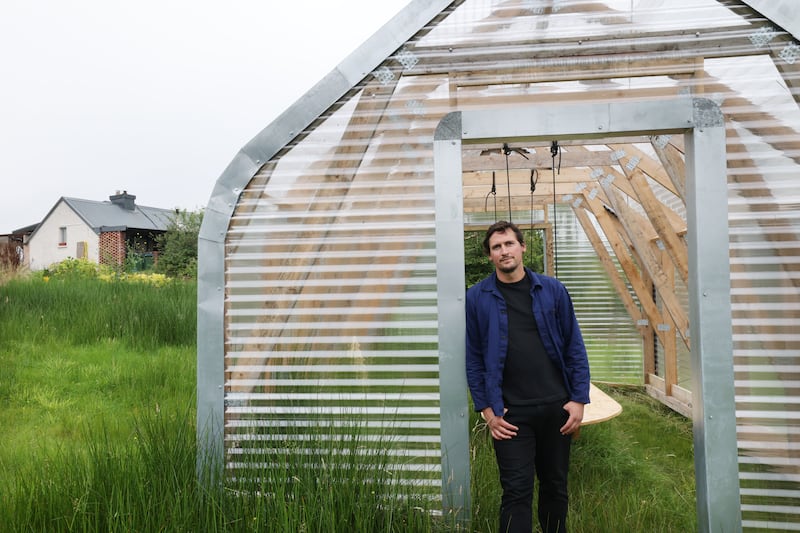 ‘I was always very motivated as a kid, always independent, always progressing. Even things like my driver’s licence, I got the first day that I could.’ Photograph: Alan Betson/The Irish Times
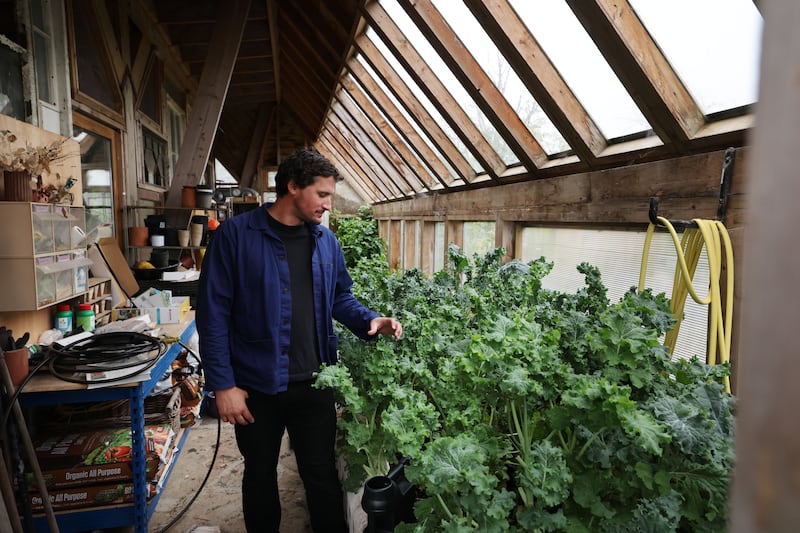 Harrison Gardner says he finds small talk hard. He is far more comfortable in the weeds. Photograph: Alan Betson/The Irish Times
But he never felt at home. The Gardners were immigrants to Australia. His mother was born in Tanzania, his father in England, and the family moved from their base in South Africa amid the turbulence of apartheid in the 1980s. The youngest of three boys and the only one born in Australia, Gardner has previously described his childhood as fun rather than conventional, and not one he is trying to recreate for his own children. “I don’t feel particularly Australian,” he says. “I never really connected with white Australian culture. I was really lucky with the nature that I grew up in, but it lacked a lot of diversity and a lot of culture. Which is what I went out looking for.”
He got his first job at 13, stacking shelves in a greengrocer’s before school, saving up to buy a video camera so he and his friends could stage slapstick stunts for Australia’s Funniest Home Videos on TV. “The ones that we overcomplicated never got picked up, but the ones that were actually very short, very simple, and got the biggest laugh” were, he says. It’s an early example of Gardner’s ability to communicate effectively and tailor his message to an audience. “Sitting on the chair, falling backwards into the pool, made it into the lineup. I remember that strongly because I was the one who was on the chair.”
He was 16 when his parents separated. His dad relocated to North Queensland. He wasn’t close to his brothers, and so he chose to leave the house too. “Everything was kind of falling apart, and my whole family was breaking up, so it just seemed like a good time for me to go too.” He was 16, just a child? “I didn’t feel like it,” he says. “I was always very motivated as a kid, always independent, always progressing. Even things like my driver’s licence, I got the first day that I could.”
Gardner moved closer to his high school, working three jobs, laying timber floors, making coffee and doing the audiovisual tech for a hotel. He was supporting himself and saving, meanwhile. A bright student, he won a regional writing competition and “scored well” on his exams, but college was never on his radar. “I just really wanted to get on with life and see what was going on out there. And so I did.” Three weeks before his 18th birthday, he boarded a flight to Kenya and headed for Kisumu, a port city on the shores of Lake Victoria, where he spent a year building houses. He started to feel more useful than ever before. It was an addictive feeling.
[ Less is more: How to buy your own ‘tiny home’ from €29,000Opens in new window ]
By the time he arrived in Dublin in 2014, as a stopover between a build in Iceland and a job in Malawi, Gardner had more than a decade of construction experience behind him, focusing on off-grid, self-sufficient homes. Ireland was just coming out of a recession, and Gardner fell in with the Fumbally crowd, meeting the late Manchán Magan, who became a close friend, and his now-wife, Erin McClure, in the progressive Dublin 8 cafe. “It felt like a country that was almost starting again and had all this potential, both culturally and at a community level. It was open to new ideas, was open to things being different.”
He slowly put down roots, and was running building-for-beginners courses from his Clare cottage when Anne McLoughlin called. The joint managing director at Motive Television and executive producer of the renovation show DIY SOS, McLoughlin was looking for a new format. She’d heard of Gardner through an architect contact. It was May 2020, and the pandemic restrictions meant it was the first time the producer needed to screen-test someone over the phone.
 ‘Providing basic needs is not that hard, and I don’t think it is something that you need to, or should be, contracting out to someone else.’
Photograph: Alan Betson/The Irish Times
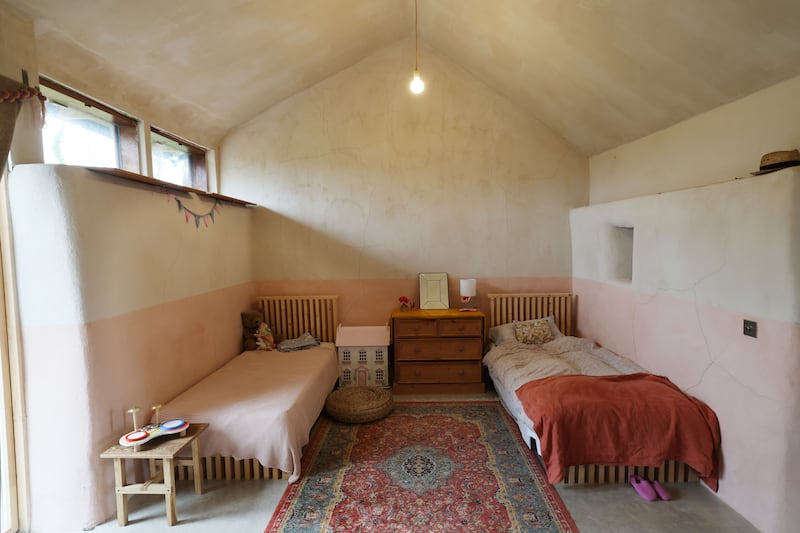 ‘The only thing you can do is understand how your home works and to understand how to meet those needs yourself.’ Photograph: Alan Betson/The Irish Times
“Harrison was really charismatic and a total natural on screen,” McLoughlin recalls. “From the very first conversation, he was only interested in authoring a TV series if the format empowered people to learn and build their own homes themselves. His knowledge is generously given, but never patronising.” The pitch was strong, and RTÉ commissioned Build Your Own Home later that year.
The show’s tone is upbeat as people on tight budgets, often with little construction experience, undertake entire house renovations, build extensions themselves and, in the case of Clare Island, update their community centre. Gardner acts as a building mentor to the participants, who get a certain number of days with him onsite. He shows them how to dig foundations, how to tile, how to plaster a wall for the first time. It’s a long way from the grandiosity and budgets of shows such as Grand Designs, and Gardner is a different kind of presenter. “A lot of the shows that you see with guys doing renovations, they’re standing on the sidelines, but Harrison isn’t afraid to put in a long day’s work,” says Sean O’Tuama, a participant in season two who renovated a 19th-century farmhouse in Limerick with his wife Jess. “The day we built the stairs was a long day, and Harrison was here for hours after the cameras left.”
The TV show is another gear in Gardner’s childhood drive to have as big an impact as possible. It’s why he moved from building single structures to teaching, and then embraced media. Particularly drawn to empowering people who have been told that they could never be a builder, the benefits of reversing that social conditioning through education and encouragement go a lot deeper than bricklaying for him.
“If you can learn how to use tools and how a structure works, or how to build a piece of furniture, or how to install a shelf, it opens up doors for people to wonder: ‘What else can I do?’ And when you open the door to self-efficacy and agency, to someone’s ability to believe in themselves, to take action and effect change in their own lives, it becomes a self-fulfilling prophecy. So, the next time there’s a power outage, we don’t just wait for the electricity to come back on. We start thinking: ‘What can I do to make sure I always have electricity in my house?’”
These thoughts crystallised for Gardner in early January 2025 when Storm Éowyn, record-breaking in its ferocity, hit Ireland, and the Clare cottage was one of the hundreds of thousands of homes that lost both power and water, as water treatment plants and pumps failed without electricity. It was bad, but things turned “medieval” when a vomiting bug hit the household, and they still didn’t have running water. “We were trying to clean up and look after everyone, but all of the things that we needed to work weren’t working. I felt like I wasn’t doing a good job of providing for my family in that moment,” recalls Gardner. “The amazing thing was, it was pouring with rain that whole time, but we didn’t have any system in place for collecting lots of rainwater, or for filtering it.”
Born into a seven-year-long drought in Australia, where there was a constant hosepipe ban, and every household was issued a free water-saving shower head and egg-timer to time every rinse, Gardner grew up with shortages, and Storm Éowyn was a “confronting” moment that made him realise how much he had taken the convenience of being connected to the grid for granted.
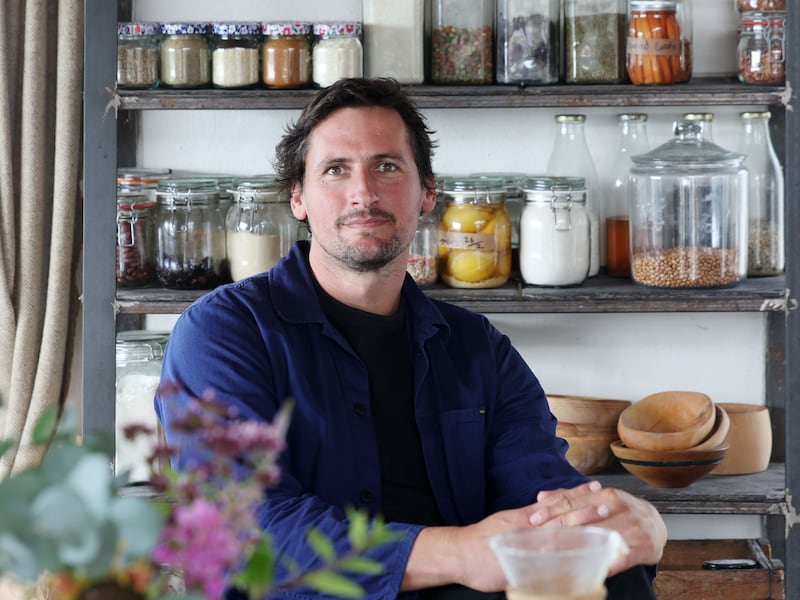 After Storm Éowyn, Gardner set about making his house more resilient against future water shortages and power outages. Photograph: Alan Betson/The Irish Times
 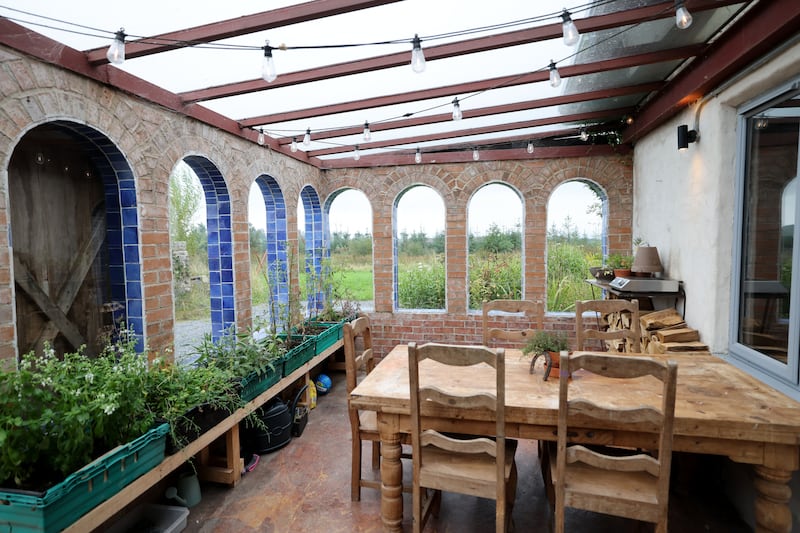 Innovative contruction methods and outcomes at Gardner’s home: ‘I really believe in community, and I really believe in people looking after each other.’ Photograph: Alan Betson/The Irish Times
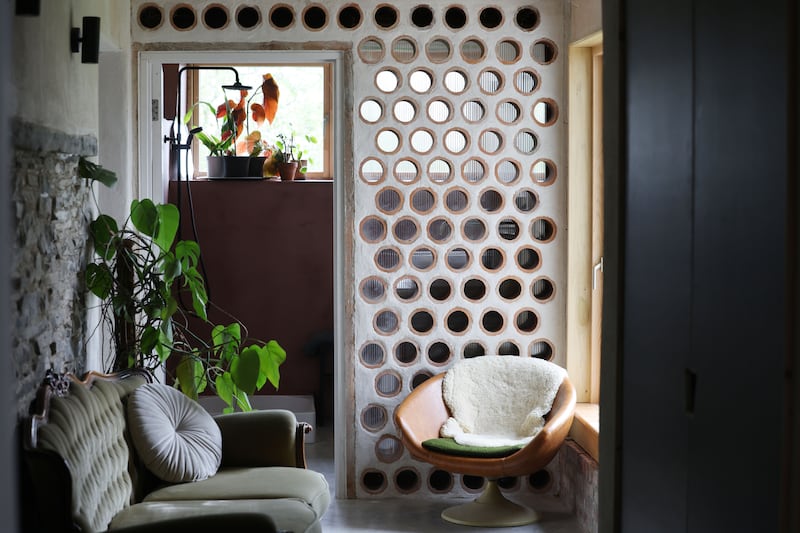 Empowering other people to was the reason Gardner wrote his new book Heat, Shelter, Water, Food. Photograph: Alan Betson / The Irish Times
After the storm, he set about making his house more resilient against future water shortages and power outages. How long could the cottage sustain itself now? “Well, it’s not forever, but we collect enough rainwater that the hosepipe ban wasn’t an issue for us. We have enough solar panels on the roof and enough battery storage that when the power goes out, we can keep everything running within the house. If we have a storm this winter, we’re kind of okay.”
Empowering other people to take similar steps was the reason he wrote his new book Heat, Shelter, Water, Food. It gives practical advice on how to be prepared for when things go wrong. “There are going to be more hosepipe bans in the summers going forward and moments in the winters when we lose power because huge storms are taking out power lines,” says Gardner, who is totally uninterested in who is to blame for outages and shortages.
“The only thing you can do is understand how your home works and to understand how to meet those needs yourself. Providing basic needs is not that hard, and I don’t think it is something that you need to, or should be, contracting out to someone else.”
Talking about agency is Gardner’s flow state, and he is cut short only by the noise of a car coming up the drive and his wife and youngest daughter arriving home. It’s time to relocate to his podcast studio, where he records and films his show The Tools at Hand. A former animal shed, with horseshoes still hanging on the walls, there is a faint but not unpleasant animal smell in the air. It’s material rather than ghostly, as Gardner built his own sound insulation panels using sheep’s wool, hessian and wood.
[ Ireland’s Greenest Places: Community is the catalyst that can create changeOpens in new window ]
For someone so successful across broadcast, audio and writing, it’s surprising when he says he finds small talk hard, and that being in a party situation can be “stressful”. He is far more comfortable in the weeds. “Sit me in a room with someone where we get to talk about our biggest fears or our traumas or our biggest life experiences, with no distractions? I’m so happy I can talk all day long.”
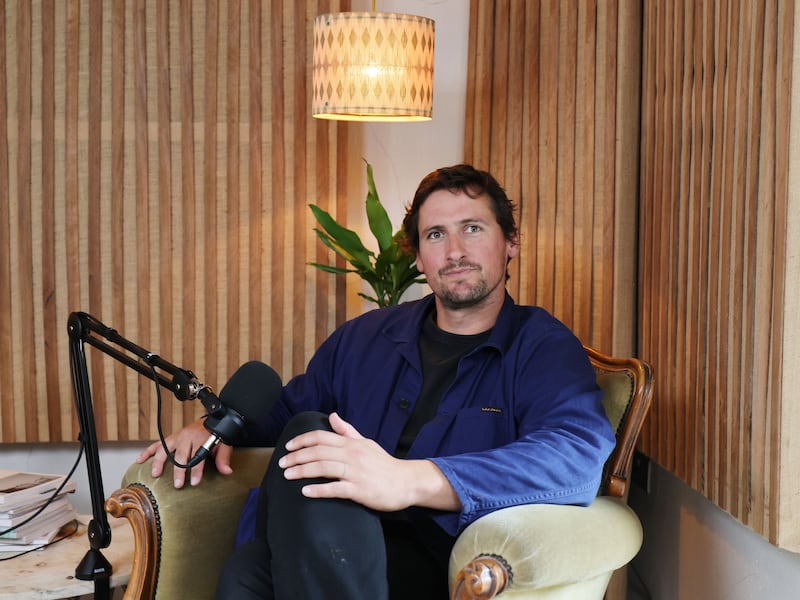 Harrison Gardner in his podcast studio, where he records and films his show The Tools at Hand. Photograph: Alan Betson/The Irish Times
 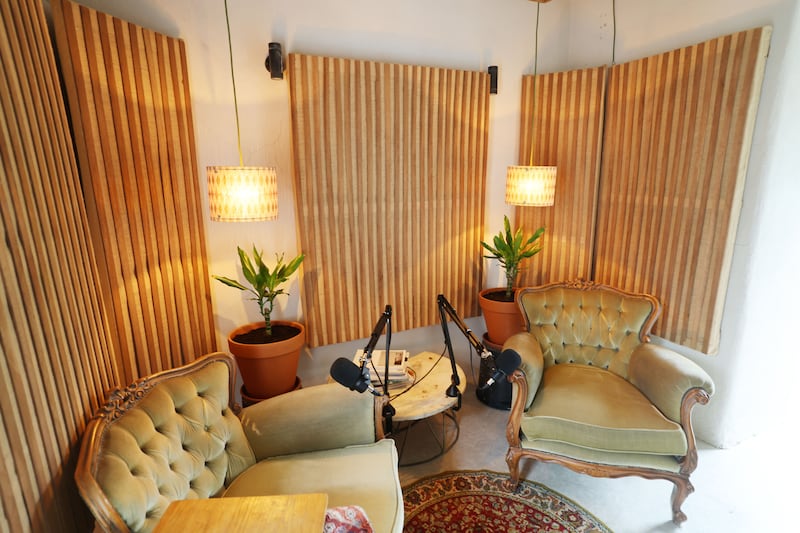 Harrison Gardner built his own sound insulation panels using sheep’s wool, hessian and wood. Photograph: Alan Betson/The Irish Times
He’s professionalised that one-on-one comfort zone with his podcast, where he invites people whose ideas he is interested in onto the show. A recent episode featured Michael Reynolds, an American architect and founder of Earthship Biotecture, which makes self-sufficient dwellings that generate their own power and harvest their own water. Gardner worked with him for years, and the American was formative to his belief that the best chance humans have of thriving and surviving will never be by building individual fortresses. “I remember an example Mike gave: if it’s the end of the world and you have tomatoes in your greenhouse, there isn’t a wall high enough that you could build that would stop people coming to take them. The only way is to show everyone how to grow tomatoes.”
Aware that some people could interpret his advocacy for individual autonomy as fearmongering, or the siren call of an Armageddon prepper, Gardner is emphatic that this is not his sentiment in any way. “I really believe in community, and I really believe in people looking after each other. I believe that the core of community is about individuals and understanding what they can give to the people around them, but when we are feeling vulnerable ourselves, we’ve got nothing to give.”
Heat, Shelter, Water, Food: How to Be Ready for the Unexpected by Harrison Gardner is published by Gill Books.