
Apple’s new foldable iPhone Duo starts at a whopping $3,499 in Australia, while Samsung’s Galaxy A17 5G can be picked up for as little as $1 a month.
Yet both can handle most of the things we do every day, from streaming and social media to navigation, video calls and taking photos.
So what does spending thousands more actually get you?
Yahoo News Australia compared phones across four price points to find out what you actually gain by spending more — and where the extra money stops making sense.

Spending more can get you better cameras, performance, displays and build quality, but the gap between cheaper and premium smartphones is getting smaller. Picture: Yahoo News Australia
(Supplied)Best mobile phones under $500 in Australia
Australians shopping below $500 have more choice than they might expect, with Samsung, Motorola and Oppo among the brands offering cheaper alternatives to flagship phones.
Cheaper phones can comfortably handle calls, messaging, social media, maps and streaming, and even large displays are now standard.
Samsung’s Galaxy A17 5G is particularly cheap through the telcos, with Optus and Vodafone offering it for $1 a month over 36 months with eligible plans.
It still gets a 6.7-inch AMOLED display, 5G, a 50MP main camera and a 5,000mAh battery, while Samsung promises six generations of Android upgrades and six years of security updates.
Motorola’s moto g67 sits much closer to the top of our $500 limit, but steps things up with a smoother 120Hz display, 256GB of storage and a larger battery, making the extra spend easier to justify for heavier users.
Oppo’s A60 is another cheaper option at around $259. Its screen and processor are more modest, but you still get a large 6.67-inch display, 50MP main camera, 5,000mAh battery and 45W fast charging — particularly handy at this price.
Yahoo News Australia pick: Samsung Galaxy A17 5G — from $1 a month with an eligible plan.
The Motorola has better hardware, but Samsung’s long software support and aggressive telco discounts make the A17 difficult to beat for someone who simply wants a capable phone for as little as possible.
Best phones under $1,500 in Australia
Things get much more interesting below $1,500, where spending more starts to become noticeable.
Phones generally feel quicker, demanding games run better and cameras become more capable at night, when zooming or shooting video. Wireless charging, better water resistance and more premium materials also become more common.
Xiaomi’s REDMI Note 17 Pro Max is one of the battery-focused alternatives at around $799, pairing its huge 9,210mAh battery with 100W fast charging. It also gets a high-refresh-rate AMOLED display and high-resolution main camera, packing unusually ambitious hardware into a phone well below $1,000.
Oppo’s $999 Reno16 F follows a similar formula, with a 6,500mAh battery, fast charging and AMOLED display. It’s particularly attractive for people who prioritise battery life and a good screen over having the most powerful processor or sophisticated camera system.
Samsung’s $1,149 Galaxy S26 FE is a more conventional all-rounder. You get an AMOLED display, wireless charging and a triple-camera system that includes an optical zoom lens, along with Samsung’s long software support, while sacrificing some of the Ultra’s more expensive camera and performance hardware.
Apple’s now last-generation iPhone 17 also squeezes into the bracket at around $1,399 for the 256GB model. It brings a high-refresh-rate OLED display, Apple’s powerful processor and strong cameras in a premium, water-resistant build. Battery capacity and charging speeds aren’t as headline-grabbing as some cheaper Android rivals, but you get Apple’s polished hardware and iOS ecosystem.
Then there’s the $1,499 Xiaomi Poco F9 Ultra. It puts much more of your money into raw performance, pairing a flagship-level Snapdragon processor with a high-refresh-rate AMOLED display, massive 8050mAh battery and very fast charging. It’s aimed at buyers who want high-end speed and gaming performance without spending more than $2,000.
Yahoo News Australia pick: Apple iPhone 17 — around $1,399.
Cheaper phones offer bigger batteries and faster charging, while the Poco delivers more raw performance for the money. The iPhone is our pick for its balance of performance, cameras, premium build and long-term software support.

The Poco and Galaxy S26 FE sit in the same price bracket, but differences in thickness and premium extras such as POCO’s Bose-tuned audio show where each brand spends its money.
(Supplied)Best phones under $2,500 in Australia
Between $1,500 and $2,500, buyers are firmly in flagship territory, with Google, Samsung, Apple, Oppo and Motorola offering some of their most advanced phones.
At this level, the extra money largely buys a more premium finish, better cameras and zoom, brighter screens and the fastest processors. Bigger batteries and faster charging aren’t guaranteed, with some considerably cheaper phones actually offering more of both.
Google’s $1,849 Pixel 11 Pro sits towards the bottom of the bracket and puts much of its focus on photography. Its triple-camera system includes a dedicated telephoto lens for optical zoom, while buyers also get a bright OLED display, Google’s latest Tensor processor and long-term software support.
Oppo’s $2,299 Find X9 Pro is another photography-focused option, combining a versatile high-end camera system with a large AMOLED display and a particularly big battery. It also supports much faster wired charging than its Apple, Google and Samsung rivals.
Samsung’s Galaxy S26 Ultra is the do-everything option for around $1,999, combining a large AMOLED display with one of the most versatile camera systems in the category, including long-range zoom. There’s also a built-in S Pen for writing, drawing and taking notes.
RELATED:
Motorola’s $1,999 Razr 70 Ultra offers something completely different. Its large internal display folds in half, while a second screen on the outside lets you check notifications, use apps and even frame photos without opening the phone. You’re paying for the folding design rather than getting the absolute best cameras for the money.
Apple’s new iPhone 18 Pro starts at $2,099 for the 256GB model, bringing Apple’s latest processor, premium build and upgraded camera system. Its new adjustable aperture gives keen photographers greater control over their shots, while Apple’s long software support should help buyers keep it for years.
Yahoo News Australia pick: Google Pixel 11 Pro – $1849
The Pixel 11 Pro sits towards the cheaper end of this premium bracket but still delivers most of what buyers are paying flagship money for, including a bright display, powerful processor and more advanced camera system with a dedicated zoom lens.

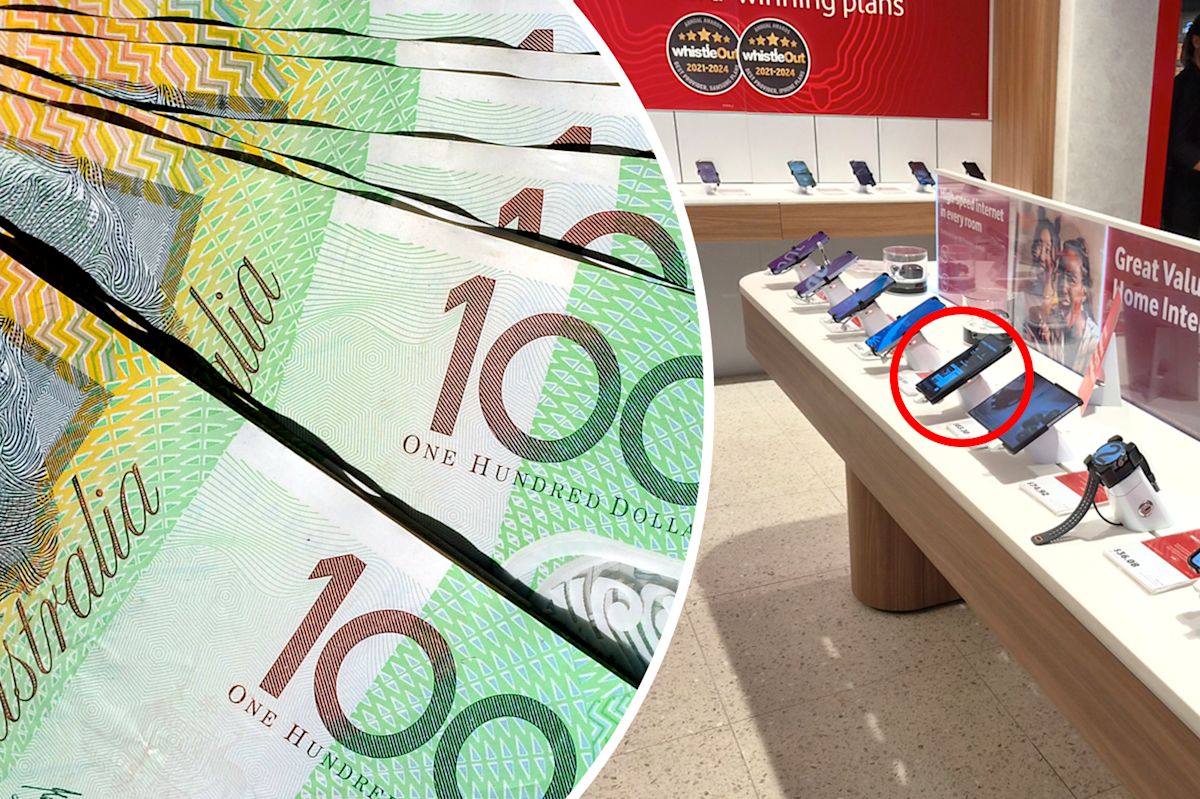
Foldable phones can cost thousands of dollars, so try before you buy to make sure the form factor — and compromises that come with it — are actually what you want. Picture: Yahoo News Australia
(Supplied)Best phones above $2,500 in Australia
Above $2,500, buyers enter a very different part of the market, dominated by book-style foldables that open into small tablets.
Samsung’s Galaxy Z Fold8 starts at $2,699, combining a conventional outer screen with a much larger tablet-sized display that unfolds for multitasking, watching video and running apps side by side.
Motorola’s $2,799 Razr Fold follows the same book-style formula, but puts more emphasis on battery and charging, offering a larger battery and faster top-ups than Samsung’s alternative.
Honor’s $2,999 Magic V6 also combines a large folding OLED display with flagship cameras and performance, while focusing on keeping the device relatively thin and light despite the extra screen and hinge.
Oppo’s $3,299 Find N6 pushes further into ultra-premium territory, pairing its large folding display with flagship cameras, a powerful processor and fast charging.
Apple’s new iPhone Duo tops the group at $3,499 — $800 more than Samsung’s Fold8 — bringing the same basic book-style folding concept to iPhone users, with a large internal display alongside Apple’s latest processor, cameras and iOS features.
But spending thousands more doesn’t necessarily make everyday tasks dramatically better. You’re largely paying for the folding design and extra screen space, while accepting more weight, thickness and cost than a conventional flagship.
Whether that’s worthwhile depends heavily on how you’ll use the bigger screen, so we’d suggest trying one at your local telco or electronics store before buying.
Yahoo News Australia pick: Samsung Galaxy Z Fold8 — $2,699.
For buyers set on a book-style foldable, Samsung is the cheapest option here, relatively thin and light, and benefits from several generations of refinement.
Motorola offers a bigger battery and faster charging, while Apple brings iOS to a foldable for the first time. But for everyone else, we’d save the money.
You can also follow us on Facebook, Instagram, TikTok, X and YouTube.