
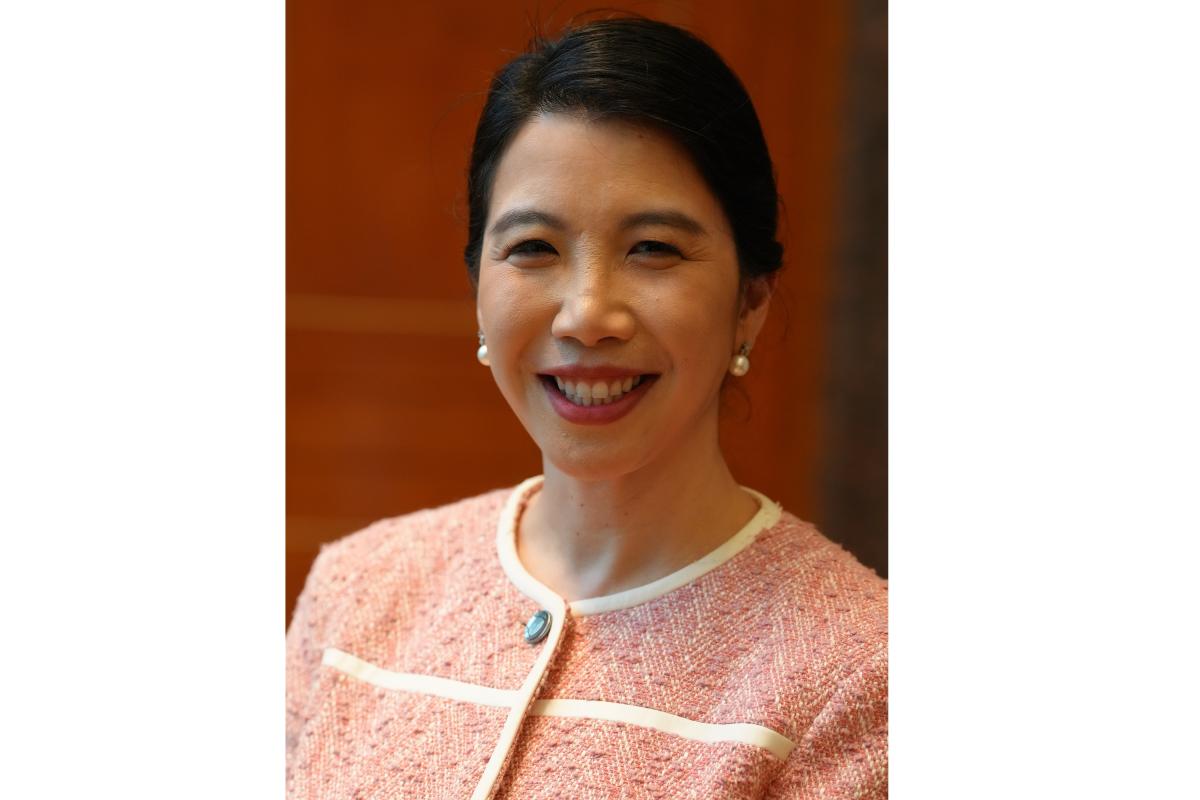
Wealth-planning conversations are rarely triggered by a single event. Speaking at the recent Hubbis HNW Insurance Summit in Singapore, Debra Tran, Managing Director and Head of Private Banking Singapore at CIMB, shared why trusted advisers must understand each family’s evolving priorities, raise difficult questions early and help clients navigate succession, liquidity and legacy across generations. Drawing on her experience advising entrepreneurial families, she observed that founders often remain firmly in control, the questions they face are highly practical, and, more often than not, meaningful action begins when a trusted adviser knows the family well enough to start the conversation.
Key Takeaways
Every family’s wealth planning is a unique journey: Tran described that each family has distinct circumstances, priorities and goals, requiring wealth plans to evolve over time to remain fit for purpose.
The Founder Remains the Decision Maker: In her experience, the business represents the founder’s purpose and life’s work, and major decisions, including estate planning, still rest with them. She described cases in which the founder, having seen children established, is now planning around the third generation.
Trusted advisers can, and should, start the conversation: Tran emphasised that effective wealth planning can be triggered by advisers who understand the family deeply enough to identify emerging needs, facilitate sensitive discussions and build consensus before a crisis occurs.
A Regional Bank’s Vantage Point
Tran has led private banking for CIMB in Singapore for around four years, having joined in late 2022 from Emirates NBD, where she held the equivalent role, following earlier roles at HSBC Private Bank. CIMB Group is headquartered in Kuala Lumpur and is Malaysia’s second largest financial services provider, by assets.
She described the group’s footprint as spanning ten markets, with a full suite of banking products and services in Singapore covering private banking, consumer, commercial, investment and corporate banking. That breadth matters to how the private bank engages with entrepreneurial families, whose personal wealth and corporate requirements are rarely separable.
The Business as Purpose
Asked how the priorities of founders and families shape the wealth-planning process, Tran began with a note of caution.
“Every family is different,” she noted, pointing to the diversity of circumstances, priorities and aspirations that shape wealth-planning decisions.
For many of CIMB’s clients, the business represents far more than a financial asset. It is a life’s work, a source of identity and a continuing sense of purpose. Tran described founders well beyond conventional retirement age who still spend their days in the office or on the factory floor, remaining deeply involved in the businesses they spent decades building. As a result, major decisions, particularly those relating to succession and estate planning, often continue to rest with the founder.
That reality shapes the nature of wealth-planning conversations. Rather than abstract discussions about structures and governance, families are grappling with practical questions: Should the business remain in the family? Is there a capable successor? Should management be professionalised? Or would a partial or full exit create better outcomes for future generations?
These decisions are rarely straightforward because they involve not only financial considerations, but also family dynamics, personal values and legacy. At its heart, wealth planning is not simply about dividing assets. It is about helping families balance different priorities, remain united and empower each generation to pursue its own path.
When asked if founders may find it challenging to step back, Tran acknowledged that this can be the case.
When the Conversation Moves Beyond the Next Generation
One development that Tran highlighted was the growing focus on the third generation.
In some entrepreneurial families, the succession conversation has already moved beyond children and towards grandchildren. She described a founder whose children, now in their forties and fifties, are already established in the family business and family office. Rather than focusing on the immediate transfer of leadership, the founder’s attention has shifted towards preparing the next generation for future responsibility.
The example reflects a broader shift in how some wealthy families think about legacy. The objective is not simply to transfer wealth, but to prepare future generations to steward it responsibly.
“It shows that even after tremendous wealth creation and the initial transition of leadership, they (founders) still see themselves as being responsible for the success of the future generation,” she said.
Who Starts the Conversation?
While many Asian entrepreneurs have demonstrated exceptional ability in creating wealth, Tran believes that transferring wealth requires a different mindset and a different set of conversations.
Much of the wealth held by entrepreneurial families could still be concentrated in operating businesses. These assets may be valuable, but they are not always easily divisible or readily converted into liquidity when circumstances change.
For this reason, she encourages clients to view succession not as a single event, but as a journey.
While changes in family circumstances, business ownership or regulation can prompt discussions, she believes trusted advisers have an important responsibility to identify emerging needs before circumstances force action. Advisers who know the family well, understand its dynamics and maintain long-standing relationships are often best placed to raise difficult questions early.
“Sometimes that answer is us, those of us sitting in this room, because we are the trusted advisers of the clients. We need to start these discussions so that our clients are prepared and well protected,” she said.
She recalled a client who, in front of his family, told them that if anything happened to him, they should turn to his relationship manager because he would know what to do. For Tran, moments like these illustrate the trust that underpins effective wealth planning and the responsibility that comes with it.
Ultimately, she argued, meaningful wealth-planning conversations are rarely triggered by a single event. More often, they begin because a trusted adviser knows the family well enough to recognise that the time has come to have the conversation.
A Question of Standing, Not Timing
Read together, Tran’s remarks suggest the industry must be careful not to place too much emphasis on the events that surround wealth planning, while overlooking the relationships that ultimately drive it. Life events, business sales, changes in family circumstances and regulatory developments may create the need for a review, but they do not necessarily determine when meaningful conversations begin. More often, the catalyst is a trusted relationship built over years of understanding the family’s goals, dynamics and evolving priorities.
That distinction matters. Wealth planning is frequently discussed in terms of structures, products and technical solutions. Yet throughout the discussion, Tran repeatedly returned to a different idea: that effective planning starts with understanding the family itself. Questions around succession, liquidity, fairness and legacy cannot be solved in isolation because they are ultimately shaped by people, relationships and long-term aspirations.