
Fear and dread mixed with a crushing, cruel sense of inevitability. It’s what I should have felt the first time I beheld an iPhone, and it’s what I did experience the first time I used ChatGPT.
It’s definitely the vibe I got as I slid into Tesla’s surprisingly cheap and plasticky Cybercab.
Of course, just sitting in one is nowhere near as freaky as it must be to take a ride in one of these entirely autonomous vehicles – no steering wheel, no pedals – around Austin, Texas, where Tesla officially launched its Robotaxi service on September 4 this year.
READ MORE: Tesla bounces back with record Q2 deliveries: But what’s going on with the share price?
READ MORE: Tesla Model Y triumphs again in latest AAA real-world EV range tests. Results indicate BYD has some work to do
READ MORE: Tesla Model 2 back on the menu? Tesla races to develop small SUV to cash in on demand for affordable EVs
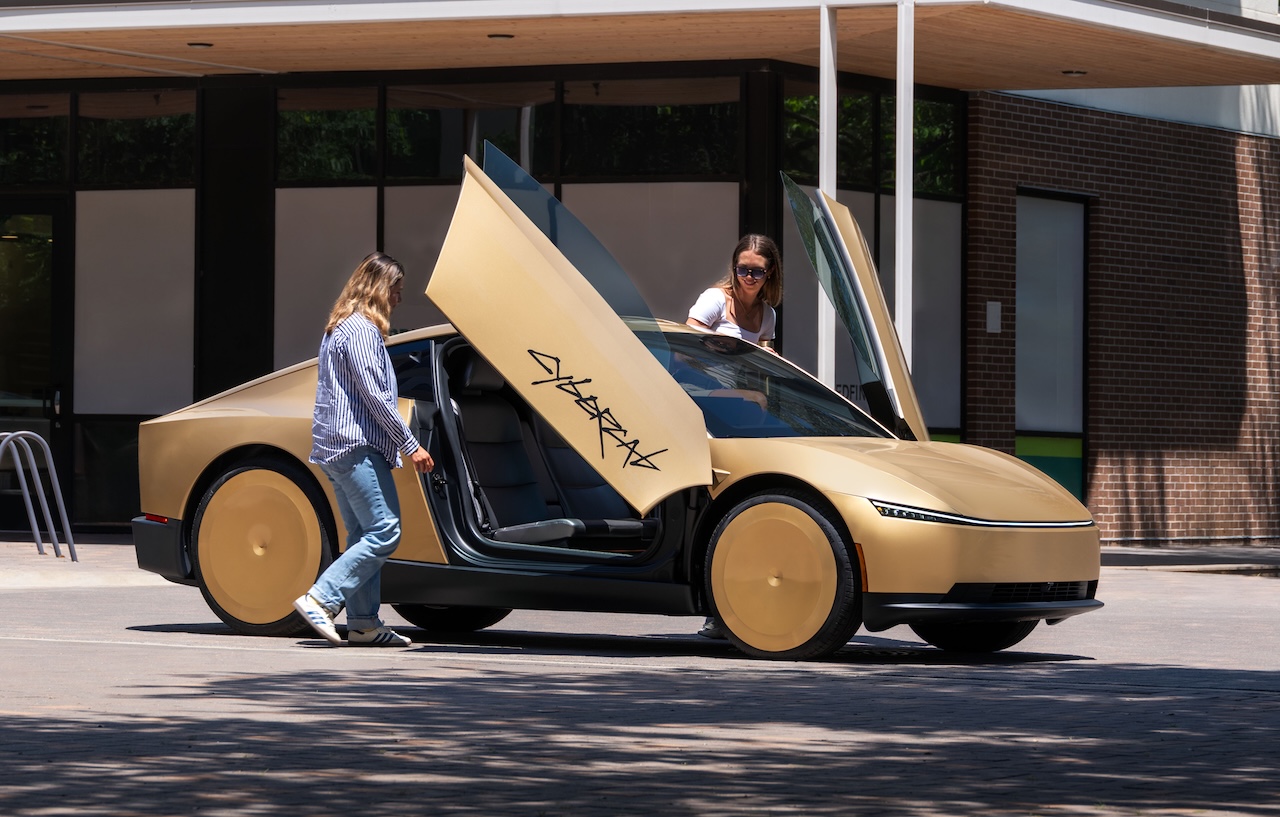
This shiny, slightly silly looking and very gold Cybercab (hmm, can you think of anyone who really loves things painted in gold? A good friend of Elon’s perhaps?) was brought to Australia so the media could sit in it and come to terms with the fact that this autonomous shit is getting real.
Tesla – or at least someone from Tesla who can’t be quoted directly because … Elon – says that Australia is very much part of the market rollout for the Cybercab technology, and they point out that, for once, we don’t have to wait for Tesla to build a right-hand-drive version, because the Cybercab would be good to go on our roads tomorrow.
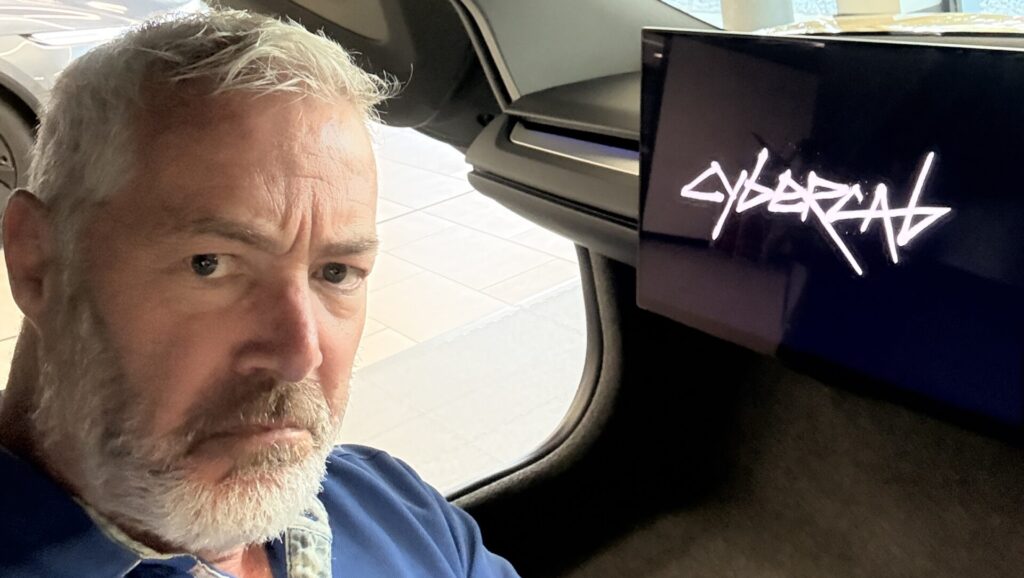 An angry man in a Tesla Cybercab
My tip is you’ll be seeing them on your streets – or at least those in Sydney (can even the world’s most powerful AI deal with a Melbourne hook turn, I doubt it) some time next year.
NSW Premier Chris Minns has already expressed support for a robotaxi trial in Sydney and said he’d personally be happy to ride in one.
And a spokesman for the Federal Department of Transport recently confirmed to EV Central that transport ministers around the country have agreed to “new implementation timeframes for Australia’s automated vehicle regulatory framework. This will enable conditional deployment of automated vehicles in select locations by 2027″.
For now, though, even though the Cybercab I was sitting in, quietly weeping, was a full production-ready vehicle, there was nowhere in Australia we were allowed to drive it.
What we did notice was that it has silly, Lambo-style doors, which no-one will enjoy as they stand on a busy road in the rain, waiting for them to slowly open at the push of a button (they are sci-fi lovely, of course, but practical, not so much).
This bit of wankery is a surprise when you consider how much thought has gone into making the rest of the Cybercab seem practical.
Yes, it only has two seats, but Tesla says more than 80 per cent of all ride share journeys have only one or two passengers. in Austin, they have fully autonomous Model Ys on the fleet – with steering wheels – for those who need a larger Robotaxi.
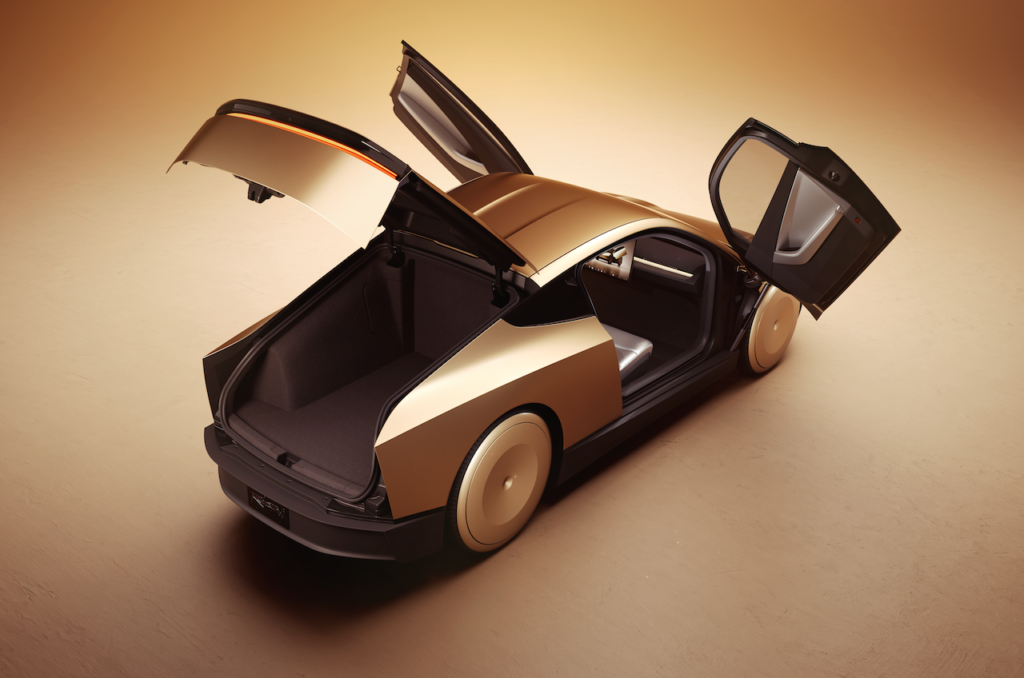 2027 Tesal Cybercab.
This design decision also leaves room for a very large, and robust feeling, load area at the rear, which is long enough for a wheelchair or something called “bicycles”.
In the front, the seats have no bolsters and are as slippery as a cheap couch, so you can slide in and out quickly, once you’ve waited for the showy doors.
In front of you is some very cheap, or rugged, carpet that should be good for soaking up kebab sauce, and vomit.
And, of course, a massive screen on which you can watch Netflix, YouTube, etc, so that you don’t have to think about the fact that you are being driven around entirely by a computer and you have no recourse to take over if things go sideways (there is a big Hazard button in the roof, but that’s it).
Weirdly, Tesla claims it’s given the car those ugly plastic wheel covers because they’re cheap and easy to pop off and replace, and the same goes for its many plastic exterior panels. But surely, this car will never kerb a wheel, or have an accident, so why does it need cheaply replaceable bits and bobs?
For now, Tesla has reached out to local fleet operators who’d like to get on the Cybercab train, but a spokesman who couldn’t officially say anything confirmed that it is Elon’s belief that people will one day buy a Cybercab for day-to-day use, and then be able to turn it into a working slave by sending it out to make money for them as an Uber/Robotaxi at night.
Hopefully, by then, we’ll also have Tesla robots to clean up the mess when it gets home.
Of course I can make all the shit jokes I like. The fact is, this Cybercab thing WILL work, and will probably justify Tesla’s silly share price. In fact, in the words of that wonderful human Steve Jobs, “this (Cybercab) changes everything”.
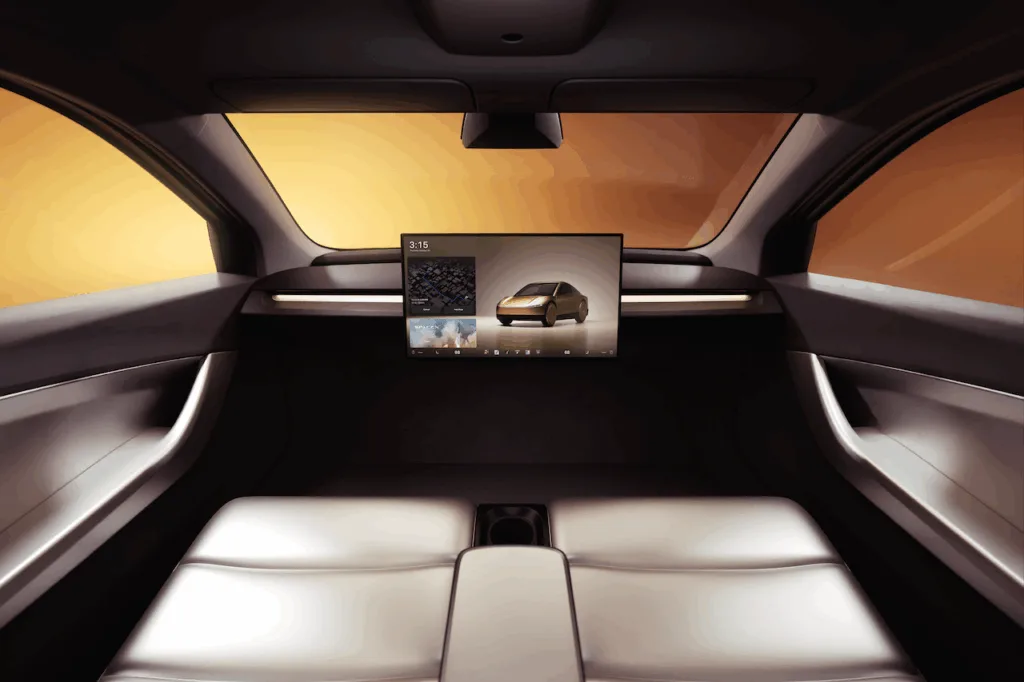 Hang on, whose driving? Tesla Cybercab.
I did ask about the fact that Waymos – the already extant and super safe autonomous taxis run by Alphabet/Google across America (and also coming here soon) – uses both cameras and LIDAR/radar systems for extra safety and Tesla uses cameras only, which seems, let’s see, maybe half as safe? And I was told that Elon says cameras are all you need for autonomous driving.
Next week, I’m going to give his Full Self Driving (Supervised) a go. Because I like to feel existential dread, apparently.