
The death of a man on a footpath outside an Auckland medical centre earlier this month has prompted questions about the obligations of health staff.
Several members of the public had tried to save the man, who was in his late 60s or early 70s, after he was discovered outside the Mt Albert Medical Centre with a faint pulse and unusual breathing.
Do you know more? Email melanie.earley@rnz.co.nz
Witnesses said staff at the clinic declined to help or let members of the public use their defibrillator, before the man died on 10 September.
Now, another Auckland man has come forward to allege he was also denied help during a medical emergency.
Sam Behzadi said he experienced a sudden loss of motor function in his feet and was unable to walk, requiring help from a member of the public, after giving blood at Awanui Labs in Onehunga in March.
The Good Samaritan went back into the lab to seek help, Behzadi said, and a nurse and senior manager came outside.
“They told me my condition was not related to the blood test, and I should return home and call an ambulance.
“I couldn’t walk, so the member of the public drove me home and my wife took me to hospital.”
Behzadi spent eight weeks in hospital and was diagnosed with a spinal stroke associated with spinal injury.
“It left me questioning the clinical response and more broadly, the responsibility of healthcare practitioners to appropriately assess and respond when a person presents with acute and serious medical conditions.
“I would have expected the response to be focused first and foremost on ensuring the immediate safety of a person.”
Awanui labs’ chief operations officer Nick Champness said Awanui staff were trained to respond to medical events at the centres and teams assisted patients experiencing adverse reactions including fainting or other medical episodes.
In Behzadi’s case, two staff members went outside to help – but his symptoms were outside the scope of their clinical training and expertise, Champness said. The staff went to the neighbouring medical centre for additional help.
He said incident record notes had shown medical centre staff at The Doctors Onehunga suggested Behzadi go home and call an ambulance rather than Awanui staff.
“While we don’t have further information about the circumstances of the medical event, we can confirm that our staff responded to a request for assistance and sought additional medical support when the situation presented was beyond their scope of clinical practice.”
General manager of The Doctors, Wayne Woolrich said his team member’s recollection differed from Behzadi’s and the lab workers.
“Our team member recalled going to the individual’s car and offering to provide an assessment in the clinic and offering to call an ambulance.”
Woolrich said the team member noted they were given “limited information” by Behzadi and the lab staff member and did not know a medical event occurred.
Behzadi claims while staff approached the car, they stayed five metres away and did not help or ask what he was experiencing.
“They didn’t approach me or carry out any physical examination.”
What is a healthcare worker expected to do in a medical emergency?
Dr Ken Clark is the chairperson for the Medical Council, the official body responsible for regulating doctors – making sure they’re “competent and fit to practice” – to protect the health and safety of the public.
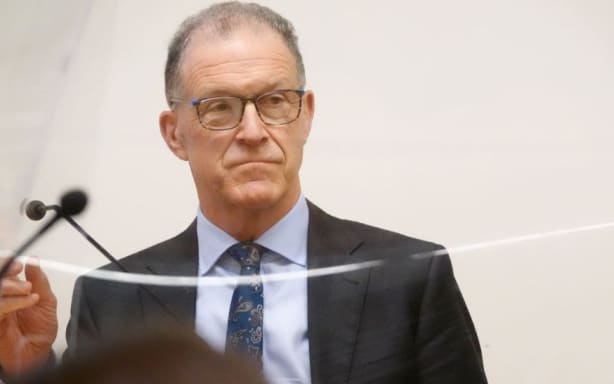
Dr Ken Clark. (File photo)
Doctors had an ethical obligation to respond promptly if needed, he said.
If they chose not to attend, they needed to be able to justify their decision.
“Good Medical Practice provides additional information for doctors in an emergency, that they should offer to help, taking account of their own safety, competence and the availability of other options for care.”
The council’s standards only applied to doctors, Clark said, while the Nursing Council advised on nurse’s obligations and healthcare providers on reception staff and clinic procedures.
“We take seriously any concerns about a doctor’s competence, conduct or fitness to practise,” he said.
“Concerns about the care or treatment a person received can be raised with the Health and Disability Commissioner. HDC can refer matters to Council where concerns about a doctor require our consideration.”
Anyone concerned about the competence of a doctor, their conduct or their fitness to practise could notify the council using an online form on its website.
The Nursing Council said its job was to regulate nurses and set standards of practice and conduct expected of the profession.
Its code of conduct included an expectation that nurses offer assistance in an emergency, taking into account competence, safety and the availability of other options.
“Whether a nurse’s actions were appropriate in a particular circumstance depends on the specific facts of the situation,” a spokesperson said.
“It would not be appropriate for the Council to comment on an individual case or hypothetical scenario.”