
Over the first few weeks of the NFL season, the disappointment of Justin Herbert in Los Angeles has led to a reckoning in NFL media over why certain quarterbacks get the benefit of the doubt and others don’t.
The conversation got loudest after ESPN’s Dan Orlovsky appeared on the network’s morning radio show, Unsportsmanlike, where he explained that he defended Herbert so often because the way the Chargers quarterback plays the position is “what it should look like.” Given that the question was specifically about Herbert in comparison with Jalen Hurts, a Black Super Bowl winner whom Orlovsky has criticized in the past, many took the explanation to be about the long-held perceptions around Black QBs.
Later, Orlovsky clarified his take. The former Detroit Lions backup explained that what he meant was that Herbert displays the qualities historically associated with a great signal-caller: “big, tall, fast, powerful, strong, smart, big-time accuracy arm.”
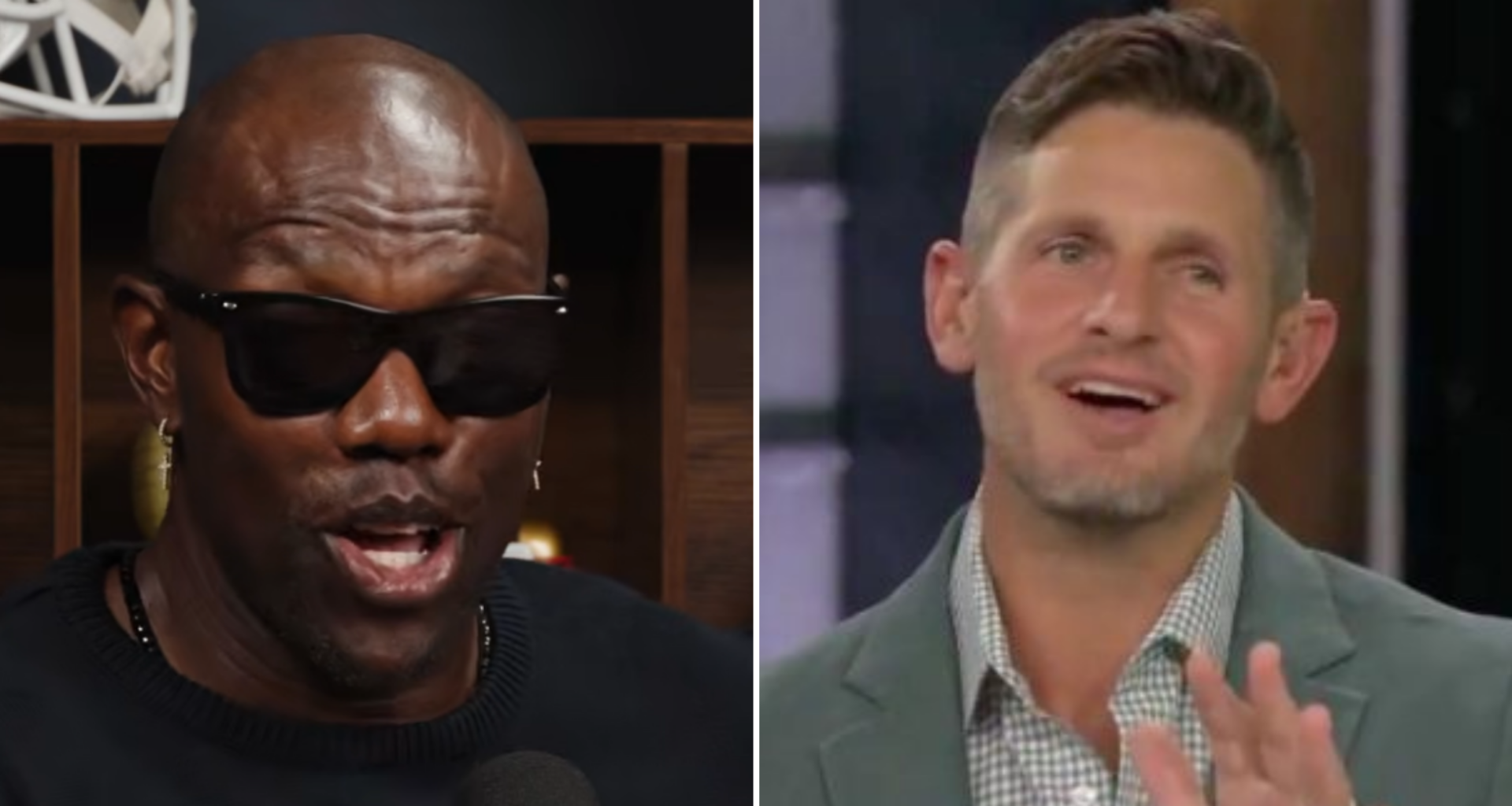
In a follow-up on Tuesday, Hall of Famer (and new podcast host) Terrell Owens went a step further, outlining how contrary to some of the history Orlovsky appeared to allude to around Herbert, Black quarterbacks are not only accepted more on the field these days but also as the faces of franchises.
“You have your Dan Orlovskys, those guys like that … they said it themselves. They see these white quarterbacks their kind of prototypical type of quarterback,” Owens said on his Get To the Point podcast.
“Stand in the pocket, deliver the ball everywhere. But the game has changed. Yeah, you’re going to need that at some point, but these Black quarterbacks are about to erase a lot of things as it relates to the prototypical type of quarterback. Because the game has changed so much and these guys, they offer so much with their arms but with their feet.”
While Orlovsky’s comments were taken out of context (he was defending his affinity for Jordan Love just as much as Herbert), he correctly underlined that Herbert is right out of central casting. Appearance and personality are often tied to what is perhaps the most American of positions in sports. The fact that Herbert is tall, handsome, and personable is hard to separate from the way he is talked about in the media.
But Owens argued that race is not as much of a deciding factor as it once was.
“Obviously the trend has changed over the last 10 years,” Owens said. “You’ve seen, even going into the season this year, I don’t know how many Black quarterbacks were starting this year but it was a lot of them. So now, you’re seeing the typical used-to-be faces of franchises and faces of the NFL starting to change a little bit. It’s starting to darken up a little bit.”
Owens ripped through several Black quarterbacks who can now boast a winning pedigree and veteran expertise, beyond the athleticism that people have long attributed as the sole advantage a Black QB brought to the table. This year in the league, Jameis Winston, Geno Smith and Jacoby Brissett have filled in capably for building teams.
“Now they’ve evolved, and they’re showing that they’re not just running quarterbacks. They can make all the throws,” Owens said. “That was part of it, too. ‘They can’t read defenses, they’re not smart enough, they can’t read defenses.’
“These guys have what it takes to make franchises very successful and push them to winning a Super Bowl.”