
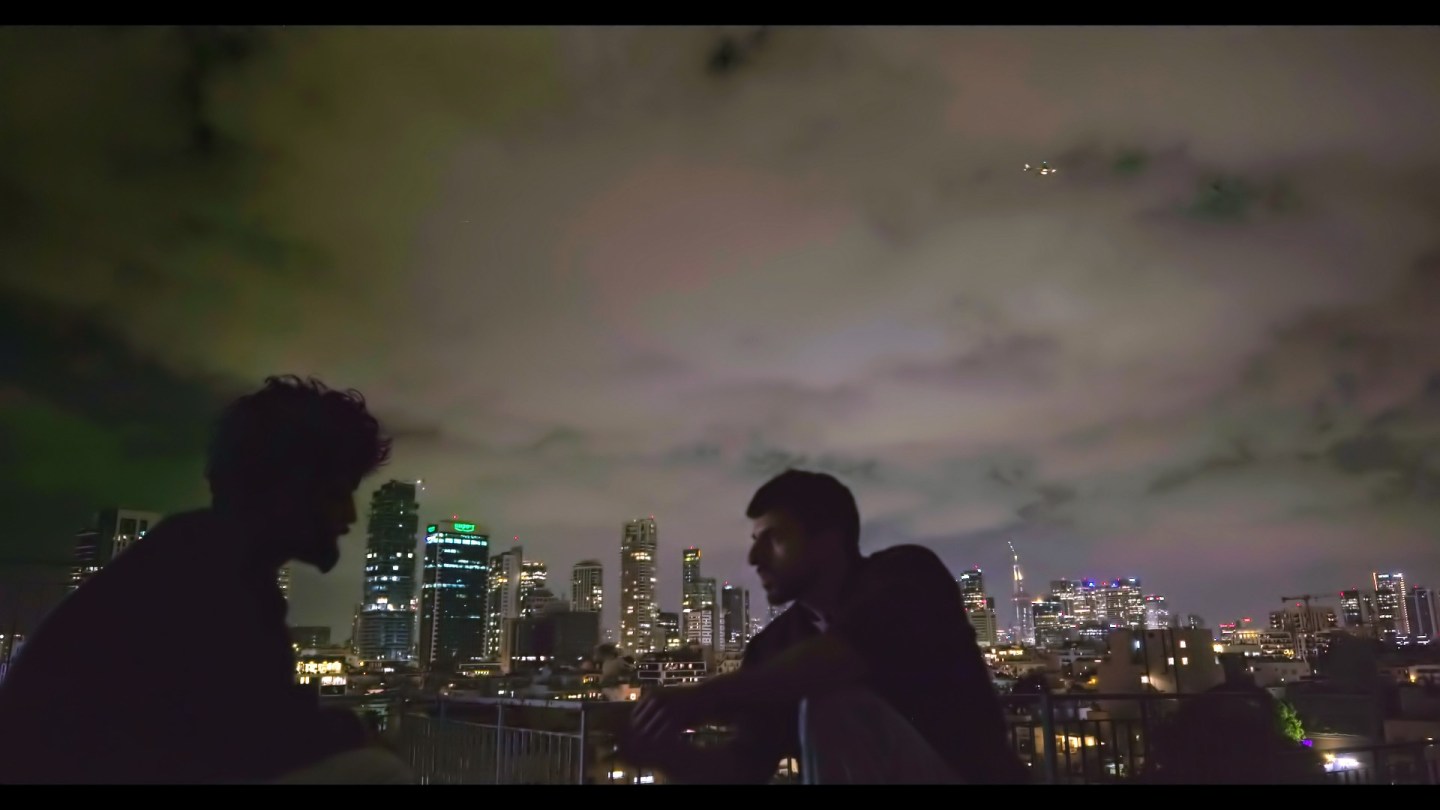
The Israeli Defense Force on Thursday came out with an official, and lengthy, response to NAZA, the Israeli-army whistleblower documentary about the war in Gaza.
The doc, from Oscar-winning Israeli directors Yuval Abraham and Rachel Szor (No Other Land), is a series of anonymous interviews with two dozen IDF veterans of the Gaza war. They lay out, in extraordinary detail what they claim is Israel‘s deliberate and systematic targeting of civilians in the war, (the NAZA of the title, an acronym of a Hebrew expression meaning “collateral damage”).
“The film NAZA presents a distorted, misleading and disingenuous picture of the IDF’s target planning and striking process,” the IDF said in its statement (available in full here), claiming the documentary’s narrative “is based on substantial factual errors stemming from a misrepresented and manipulative depiction of reality.”
In particular, the military statement reads, the film omits “context essential to understanding the war in Gaza,” distorts reality ” through manipulative editing of interviews” and “falsely and baselessly attributing malicious intentions to the IDF that the purported ‘evidence’ in the film does not substantiate.”
The IDF admitted it has not yet seen NAZA, noting that “the filmmakers did not submit their allegations to the IDF for examination and response before publication, and did not provide a copy of the film after its screening, although the IDF requested it.” Their lengthy statement and rebuttal is based on “a detailed account by a representative who attended a public screening,” of the film “as well as other public accounts and the filmmakers’ own public statements.”
The IDF statement rebuts or contextualizes several specific claims made in the film and argues the IDF takes “concrete steps [to] mitigate civilian harm” which the filmmakers omit to mention. The interviewees, the IDF says, are “addressing matters beyond their knowledge and competence” drawing broad conclusions of the Israeli military’s targeting process in Gaza based on “limited” intelligence. While acknowledging civilian deaths, the IDF refutes claims that any killing of non-combatants was deliberate or a matter of military policy.
“IDF directives prohibit targeting civilians,” the statement reads. In response to one interviewee, who in NAZA details the shooting of Palestinians trying to reach Gaza aid distribution sites, the IDF said “in response to several tragic incidents involving civilian deaths in or around distribution centers” operational debriefs were conducted, “lessons were learned and implemented, and additional instructions were issued.”
The Israeli military also rejects “categorically” the claims, made by several NAZA interviewees in response to questions from Abraham, that IDF’s actions in Gaza constitute a “genocide.”
“The allegation of ‘genocide’ is outrageous and unfounded, and the State of Israel has categorically rejected it,” the statement reads. “The filmmakers’ choice to ask people who are not experts on the matter and do not know the internationally accepted definition of the term for their personal views on it, is manipulative, misleading and irrelevant.”
British newspaper The Guardian, which produced NAZA, dismissed the IDF’s comments.
“The IDF’s attempt to portray the 24 participants in NAZA as junior-ranking officers involved only in the early stages of the targeting process is false,” reads a statement sent to The Hollywood Reporter from a Guardian News & Media spokesperson. “They include officers and soldiers who were involved in multiple stages of the targeting process in Gaza, including intelligence, operations and the final authorisation process.
“The process of assessing the credibility of the testimonies was rigorous. It included leaked classified documents, detailed verification of specific strikes and corroboration via a wider pool of confidential journalistic sources who did not appear on camera in the film.
“Over the past three years we have together interviewed more than 100 sources familiar with IDF systems used in the war in Gaza, including senior-ranking commanders directly involved in the authorization of strikes.
“The Guardian stands fully behind the film, which builds on three years of detailed reporting by the Guardian and our partners. Several highly respected news organisations have subsequently confirmed the IDF’s use of AI-driven systems in the Gaza offensive and the loosening of safeguards to protect civilians, including The New York Times, Washington Post and Associated Press.”
NAZA premiered in competition at the Venice Film Festival, where it won a Special Jury Prize. The film had its U.S. debut at the New York Film Festival, where it played to an enthusiastic crowd inside Alice Tully Hall, while drawing a small but intense pro-Israel protest outside the theater.