
I’m pretty sure everyone who was at the 2026 road worlds, whether rider or spectator, can agree they were a total success. A week of incredible racing, great weather and some seriously memorable experiences made the third edition of the road worlds in North America one to remember.
Getting to and fro
The gang at Canadian Cycling Magazine were on the ground, running (and riding) around doing race reports, taking photos, and interviewing all of the fantastic Canucks who were duking it out in Montreal. We all like to use the bikes to commute in Toronto, as much as we can, so given that the city was blocked up bigtime, it made only sense to ride to and from the events or where we were staying. And although some of us had our racing bikes with us for some rides, they weren’t exactly ideal—don’t want to lock those puppies outside, and dragging them through crowds was pas une bonne idée.
I’ve used Bike Share here in Toronto only a few times because I have my own beater bike I ride for errands, to the office, or out for dinner. And although I’ve spent lots of time in Montreal visiting family or bike racing, I never used the BIXI bike share there. Since launching in 2009, BIXI has grown from a relatively small bike-share system into a sprawling network with all kinds of bikes and stations across Montreal.
In fact, I was staying with an old high school friend and after speaking to my cranky editor-in-chief, also named Matthew, he said the BIXI bikes were perfect for getting from his place to the course, or wherever else we needed to. (Btw, check out some of said editor-in-chief’s awesome reels whilst riding said bikes.)
So many stations
When I asked Alex, my host for the weekend, if BIXI made sense and if there were some close to him, all he said was, “they are everywhere.”
Today, the Montreal network alone has more than 800 stations, while the broader BIXI system has grown to more than 13,000 bikes and 1,100 stations across Quebec. You can even get studded tires in the winter, or trailers.
From the house to the course
He lived about five km away from Mont Royal, but the first day I needed to head down to get my press pass. It was down on Rue Saint-Antoine Ouest, about a 10 km ride. I walked out the door from his place in Villeray–Saint-Michel, and there was a docking station within 200 m. I downloaded the app, entered our deets and I was good to go.
Now, that day I should say he was riding his sweet Colnago road bike—albeit with running shoes on his TIME pedals. The 10 km ride was…well, the BIXI bikes are great, and bomb-proof, but they are no match for a skinny-tired road bike. So it was a bit of a workout for me, but hey, when in Rome?
The sweats
By the time I got there, with my backpack and stuff, I was a bit damp in the shirt and didn’t want to be drenched in perspiration when I got to the press centre, which was right by the finish line on Parc Avenue. And since it was uphill, I instead opted for an e-bike—and the boost meant I could climb those climbs like Demi Vollering, well, sort of. Mostly I didn’t look like I was coming out of a shvitz when I got to the McGill athletics centre. And sure enough, a docking station was right here, something I would notice for the week.
I ended up getting a monthly pass even though I only needed it for a few days—but with multiple rides all over the city—for the race, for some events, and dinners—it quickly paid off.
One thing I noticed after the women’s road race on Saturday—when I had to head back to my old friend’s place—was suddenly, panic! No bikes at the docking station. But the app is so, so good, you could see in real time where docking stations had bikes—it was super easy. So yeah, I had to walk what, another 200 m to grab a bike? It also happened when I rode home—except the opposite. When I arrived to drop the bike off at Alex’s place, another moment of panic: the docking stations were full. But again, check the app—there was another spot just a block away.
Safe options for cyclists
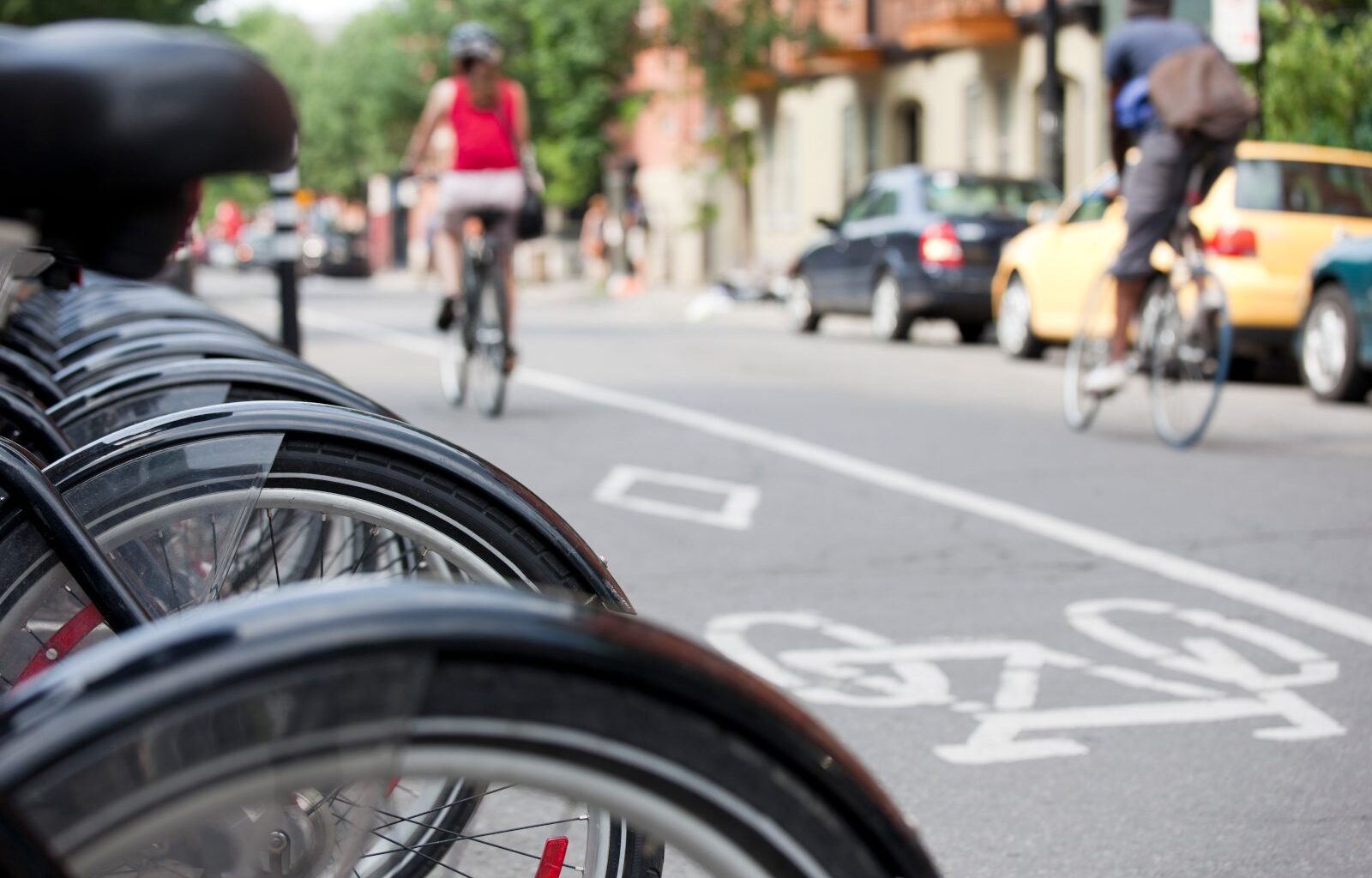
I’m pretty familiar with Montreal, but it’s been a while riding around. And the bike lane expansion the last decade or so has been bloody impressive. It made for some very safe riding. Everyone talks about the “European” aspect of the capital of Quebec—and yeah, lots of cool walking streets, bars, restos and stuff with a Euro vibe—but the cycling infrastructure is what stuck out to me. For a guy with Danish-born parents who spent plenty of time in Denmark, The Netherlands, etc. racing, the bike lane sitch was kind of amazing in Montreal.
In fact, when I would ride home from the press centre, I would simply put on Google Maps, turn on speaker and it would guide me from bike lane to bike lane. I don’t think I rode on a road without one the whole time.
So chapeau Montreal 2026, and also, chapeau BIXI. That was awesome.