
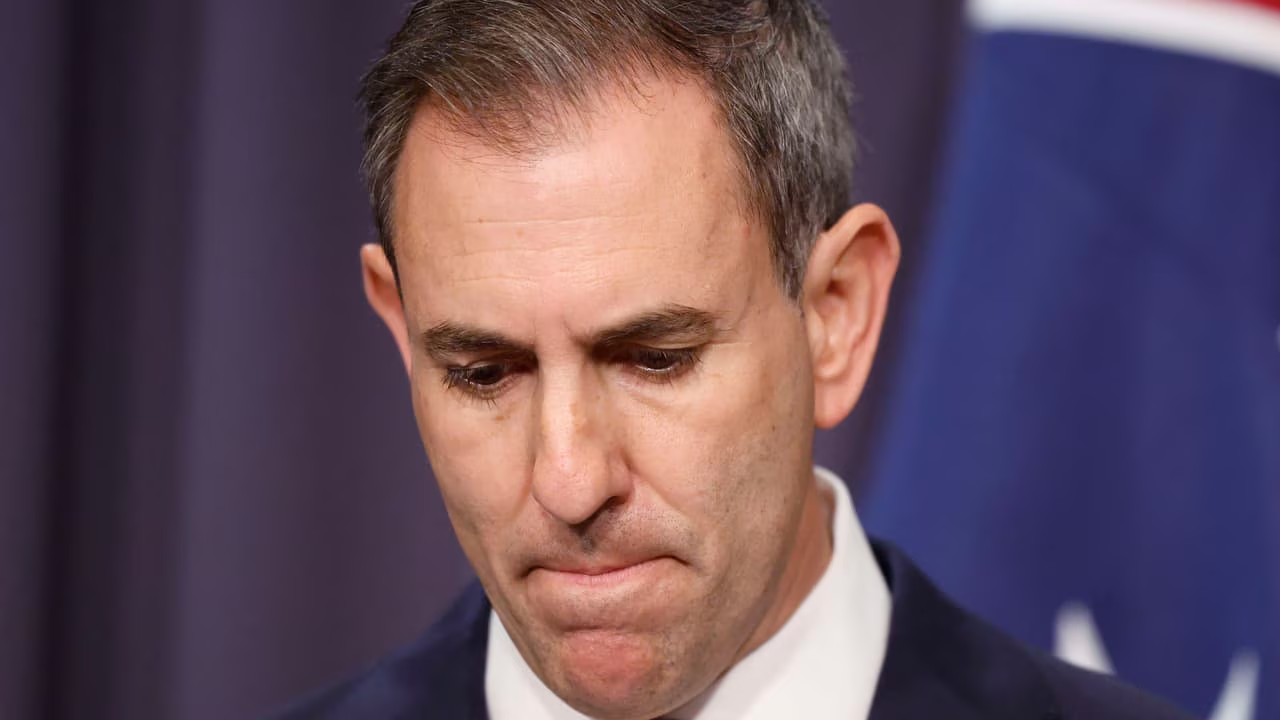
One of Anthony Albanese’s most trusted ministers has defended Treasurer Jim Chalmers after this week’s rate hike and uptick in inflation delivered a bruising blow to Labor’s economic credentials.
Mr Chalmers put Australia’s stubbornly high core inflation and climbing headline inflation down to higher fuel prices caused by conflict in the Middle East.
He brushed off concerns about public spending, which accounts for about 27 per cent of Australia’s GDP, and said spending by the private sector had tripled.
But despite the fresh blow to mortgage holders, Cabinet Secretary Andrew Charlton on Sunday pushed back on Mr Chalmers’s critics, saying the Treasurer “is doing an extraordinary job in very difficult global circumstances”.
“He has shown a willingness to take on the big challenges facing Australia, including challenges in the housing market with difficult reforms, he’s delivered significant cost of living relief to Australians at a time when that’s been very important,” Mr Charlton told News24.
“He is managing one of the few comparable economies in the world that has dealt with these big global challenges of inflation and low productivity without going into a recession that would have caused a lot of pain.
“As a Labor government, that is a big priority for us to make sure that we don’t go into a recession that drives a lot of people into unemployment.”
Data released this week showed headline inflation in the year to August jumped to 4 per cent from 3.5 per cent.
The measure includes items that bounce around in price, such as food and fuel.
The fresh data also showed core inflation, which strips out volatile items, held steady at 3.6 per cent.
But that figure, the RBA’s preferred measure, remained well above the bank’s 2-3 per cent target band, suggesting there were other factors at play than just fuel price pressures spurred by the re-escalation of fighting between the US and Iran.
Explaining its decision hike rates to a 15-year high this week, the RBA board acknowledged “conflict in the Middle East has broadened and global energy prices are now much higher than had been assumed in the August forecasts”.
But it also named artificial intelligence-related demand and ongoing “pressures on domestic capacity” as key factors.
To ensure high inflation “does not become embedded”, it said spending across the economy needed to cool to relieve pressure.
Mr Chalmers stressed that government spending accounted for $1 in every $5 of demand in the economy when he fronted media on Sunday.
However, he did take a softer line on public spending playing a role in inflation, saying “nobody’s ever contested” that aggregate demand is an issue.
“We actually saw public final demand grow more slowly in the new figures that were released at the start of last week and so what that shows is there are other factors at play here because public demand growth has been coming down at the same time as inflation has edged up,” Mr Chalmers told ABC Insiders.
“Budget settings are not the primary driver of prices in our economy. There’s a whole bunch of other things going on.”
‘Disaster’
During his interview, Mr Chalmers renewed his criticism of the conflict in the Middle East, declaring it a “disaster”.
“I’m not for giving free advice to the President of the United States,” he said.
“I think it’s clear whatever the reasons were for going in, from an economic point of view, the war in the Middle East has been a disaster.
“It’s been disastrous from a cost-of-living point of view and for Australians and indeed for people right around the world.”
He added that “no serious observer” could conclude that conflict in the Middle East is not “putting very substantial upward pressure on inflation, not just in Australia, but around the world”.
“That’s why we are seeing interest rates go up around the world as well,” Mr Chalmers said.
As he spoke reports emerged from Saudi Arabia of attacks on oil facilities amid escalating fighting with the Iran-allied Houthi rebels in Yemen.
The recent flare up has slapped further pressure on oil shipments from the region.
Meanwhile, the US war with Iran shows no signs of ending, with a UK navy agency reporting an oil tanker was “struck by an unknown projectile” on Saturday.
The incident came after senior Trump administration officials held secretive talks both on the war with Iran and the fighting between Saudi Arabia and the Houthis, according to US media.
The White House has not publicly confirmed the meeting.
Read related topics:Anthony Albanese