
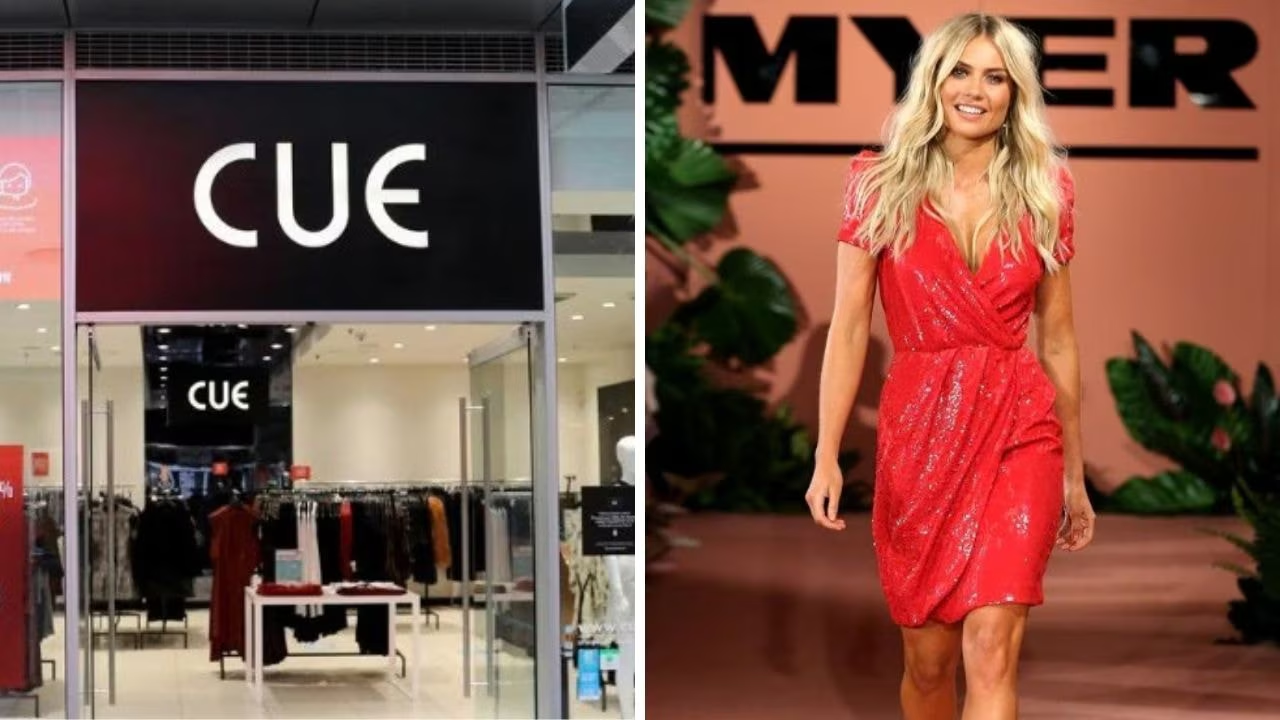
For the better part of six decades, slipping into a structured Cue suit was a rite of passage for the Australian corporate woman.
Cue was the brand that defined modern professional dressing, from the boardroom to after-hours events.
Today, that brand is hanging by a thread.
Be the first to know when news breaks. Download our new app
The spectacular unravelling of Cue Clothing — and its sister label Veronika Maine — into administration last month marks the end of an empire.
Founded in 1968 by Rod Levis to capture a growing demographic of women entering the workforce, Cue once boasted a footprint of more than 230 stores and concessions across Australia and New Zealand.
Now that number has dwindled to just 51, with receivers FTI Consulting already planning to shutter at least five of those locations.
David Briskin, former chief executive of Sass & Bide, neatly summarised the mood across the industry to The Australian Financial Review, noting that the collapse is “very sad for the state of Australian retail”.
But nostalgia doesn’t pay the rent, and one retail expert argues the brand’s downfall was a self-inflicted wound born of an inability to read the room.
According to Jana Bowden, professor of marketing at Macquarie University, Cue was undeniably the “IT-girl brand” at its cultural peak.
“But fashion changed, and Cue didn’t get the memo,” Prof Bowden told news.com.au.
The pandemic rewired women’s work wardrobes, dissolving the barrier between office and home hours and ushering in a hybrid reality.
“It’s no longer about how formal and powerful can I look – which was the core of the Cue identity,” Prof Bowden said.
“Women’s workwear is now more about casualisation and how comfy can I be from desk to school pick up, parent duties and dinner.”
With female workforce participation hitting record highs of around 63 per cent, women are juggling careers alongside the lion’s share of unpaid domestic care, the professor said.
“Women don’t want restrictive, synthetic heavy and rigid structured clothes to rule their multi-tasking lives; they want comfort, simplicity and everyday,” she said.
“Traditional corporate wear is a thing of the past reserved only for the most formal of occasions, but certainly not the modern workplace.
“We have changed how we see the world – we have a lifestyle approach.”
Cue failed to change with the times while premium mainstays like Country Road, Witchery, Saba and AJE successfully pivoted, Prof Bowden said.
“Hell, even stalwart lifestyle and resort wear brands like Camilla are entering the fray with silk suits for workwear,” she added.
Cue, meanwhile, “couldn’t let go” of the stiff, edgy London mod movement and brand image it had historically tied itself to.
There were macro factors at play, too. Discretionary cash is tight and there is a “sheer oversupply of in-store and online womenswear brands” competing for that spending.
“It’s a saturated landscape of over choice,” Prof Bowden said.
“Chuck into the mix lost foot traffic, especially in city stores; shuttering stores, drama, within-company discontent…and you have a rudderless brand spiralling out of control.”
Family feud erupts
That “within-company discontent” Prof Bowden referred to wasn’t just everyday bickering.
It was a full-blown family succession war playing out in the Supreme Court of New South Wales.
At the centre of the storm was Justin Levis, the son of Cue founder Rod Levis.
For years, Justin served as the company’s executive director and, as The Australian Financial Review noted, had anticipated taking the reins of the 58-year-old empire alongside his sister, Melanie.
Instead, a dispute erupted over succession plans for the business.
In a blistering public statement shared with fashion trade publication Ragtrader in April last year, Justin Levis revealed he was suing his parents, seeking a constructive trust over up to 50 per cent of the Cue Clothing Company. The legal dispute is ongoing.
“After nearly three decades of leadership, I hold no ownership stake in the company I helped build,” Justin said at the time, describing the situation as “devastating”.
“…While I respect his (Rod’s) legacy and the business he built, it is inconceivable that my indispensable decades of leadership, strategic direction, and personal sacrifices have been disregarded and erased.”
Iconic business sold off
The business was sold to British-based investor Hilco Capital by the Levis family in April last year.
Hilco described the receivership as a “disappointing outcome”, but the only course of action available under the circumstances.
The receivers said that notwithstanding an increase in sales and other improvements across the group, these were insufficient to mitigate the impact of overhead costs currently in the business.
The receivers are continuing to trade while they assess the company’s operations and available restructuring options.
A sale process seeking offers for the business as a going concern will also be launched.
The upshot, according to Prof Bowden, is that unless womenswear brands are dynamic there’s a good chance they’ll be left behind, and sadly that’s where Cue has ended up.