
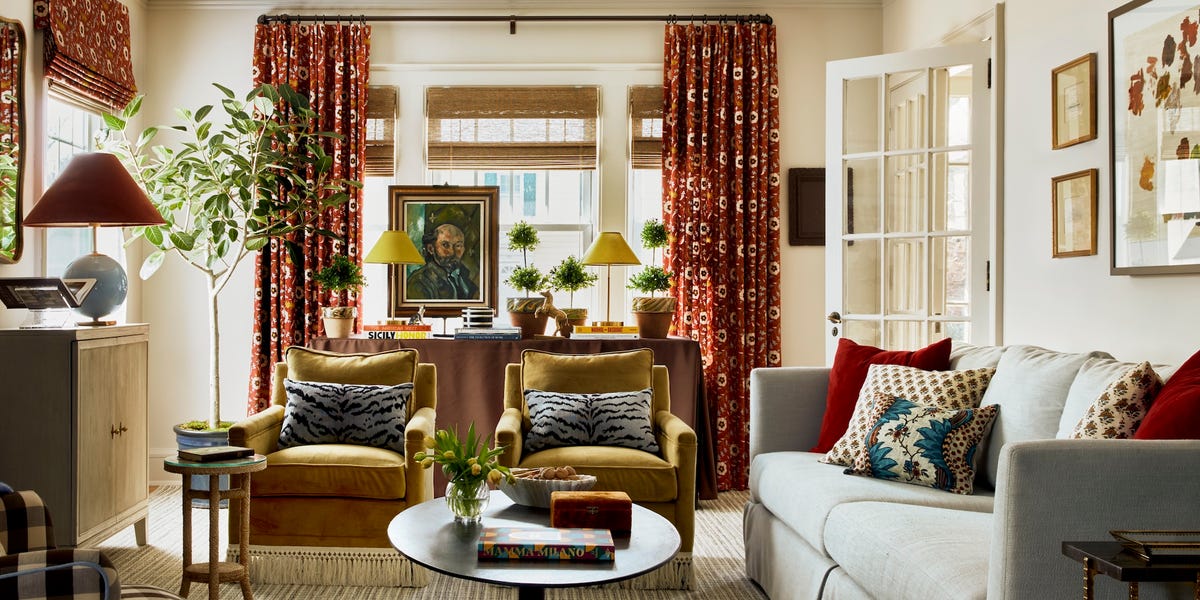
If you need any proof that what’s old is suddenly new again, think about your grandmother’s house. For years, her abundance of flora, skirted furniture, and wallpapered-everything would be hallmarks of an outdated, mothball-infested space. But now? Those cutesy elements are everywhere—and fringe is joining the ranks. Because, yes, fringe-flanked decor is finally making its triumphant return.
For Carrie Moore, the comeback is particularly appreciated after ‘a long stretch of minimalism in design.’ In an era that champions traditional, and even whimsical touches, a tasseled touch can make a room feel ‘layered and collected rather than overly polished,’ says Jeanne Hayes of Camden Grace Interiors. ‘Designers and homeowners are embracing more texture, pattern, and personality, and fringe is an easy way to introduce all three,’ adds the West Hartford, Connecticut, designer.
According to Marisa Gutmacher, senior vice president of design for Samuel & Sons, fringe was historically used to finish and protect a textile’s edges. But over the years, it morphed into a decorative detail that could help convey a certain aesthetic: The bold border had an Art Deco appeal in the 1920s, an ultra-glam allure during the ‘80s, and a boho flair come the 2010s. But now? Passementerie is non-partisan.
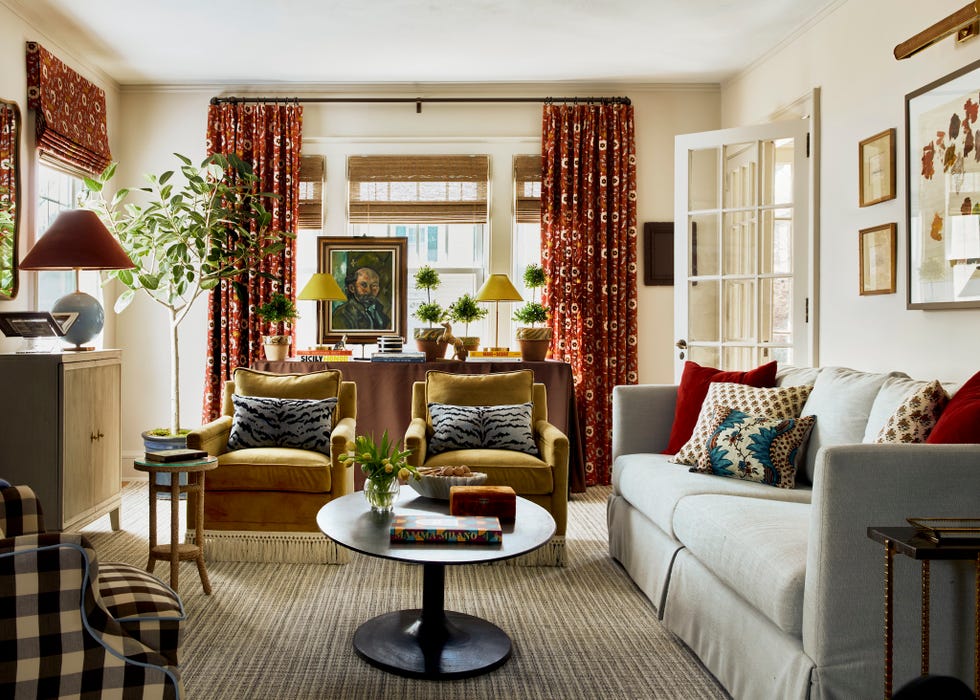
Design: Camden Grace Interiors; Photographer: Jared Kuzia
‘Designers use fringe with a lot more freedom,’ Gutmacher observes. ‘What interests me is the range: Fringes can be novel, tailored, romantic, or understated.’
Moore adds today’s take celebrates a ‘resurgence of expressiveness.’ ‘It’s one way that people can express themselves or a particular design style,’ says the North Carolina designer. ‘Fringe can read in different ways: 1920s flapper, country Western, Rock ‘n’ Roll, and so on.’
Trims and tassels are incredibly versatile—and jell well with a bunch of vibes—but there are a few ground rules everyone needs to follow. For starters, practice restraint.
‘Fringe should feel like punctuation, not the entire sentence,’ says Britany Simon, an interior designer in Scottsdale, Arizona. When in doubt, consider a piece’s function. If the trim is going to get caught underfoot or constantly tangled, Hayes encourages you put it somewhere else: A tasseled accent chair, ottoman, or throw pillow is bold, but not cumbersome.
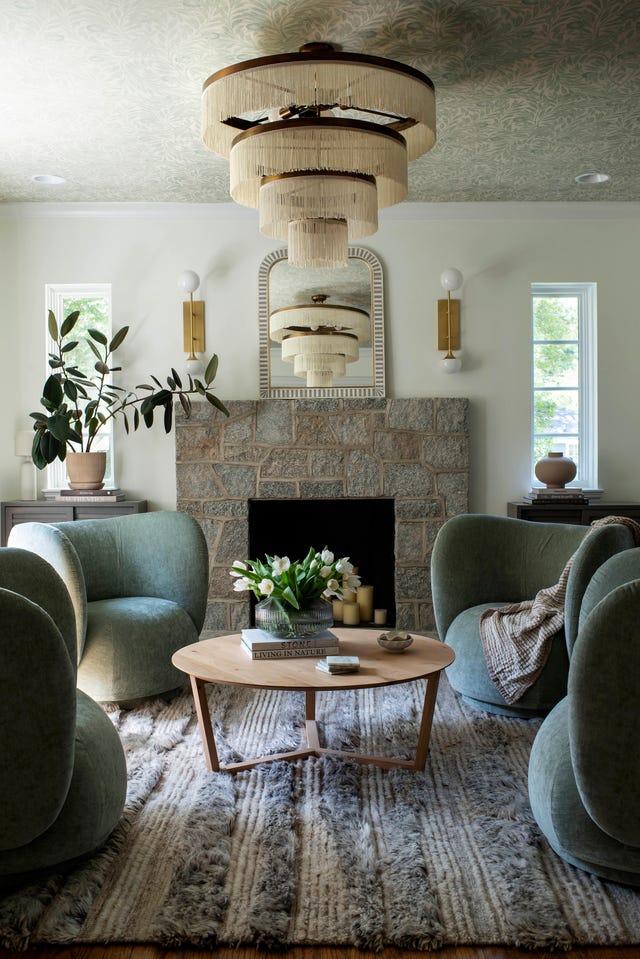
Design: Carrie Moore Interior Design; Photographer: Lissa Gotwals
In one project, Moore added a fringed chandelier to an ‘older, storybook-feeling home.’ ‘It speaks most to the vintage charm of the home and the client’s love of a bit of glamour,’ she says. Plus, her clients don’t have to worry about untangling a chair’s tresses.
Equally important is the trim itself. While a ‘substantial, intentional finish’ often reads chic, Hayes warns thin, wispy strands can quickly feel fussy.
Once you selected the spot and scale, have fun with detail. When paired with a pastel or patterned piece, a shaggy edge can imbue any room with a cottagey cachet. Or, for a more approach, create contrast.
‘If everything surrounding the fringe is also traditional, ornate, or overly decorative, it can start to feel very literal,’ Simon shares. ‘I like to pair fringe with cleaner silhouettes, contemporary furniture, great stone, beautiful woods, or even something sculptural.’
‘It’s less about being “trendy” and more about adding a little personality to the pieces you already love,’ Hayes adds.
She has a point: Fringe has ebbed and flowed in popularity, so it’s not exactly on track to become extinct. And if you can use tassels and trim in a way that speaks to your unique design perspective? Well, this comeback will be here to stay.