
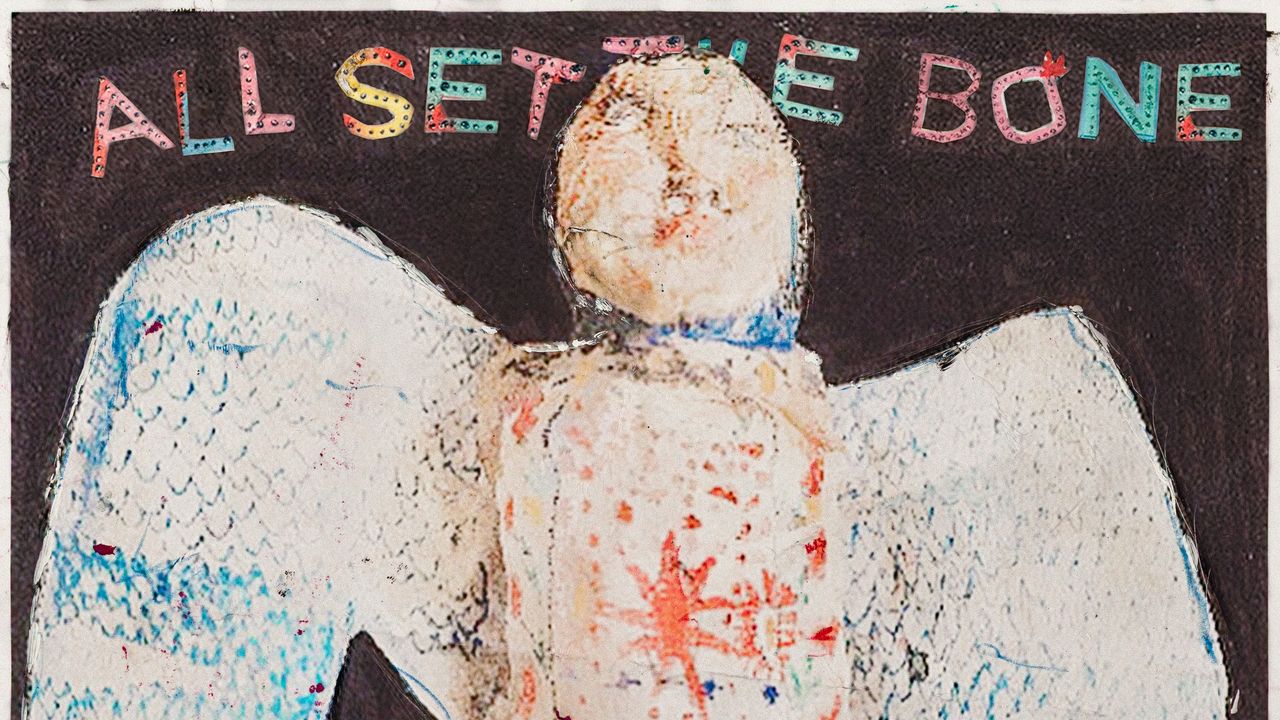
In Greg Freeman’s music, every passing second is an emergency, another last chance not to be alone forever. Even the tender sentiments on his fierce, heart-cracking new album, All Set the Bone—“When I’m alone, I can be anyone, but when I’m with you, I’m me,” for example, from “Loser’s Prize,” or “All I wanna do is look at you looking at me with your moonlight in your eyes” from “Indu”—come out sounding panicked and bewildered, like Freeman’s fending off loan sharks in a back alley.
Freeman sings this way by design. The tone and grain of his voice tends to invoke comparisons to Jason Molina, but the Vermont singer/songwriter has talked about his love of blues hollerers like Skip James, Charley Patton, and Howlin’ Wolf, singers whose voices sound like disruptions or warnings. Freeman lets his voice splay and skid, cracking and skating past the pitch center, because this is the sound his characters’ nervous systems make. He stumbles into his own immaculately composed rock songs like he’s blind drunk at a party, eyeing everyone unsteadily and warily, fight-or-flight hormones coursing through his system and a load of condemnations on his tongue.
No score yet, be the first to add.
Those condemnations flow thick and fast. As on his 2025 breakout, Burnover, Freeman’s lyrics cram so much human disappointment and dashed hopes into small spaces that each song seems to gaze out at you, coyote-ish and hungry. “Everything you look at/Looks back at you,” he warns on “Indu,” and across All Sets the Bone, Freeman introduces us to dozens of souls, all nameless, who fix their beery, hardened stare on us.
Freeman recently left his longtime home of Burlington for Chicago, but his songs often take place in specific upstate New York towns—your Romes, your Vestals, your Rennselears. These are places where the economic strain of spiraling city rent meets the crumbling infrastructure of American small-town life, where the only thing everybody can agree on is that “these are the days of one thing after another.” On the opening song, “Cahokia,” he sings about the feeling that “doomsday came and went for everybody else,” and this is the default setting for Freeman’s music: His characters are angry and they feel alone. In the words of one song, they are “Marooned.”