
The NBA pushed back on Friday on the idea that the second tax apron has had a detrimental effect on the league’s middle class, putting out a statement on social media to dispute that notion. That statement (via Twitter) reads as follows:
“Recent reports asserted that the second apron is hurting ‘lower’ and ‘middle’ class players. That’s untrue. Since the implementation of the second apron, the number of players on team rosters has remained the same and annual salaries have increased by nearly $1.3 billion, resulting in pay increases of approximately 30% for all classes of players.”
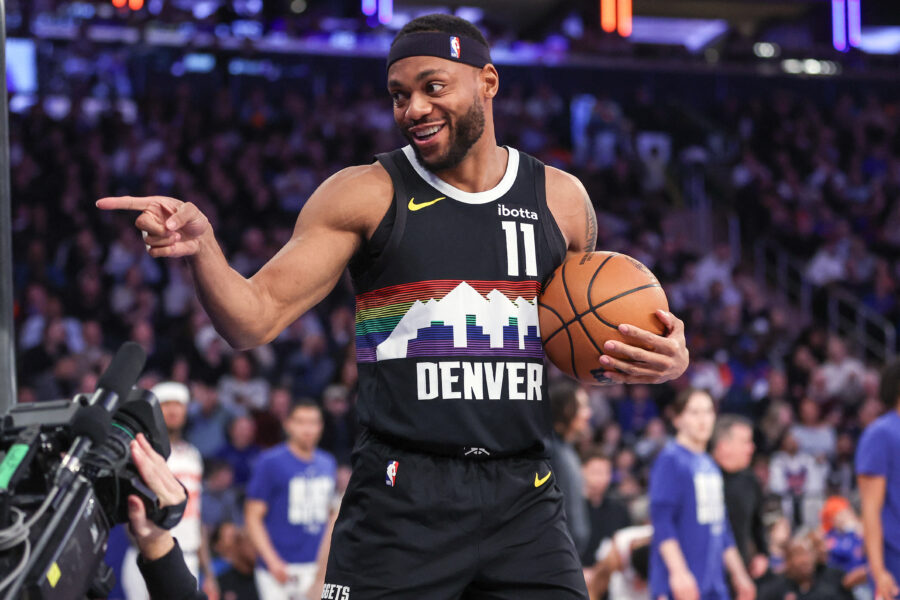
The league’s statement appears to be a response to remarks made this week by veteran guard Bruce Brown, who is in camp with the Knicks on a non-guaranteed Exhibit 9 contract. Speaking to reporters, including Ian Begley of SNY.tv, Brown expressed surprise that he was unable to secure a guaranteed deal after playing a significant role off the bench for the Nuggets last season and suggested the CBA and the second apron are to blame.
“The new CBA is good for certain players, right? Max guys, top free agents and maybe rookie extension guys,” Brown said. “But other than that, like the middle guys, it kind of sucks for us. As you see, there’s not that many people getting that full mid-level (exception) anymore – or even the tax mid-level (exception). It’s tough, but that’s just the way it is right now. So each time you’re out there, you’ve just got to play your best and hope for the best.”
While the apron-related roster building restrictions included in the league’s latest Collective Bargaining Agreement have certainly curbed certain teams’ spending to some extent, overall player salaries have continued to increase at roughly the same rate as the salary cap, and the NBA’s “middle class” hasn’t been the only group impacted by clubs’ evolving spending habits.
A player like Pistons center Jalen Duren, for instance, likely would’ve been a lock for a maximum-salary contract starting at 25% of the cap under the old CBA after making an All-NBA team at age 22, but he ended up getting a five-year, $200MM contract that is worth about $8MM per year below that 25% max (and roughly $17MM per year below the 30% max he qualified for by meeting the Rose rule criteria).
ESPN’s Bobby Marks laid out data last summer showing that salaries for the so-called middle class have continued to rise during the latest CBA, which was a point reiterated by both commissioner Adam Silver and former NBPA president CJ McCollum at the time.
So far during the 2026/27 league year, 17 players who have been signed using some form of the mid-level exception negotiated a 2026/27 salary worth at least $6MM, including four who will earn $14MM or more. By comparison, in 2023/24, before the new apron penalties went into effect, 10 players signed using the mid-level exception received at least $5MM, which was the amount of the taxpayer MLE at the time, and only three of those players locked in a salary of $9MM+.
Brown’s former team, the Nuggets, is the only NBA team currently operating over the second tax apron. Denver filled out its roster this offseason by signing Marvin Bagley III, DeMar DeRozan, Tyus Jones, and Alpha Diallo to guaranteed minimum-salary contracts, but didn’t work out a new deal with Brown.