
Australia’s housing downturn is gathering pace, with prices now more than 5 per cent below their peak and forecasts pointing to further falls.
While that may seem like good news for first homebuyers, higher interest rates have done little to improve housing affordability so far. Four rate hikes this year have cut borrowing capacity by about 9 per cent, or $90,000, for a median-income household, according to data analytics company Cotality.
Homeowners and renters are also under pressure. According to Roy Morgan research, more than 32 per cent of borrowers are now at risk of mortgage stress — up 8.4 per cent since January — while the rental market remains tight.
The major banks and analysts are predicting a decline of between 7 and 15 per cent, while United States investment bank Morgan Stanley has forecast the biggest price correction in 40 years.
The broader economic backdrop is also weighing on households. Interest rates are at their highest level in 15 years, while the cost of living crisis and growing fears of recession have kept consumer confidence near historic lows.
Your trusted source for staying up-to-date with the world around you. Get free daily news updates and analysis, straight to your inbox.
But looking across the Tasman to New Zealand and across the Pacific to Canada could provide insight into what lies ahead for Australia’s property market.
All three countries have experienced housing crises, marked by unprecedented price booms during the COVID-19 pandemic, housing shortages and affordability pressures.
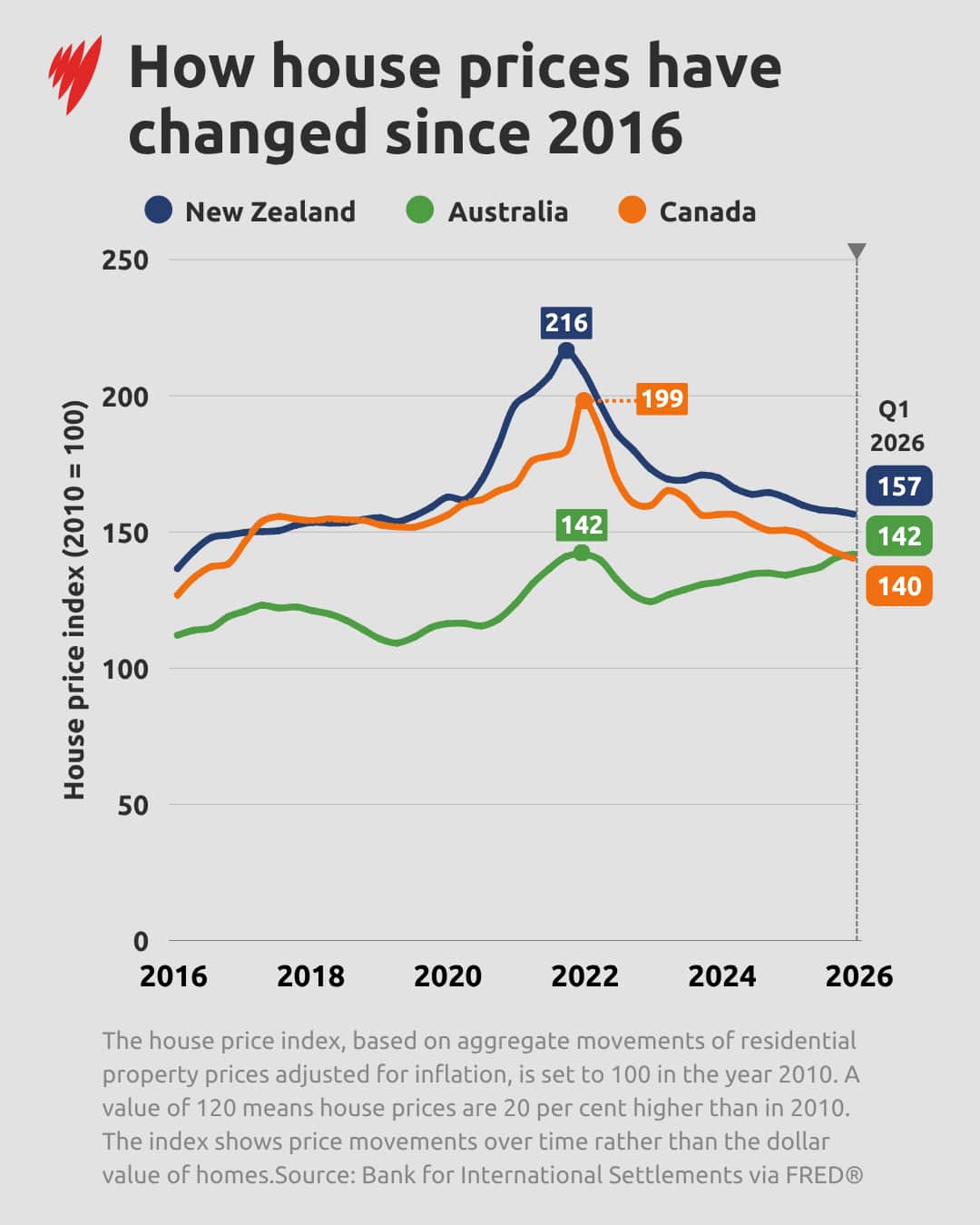
Since then, Australia has taken a different path. While home values in New Zealand and Canada began falling several years ago, Australia’s downturn is only just beginning.
 Source: SBS News
As of the first quarter of 2026, house prices relative–to–incomes had fallen substantially from their COVID-era peak in New Zealand and Canada, while Australia’s remained above its pandemic-era high, according to Organisation for Economic Co-operation and Development data.
Australia’s ratio, by contrast, is now 4.7 per cent above its COVID-era peak.
Could Australia follow a similar trajectory? And what lessons can be learned from their housing corrections?
New Zealand’s housing correction
Across the ditch, average property prices rose 85 per cent between 2010 and 2020, then surged another 44 per cent during the pandemic, peaking at NZ$1.06 million ($1 million) in 2022.
Nick Goodall, head of research at Cotality New Zealand, says the property boom was fuelled by ultra-low interest rates, pandemic support measures and looser lending rules.
He describes the peak as “very artificial”, with the market reversing once interest rates started to rise.
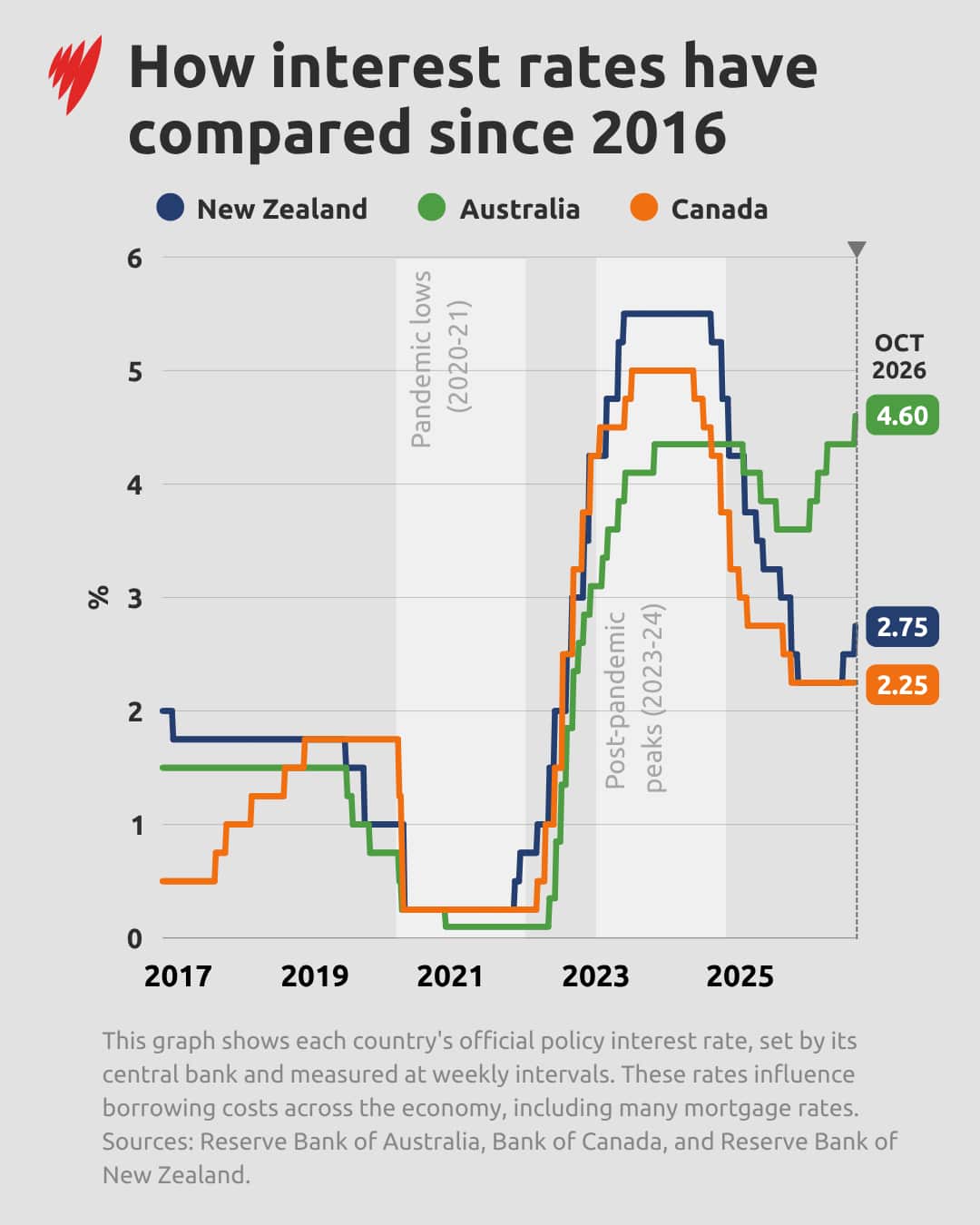
To curb post-pandemic inflation, the Reserve Bank of New Zealand lifted its cash rate 12 times in a row to 5.5 per cent by May 2023.
By comparison, Australia’s cash rate peaked at 4.35 per cent in November 2023.
New Zealand then entered recession in 2023, as higher interest rates weighed on demand and the labour market weakened, contributing to about an 18 per cent decline in property values from their peak over 18 months.
 Nick Goodall of Cotality New Zealand says New Zealand’s property boom was driven by ultra-low interest rates, pandemic support measures and looser lending rules. Source: Supplied
Prices have remained broadly flat since.
But affordability has begun improving as interest rates have fallen, following nine consecutive rate cuts from mid-2024.
Cotality data shows the national value-to-income ratio, which measures how many years of household income are needed to buy a median-priced home, fell from a peak of 9.8 in late 2021 to 6.7 in the second quarter of 2026.
Goodall says a more useful measure is the median gross household income needed to service a mortgage, with now sits at 40 per cent, down from a peak of above 50 per cent in late 2021 and below the long-term average of 42 per cent.
Supply and planning reforms have also played a role, particularly in Auckland, where changes allowed greater housing density.
“Enabling more properties to be built on the same area of land that was available previously for only one property, certainly has led to less growth or maybe a greater decline [in prices],” Goodall tells SBS News.
 Housing affordability has improved in New Zealand in recent years. Source: Getty / Hagen Hopkins
First homebuyers accounted for 29 per cent of sales in the most recent quarter, the highest proportion since Cotality started tracking the data in 2003.
Rental affordability has also improved, with rents 1.8 per cent lower in 2025 than a year earlier — the first annual decline in a decade, according to Realestate.co.nz.
[Renters have] got less competition out there, so they can take their time. They know they’ve got the power in their hands because there’s high supply.
Meanwhile, investors have been squeezed by higher ownership costs, weaker expectations of capital gains, and softer rental returns as housing supply increased and population growth slowed.
“[Property investors] can make it work, but it’s definitely not the easy game it used to be when interest rates were really low,” Goodall says.
Canada’s housing correction
In Canada, home prices surged more than 50 per cent during the COVID-19 pandemic, before falling about 20 per cent from their early-2022 peak.
The boom was fuelled by very low interest rates and a shift towards larger suburban homes as lockdowns and remote work changed where people wanted to live.
The Bank of Canada lifted the cash rate from 0.25 per cent in March 2022 to 5 per cent in July 2023, with prices starting to fall sharply later that year before declining more gradually.
Robert Hogue, assistant chief economist at the Royal Bank of Canada, says while the correction offered some relief, prices remained far higher than before the pandemic and housing remained particularly unaffordable in cities such as Toronto and Vancouver.
 Housing affordability remains a major issue in Canadian cities such as Toronto. Source: Getty / Francois Nel
“If you ask ordinary Canadians, it’s still unaffordable in many parts of Canada … it’s just that it’s less unaffordable than it was just a couple years ago,” he tells SBS News.
He says Canada’s cash rate, which has been at 2.25 per cent since October last year, which he expected to rise in the year ahead, while slower economic growth could weigh on wage growth, meaning affordability is unlikely to improve anytime soon.
A surge in post-pandemic migration added significantly to housing demand, with Canada adding more than 1.2 million people through permanent and temporary migration in 2023 alone.
The Canadian government subsequently moved to reduce migration pressure, cutting temporary resident arrivals by about 43 per cent.
It also aimed to slash permanent migration from a previous target of 500,000 to 395,000 last year, with further reductions in the years to follow.
READ MORE
Hogue says curbing temporary immigration had cooled the rental market.
Data from rentals.ca this month show asking rents across Canada were down 4.2 per cent year-over-year, marking the 24th consecutive month of decline.
But Hogue says the drop in demand had a spillover effect, with condo developers launching fewer projects because of lower returns and higher building costs.
He says that could be a problem when migration picks up again.
“This is a big concern for those like me thinking ahead in three or four-or five-years’ time.”
What Australia can learn
New Zealand has seen housing affordability improve, while Canada continues to face significant affordability pressures.
To understand what that means for Australia, it’s worth first examining why its housing market took a different path from Canada and New Zealand.
Australia’s pandemic housing boom was less pronounced than those of New Zealand and Canada, with prices rising about 25 per cent between April 2020 and February 2022, according to Cotality.
After an initial fall, however, Australian property prices recovered and continued rising until reaching a new peak in March 2026. They have since fallen for six consecutive months, leaving prices 5.2 per cent below their peak.
Despite the decline, housing affordability has reached a record low on realestate.com.au’s measure, with a typical-income household able to afford just 12 per cent of homes across Australia.
Independent economist Saul Eslake says Australia’s downturn is only beginning this year partly because governments have until recently supported the housing market through cash grants and other schemes.
He points out Canada and New Zealand did not intervene in the same way.
 Source: SBS News
Eslake also notes Australia’s unemployment rate, currently 4.6 per cent, is lower than Canada’s 6.4 per cent and New Zealand’s 5.6 per cent, reducing pressure on households to sell and, in turn, on property prices.
While Australia’s cash rate of 4.6 per cent is currently higher than New Zealand’s 2.75 per cent and Canada’s 2.25 per cent, Eslake notes that differences in cash rates do not necessarily translate into an equivalent difference in mortgage rates.
Canadian mortgages are often fixed for five years, with many rates until recently higher than Australian variable mortgage rates. New Zealand floating variable rates have also often sat around Australian rates, despite the country have a lower cash rate.
Eslake points out New Zealand’s population growth had been slower than Australia’s, partly because many New Zealanders moved across the Tasman in search of better economic opportunities, while Canada introduced measures to curb temporary migration several years ago.
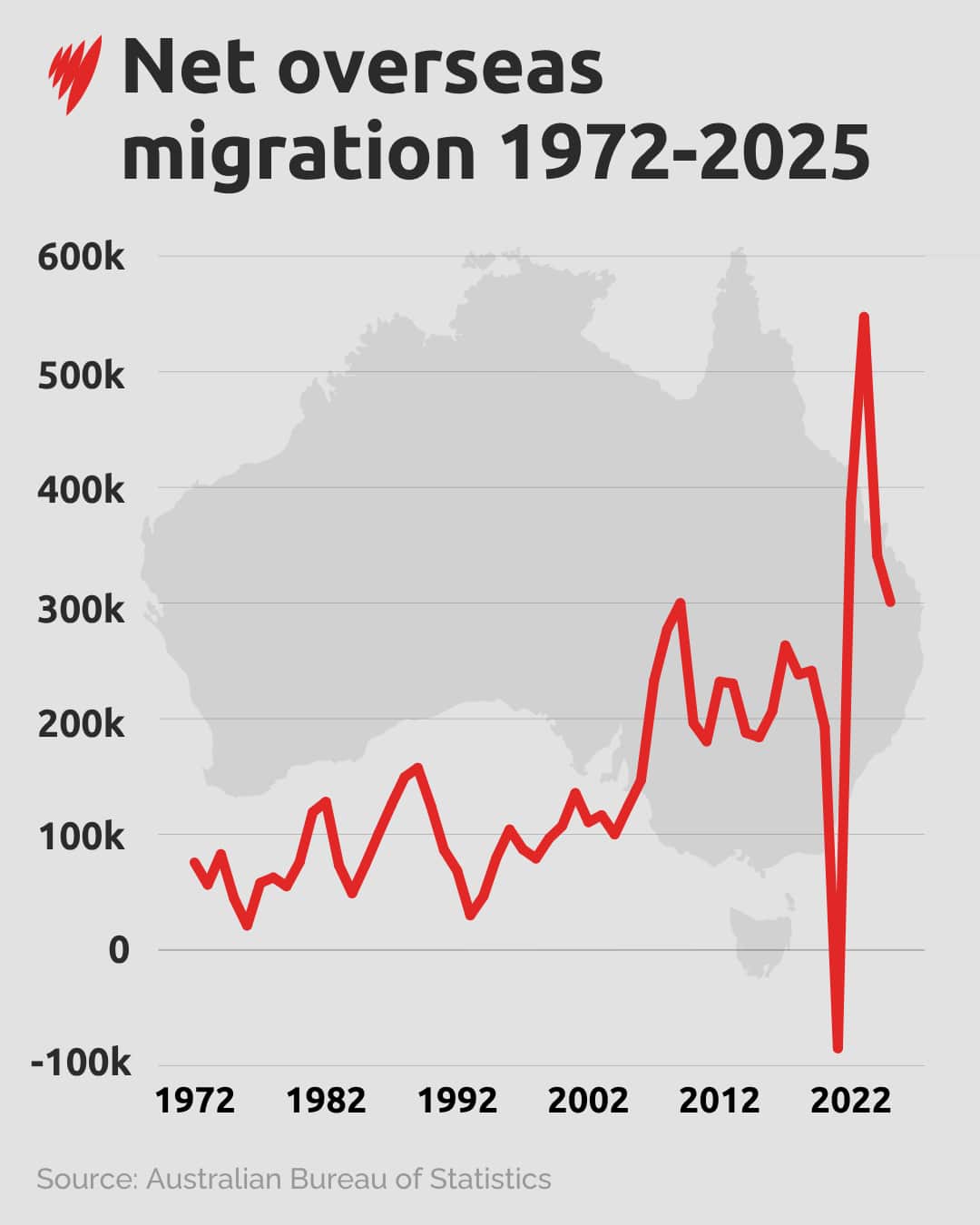 Net overseas migration (NOM) looks at how many longer-term migrants are arriving in Australia each year. Source: SBS News
The federal government only announced tightened temporary migration rules last month, while the Coalition and One Nation have promised deeper cuts.
“Cuts in the immigration intake, depending on how large they are, and depending on what categories of migrants they fall on, could reduce the demand for housing,” Eslake says.
Eslake estimates a 10 to 15 per cent decline in house prices over two years could improve affordability, while warning a sharper fall would harm the economy.
But for affordability to become the priority, he says there needs to be a fundamental shift in how housing is treated.
Australians have increasingly come to think about housing as a vehicle for, to use the common politician’s phrase that I hate, ‘a means of getting ahead’, without, of course, ever asking the question ahead of whom?
“To which the answer is your own children and grandchildren. In other words, we’ve come to think of housing as a vehicle for wealth accumulation, rather than a vehicle for providing basic human needs.”
Even now, Eslake says governments have been reluctant to frame policy, such as changes to negative gearing and the capital gains tax which have cooled investor demand, as an effort to make housing more affordable.
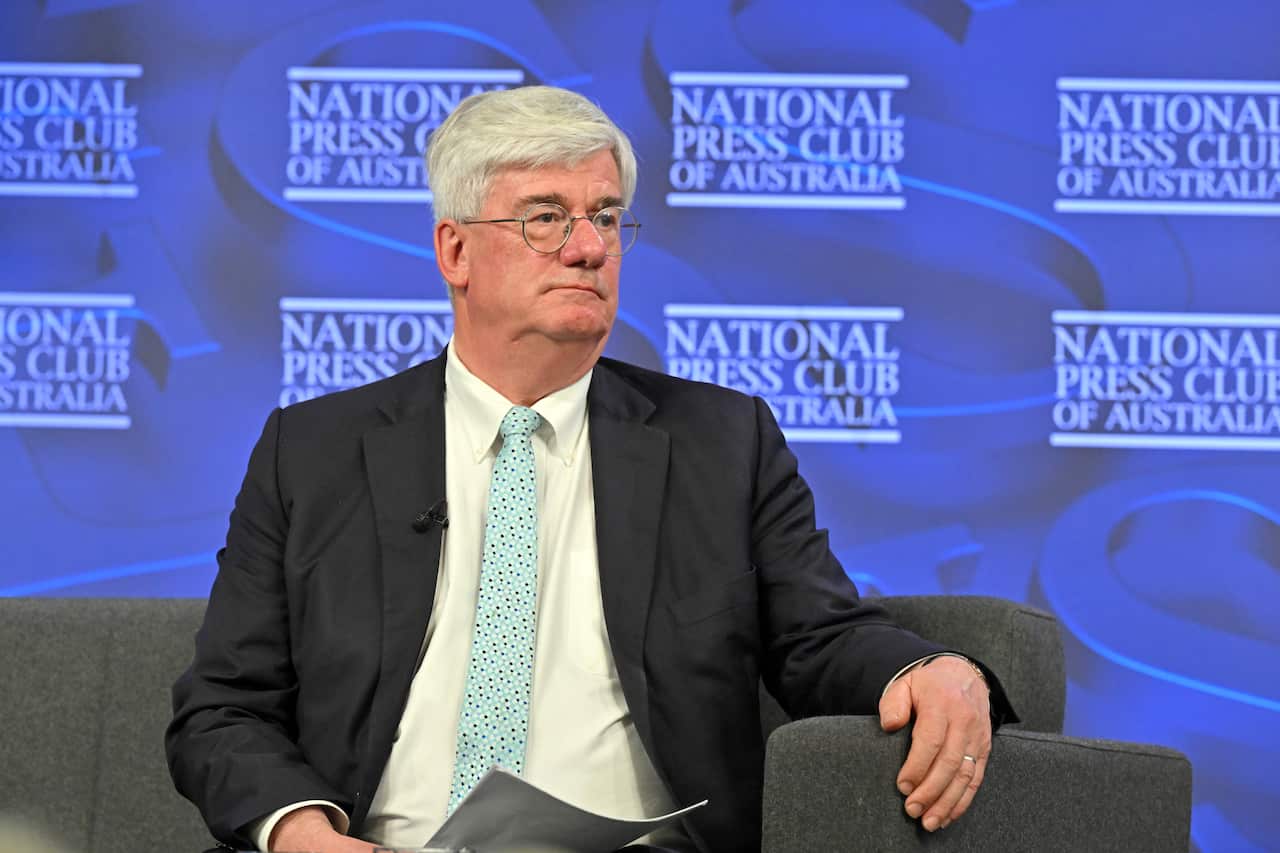 Economist Saul Eslake says the government has been unwilling to frame policy changes as an effort to make housing more affordable. Source: AAP / Mick Tsikas
“We have consciously sought to reduce investor demand for established housing, in order to make housing cheaper for first-home buyers, in other words, to make housing more affordable,” Eslake says.
“But they haven’t said that. They have run away from it … they are still captured by the idea that the main purpose of housing is a vehicle for accumulating wealth rather than meeting basic human needs.”
New Zealand economist Shamubeel Eaqub argues that changing this mindset may be just as difficult as changing housing policy.
New Zealand’s experience, he says, has shown that people can become so accustomed to rising house prices that accepting a different path becomes a major psychological barrier.
“When house prices are rising, I think it’s very easy to kind of focus on the fact that we’re just wealthier and it’s just easy,” he tells SBS News.
But the real work of an economy is actually much harder in terms of how we create good businesses, good jobs, good quality of life, and those wider competitive and policy settings that are good for society.
For the latest from SBS News, download our app and subscribe to our newsletter.