
In briefBuildings have collapsed and 80 aftershocks, one above magnitude 6.0, were recorded by local authorities. North of Panama, Hurricane Isaias has made landfall in near a different Panama City in Florida, a storm delayed by El Niño.
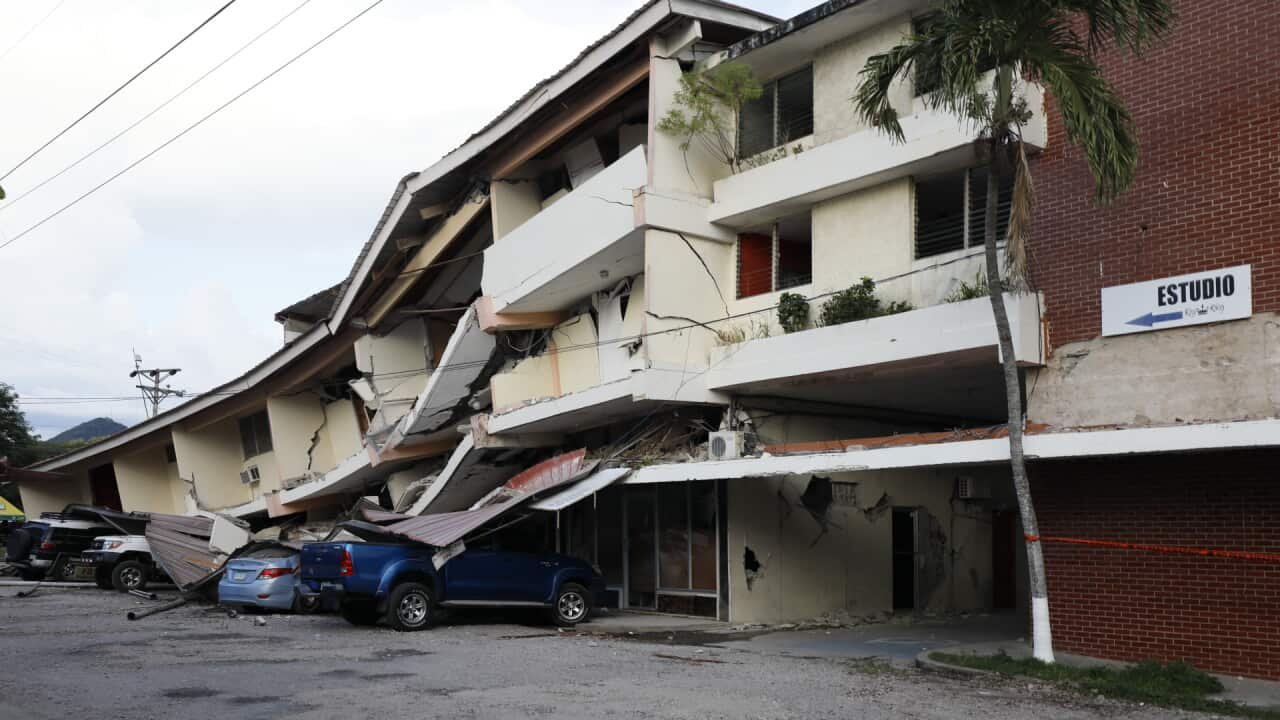
A powerful 7.7-magnitude earthquake struck Panama on Saturday, collapsing buildings and roads in the centre of the country but sparing the critical Panama Canal trade waterway.
The shallow tremor was felt across the Central American nation of around 4.5 million people, according to the National Civil Protection System. In Panama, earthquakes of this magnitude are rare.
The head of emergency operations Rene Garcia told AFP that so far there were no reports of fatalities. He said there were reports of people trapped in different collapsed structures, one near a church in Veraguas, the other in a collapsed hotel in Cocle.
In Panama City, about 200 kilometers (120 miles) from the epicenter, there were scenes of panic as people rushed to evacuate from the city’s emblematic skyscrapers.
“I was scared because the shaking was very strong and prolonged,” Salomon Andion, 46, told AFP after evacuating his 15-story building for the second time following aftershocks.
Your trusted source for staying up-to-date with the world around you. Get free daily news updates and analysis, straight to your inbox.
“Heavy objects like dressers, the bed, and all the kitchen items were shaking.”
A video widely shared on social media showed water falling from the rooftop pool of a building more than 20 stories tall. Another showed a bridge over the Panama Canal shaking violently but remaining upright as vehicles traveled across it.
“We are facing a major disaster,” President Jose Raul Mulino said, adding that some roads had “completely collapsed.”
The United States Geological Survey said the quake struck at about 5am on Saturday, AEDT with an epicenter that was 10 kilometres from the small town of Pitaloza Arriba in central Herrera province. A tsunami warning was issued for the eastern Pacific but later lifted.
 A rare earthquake in Panama has sent tremors across the whole country. Source: AAP / Moncho Torres
The Panama Canal Authority said shipping through the channel, which connects the Pacific and Atlantic oceans, was unaffected and operating “as normal.”
President Mulino travelled to Penonome to coordinate the disaster response.
Health minister Fernando Boyd said the most affected areas were the provinces of Herrera and Cocle as well as Los Santos and the town of Tonosi in Los Santos was completely cut off.
Panama City’s international airport, a major hub for the region, was temporarily closed.
Rare quake
Earthquakes are rare in Panama and if they do occur, they usually strike the western Chiriqui province, bordering Costa Rica.
Former president Ricardo Martinelli posted pictures on Instagram of his house in the town of Sona in Veraguas province which collapsed.
A church and a hotel in Penonome also suffered extensive damage, images shared on local media showed.
More than 80 aftershocks, one above magnitude 6.0, were recorded by the local geosciences institute.
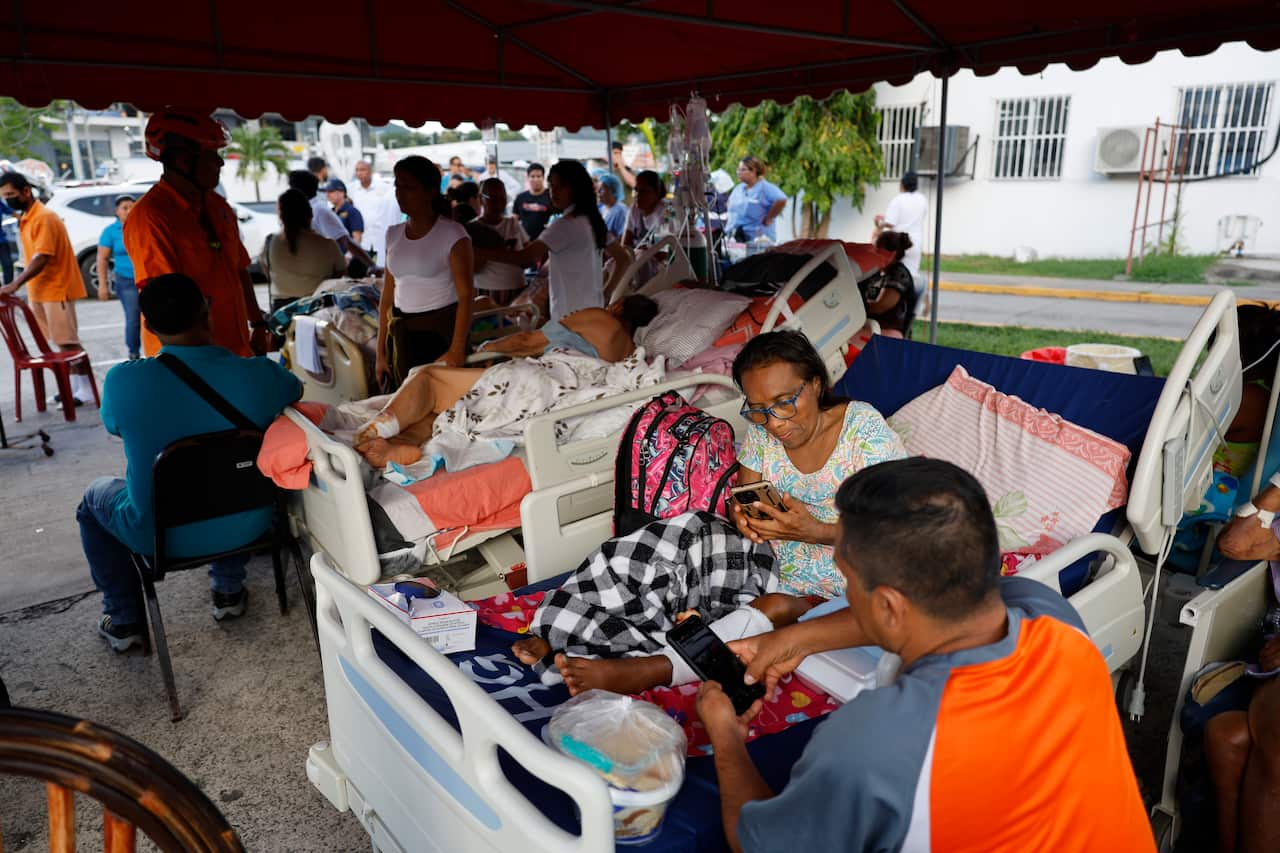 Earthquake vicitms have been forced to huddle outside hospitals. Source: AAP / Bienvenido Velasco
Mulino called for calm.
“What happened should not be used to generate alarm and disorder,” he wrote on X, adding that he had called for a report on the damage.
The education ministry announced the suspension of classes in schools nationwide.
The Panamanian quake is at least the fourth quake this year in Latin America surpassing 7.0 in magnitude, after devastating back-to-back earthquakes in Venezuela’s Guaira in June and a powerful earthquake in western Colombia in August.
United States Secretary of State Marco Rubio said on X on Friday that he was “closely monitoring” the situation, with his office “rapidly mobilising resources and personnel to assist,” at the Panamanian government’s request.
Delayed storm, El Niño responsible
In the US — at a different Panama City — another natural disaster is unfolding.
Hurricane Isaias has made landfall in Destin, near Panama City and has lashed the US Gulf Coast with heavy rain and strong winds Saturday.
The Category 2 hurricane is packing maximum sustained winds of 165 kph, with storm surges expected along the Gulf coast, from the mouth of the Mississippi River south of New Orleans to Florida’s Suwannee River, the National Hurricane Center says.
Coastal communities saw mandatory evacuations and shuttered businesses as Isaias became the first hurricane of an Atlantic season that kicked off in June, held in check by a historic El Niño phenomenon that typically spurs more major storms in the Pacific.
More than 300,000 customers in Florida and 200,000 customers in Alabama were without power on Friday night, according to poweroutage.us. Water service to buildings was suspended.
Fueled by record-warm Gulf waters heated by climate change, it underwent rapid intensification, and is the first hurricane to strike the US mainland since Milton in 2024.
Isaias’s late arrival this season is largely due to an El Niño of historic strength.
READ MORE
El Niño, the warm phase of the El Niño-Southern Oscillation (ENSO), creates strong vertical wind shear over the Atlantic that tends to tear storms apart.
“We have been seeing basically nearly record strong shear throughout the Atlantic Basin this year, and that is consistent with what we’d expect to see with a strong El Nino event,” Michael Fischer, of University of Miami’s Rosenstiel School of Marine, Atmospheric, and Earth Science, told AFP.
In the Pacific, it has the opposite effect, weakening shear and allowing storms to grow. The Pacific has already produced several hurricanes this year, some of which hit maximum Category 5 strength.
“Sea surface temperatures in the Gulf of Mexico are in record territory because of fossil fuel-driven climate change,” Marc Alessi, a climate scientist with the Union of Concerned Scientists, told AFP. “Isaias was able to tap into all of that energy in the ocean to develop into a major hurricane.”
READ MORE
According to an analysis by nonprofit Climate Central, waters in the Gulf of Mexico are about 1.4C above the pre-industrial average, and Isaias “formed over waters that were 600 times more likely to be that temperature because of climate change,” Kristina Dahl, the group’s vice president for science, told AFP.
Storm surge will also be worsened because climate change has raised sea-levels by around 6.5 inches in this region, so the surge acts on a higher base, Dahl says. Heavy rainfall is also linked to warming since warmer oceans and atmosphere allow hurricanes to carry more moisture.
For the latest from SBS News, download our app and subscribe to our newsletter.