

It took an extra year’s wait, but the 17th edition of the Rugby League World Cup kicks off on Thursday with a blockbuster between two tournament favourites; the Kiwis meet the defending champion Kangaroos in Sydney.
Sunday will see the women’s tournament begin with the Jillaroos, also defending champs, take on Fetu Samoa. While the competition has been blown open by numerous player movements, the biggest question still remains, can anyone conquer the Australian empire?
Here’s everything to know.
Eligibility
The player eligibility merry-go-round may be messy, but has been an enthralling addition to the international game. The league landscape underwent a seismic shift in 2017 when just two days before naming their World Cup Squad, the Kiwis were told superstar Jason Taumalolo would be turning out for Tonga.
This began a flood of players bouncing between nations, keeping coaches and fans on their toes and significantly increasing the competition across countries. The rules have since been relaxed even further, with changes to the long standing State of Origin rules.
Previously, a player was not permitted to represent a tier one nation other than Australia if they played in State of Origin. This was amended in February allowing the likes of Kalyn Ponga and Dane Gagai to switch to the Kiwis.
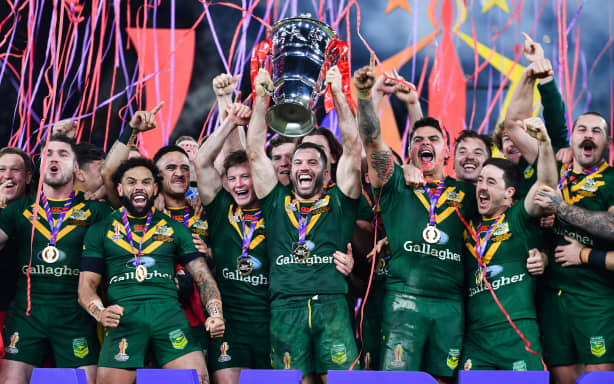
Australia have won the last three Rugby League Men’s World Cups.
PHOTOSPORT
Hosting hullabaloo
Initially set to be hosted in the Unites States, the event was then moved to France for 2025, who in turn withdrew due to financial concerns cited by its government.
This resulted in Australia stepping in to stage the 2026 edition, with games also played in Papua New Guinea and New Zealand. However, New Zealand will host just two games, a double header in Christchurch on 31 October.
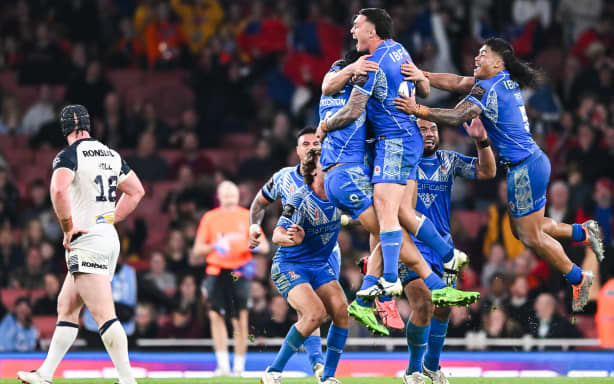
Samoa shocked England in the 2021 semi final.
SWPix / www.photoport.nz
Pacific resurgence
The Pacific nations are no longer simply making up the numbers. When some of the biggest names in the game pledged their allegiance to Tonga in 2017, it ignited a nation.
Now genuine contenders, packed with talent, and backed by an infectious, relentless, and at times deafening fan base, Tongan league is well and truly alive.
Samoa saw the success and followed suit, securing several superstars including premiership winners Stephen Crichton, Brian To’o and Jarome Luai, going on a dream run at the 2021 World Cup, falling just short in the final against Australia.
Once again in 2026, a slew of former Kiwi and Kangaroo players have declared for their Pacific homes, moving further from the three team tournaments of the past.
Format
The men’s draw is a bit complicated as the top two teams from Pool A will qualify for the semi-finals, while the highest ranked two teams across the combined Pool B and Pool C standings will also progress. Teams in Pools B and C play three inter-pool matches against each team in the opposing pool. It’s much more straightforward in the women’s tournament, the top two from each pool advancing.
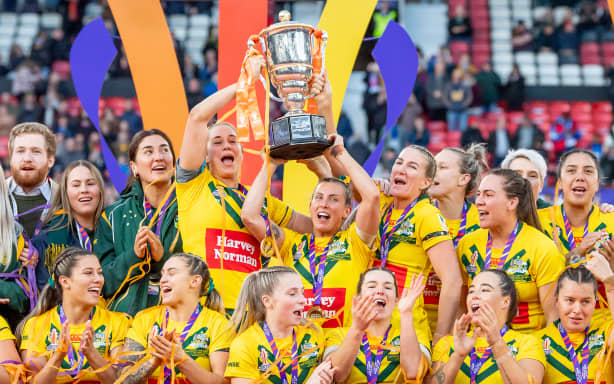
The Jillaroos loom as the Kiwi Ferns toughest competition in the tournament.
Photosport / Allan McKenzie
Warriors watch
There are plenty of Warriors in action across four teams – Erin Clark, James Fisher-Harris, Jacob Laban, Charnze Nicoll-Klokstad, Tanner Stowers-Smith and Te Maire Martin for the Kiwis.
Chanel Harris-Tavita and Eddie Ieremia-Toeava will suit up for Toa Samoa.
Making his first appearance for the nation, former Kiwi Dallin Watene-Zelezniak has changed the black jersey for red, with Demitric Vaimauga also named for Tonga while Emosi Ravosai, yet to make his Warriors debut, is with Fiji.
The Kiwi Ferns boast five Warriors women in Stacey Waaka, Apii Nicholls, Ivana Lauitiiti, Mele Hufanga and Kaiyah Atai. Meanwhile, Annetta Nu’uausala will captain Fetu Smaoa with Christabelle Onesemo-Tuilaepa also in the squad.
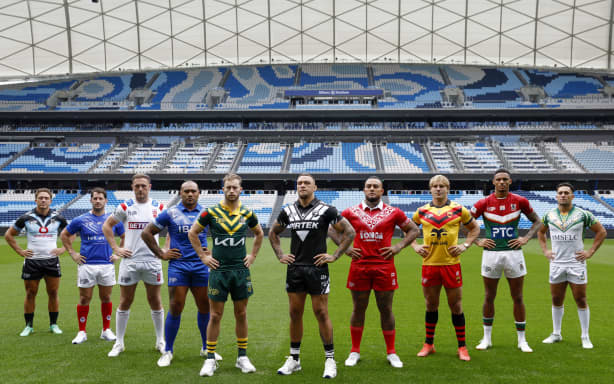
Captains of the men’s teams (from L-R) Fiji’s Kurt Donoghoe, France’s Benjamin Garcia, England’s Ben Currie, Samoa’s Junior Paulo, Australia’s Sam Walker, New Zealand’s James Fisher-Harris, Tonga’s Addin Fonua-Blake,Papua New Guinea’s Jack de Belin, Lebanon’s Jason Saab, and Cook Islands’s KL Iro pose for a photo during the captains’ run at the Rugby League World Cup launch at Allianz Stadium in Sydney on 10 October 2026.
Izhar Khan / AFP
Selections
Fresh off an outstanding performance in the NRL grand final, Knights superstar Kalyn Ponga will finally wear the black jersey he has coveted for so long. Having played for Queensland in State of Origin, Ponga was ineligible to represent the Kiwis until the Australian Rugby League Commission updated its rules earlier this year, paving the way for his New Zealand debut. Joining him, Knights veteran Dane Gagai, set for his first Kiwis cap after seven tests for Australia, qualifying through his Ngāti Pikiāo heritage. Jahrome Hughes is back for his first campaign in two years while other new names include Warriors’ forwards Jacob Laban and Tanner Stowers-Smith.
Meanwhile, Ricky Henry has selected seven debutants as the Kiwi Ferns chase a fourth World Cup title. Among them, two-time Rugby World Cup winner, Olympic Gold Medallist and Sevens world champion Stacey Waaka. Also in line for their first test caps are Kaiyah Atai, Chantay Kiria-Ratu, both of who have switched allegiance from the Cook Islands, as well as Trinity Tauaneai, Tenika Willison and former Jillaroos Shannon Mato and Zahara Temara. Co-captains Georgia Hale and Raecene McGregor will again lead the side.
Erin Clark (Warriors), James Fisher-Harris (Warriors), Dane Gagai (Newcastle Knights), Jahrome Hughes (Melbourne Storm), Jamayne Isaako (Dolphins), Keano Kini (Gold Coast Titans), Jacob Laban (Warriors), Moses Leota (Penrith Panthers), Jeremy Marshall-King (Dolphins), Te Maire Martin (Warriors), Casey McLean (Penrith Panthers), Ronaldo Mulitalo (Cronulla-Sutherland Sharks), Charnze Nicoll-Klokstad (Warriors), Briton Nikora (Cronulla-Sutherland Sharks), Kodi Nikorima (Dolphins), Isaiah Papali’i (Penrith Panthers), Kalyn Ponga (Newcastle Knights), Scott Sorensen (Penrith Panthers), Tanner Stowers-Smith (Warriors), Joseph Tapine (Canberra Raiders), Leo Thompson (Canterbury-Bankstown Bulldogs), Naufahu Whyte (Sydney Roosters), Xavier Willison (Brisbane Broncos).
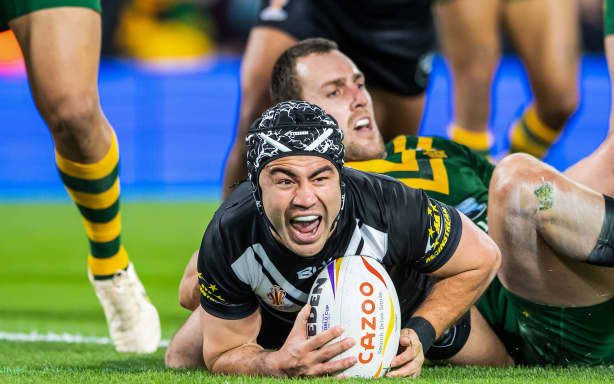
Jahrome Hughes is back in the Kiwis for the first time since 2023.
Allan McKenzie / www.photosport.nz
Brooke Anderson (St George Illawarra Dragons), Kaiyah Atai (Warriors), Annessa Biddle (Cronulla-Sutherland Sharks), Brianna Clark (Brisbane Broncos), Georgia Hale (Gold Coast Titans), Mele Hufanga (Warriors), Chantay Kiria-Ratu (Cronulla-Sutherland Sharks), Ivana Lauitiiti (Warriors), Shannon Mato (Brisbane Broncos), Raecene McGregor (Wests Tigers), Shaniece Monschau (Wests Tigers), Apii Nicholls (Warriors), Shanice Parker (Newcastle Knights), Otesa Pule (Sydney Roosters), Ashleigh Quinlan (Canterbury-Bankstown Bulldogs), Abigail Roache (North Queensland Cowboys), Alexis Tauaneai (Canterbury-Bankstown Bulldogs), Trinity Tauaneai (St George Illawarra Dragons), Angelina Teakaraanga-Katoa (Canterbury-Bankstown Bulldogs), Zahara Temara (Canberra Raiders), Leianne Tufuga (Canberra Raiders), Stacey Waaka (Warriors), Tenika Willison (Newcastle Knights).
Who will actually play in the first games?
Dane Gagai will become the second oldest Test debutant in New Zealand rugby league history when he takes the field for the Kiwis’ opening game on Thursday. Meanwhile, the Kiwi Ferns have named an accomplished side for their first match Fiji Bulikula on Sunday.
1. Kalyn Ponga 2. Jamayne Isaako 3. Dane Gagai 4. Casey Mclean 5. Ronaldo Mulitalo 6. Kodi Nikorima 7. Jahrome Hughes 8. James Fisher-Harris 9. Jeremy Marshall-King 10. Moses Leota 11. Isaiah Papali’i 12. Briton Nikora 13. Joseph Tapine 14. Te Maire Martin 15. Naufahu Whyte 16. Erin Clark 17. Xavier Willison 18. Charnze Nicoll-Klokstad 19. Keano Kini 20. Scott Sorensen 21. Leo Thompson 22. Jacob Laban
1. Apii Nicholls 2. Leianne Tufuga 3. Mele Hufanga 4. Abigail Roache 5. Stacey Waaka* 6. Zahara Temara 7. Raecene McGregor 8. Otesa Pule 9. Georgia Hale 10. Shannon Mato* 11. Annessa Biddle 12. Kaiyah Atai 13. Angelina Teakaraanga-Katoa 14. Ashleigh Quinlan 15. Alexis Tauaneai 16. Ivana Lauitiiti 17. Brianna Clark 18. Brooke Anderson
When do the Kiwis and Kiwi Ferns play?
Fixtures and kick-off times:
10.05pm Thursday 15 October
Allianz Stadium, Sydney, Australia
One NZ Stadium, Christchurch, New Zealand
5.30pm Saturday 31 October
Cbus Super Stadium, Gold Coast, Australia
McDonald Jones Stadium, Newcastle, Australia
One NZ Stadium, Christchurch, New Zealand
Kiwi Ferns v Papua New Guinea
7.45pm Saturday 31 October 2026
Cbus Super Stadium, Gold Coast, Australia
You can also check out all the Pacific Island squads and fixtures here.
How can I watch or follow along?
Games will be broadcast on Sky Sport in NZ.
RNZ will be blogging all the action from the Kiwis and Kiwis Ferns games, as well as other key match-ups.
Who is in each pool?
Pool A: Australia, New Zealand, Fiji, Cook Islands
Pool B: England, Samoa, Lebanon
Pool C: Tonga, Papua New Guinea, France
Pool A: Australia, England, Samoa, Wales
Pool B: New Zealand, Papua New Guinea, France, Fiji
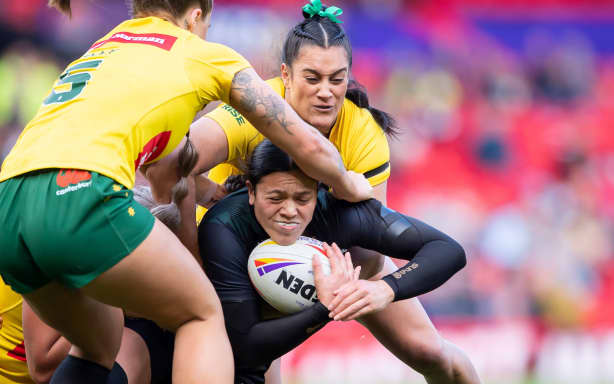
Autumn-Rain Stephens-Daly in action in the 2022 World Cup final.
PHOTOSPORT
History
In 2008, the Kiwis produced one of the greatest upsets in rugby league history, ending one of the most dominant sporting dynasties. Since 1975, the Kangaroos had been kings of the rugby league world, winning six consecutive World Cups. But the unstoppable Australian force met the courageous Kiwis in the final, with New Zealand stunning the champions 34-20 to claim their first and only World Cup crown. Since that triumph, the Kiwis have fallen short in the 2013 final, 2017 quarterfinal, and 2021 semi-final. The low point came in 2017, when the co-hosts were bundled out as by Fiji in a listless 4-2 loss.
Meanwhile, it has been a long wait for redemption for the Kiwi Ferns, who were hammered 54-4 in the 2022 final against the Jillaroos in Manchester. It’s been a stark contrast to the early days of the tournament,when the Ferns dominated.
Formed in 1995, the Kiwi Ferns spent the next 20 years dominating women’s rugby league, winning the first three World Cup crowns in 2000, 2003 and 2008. But the Jillaroos would later become a force of their own, capturing the 2013, 2017 and 2021 titles. New Zealand still hold a 17-15 head-to-head advantage over the Aussies, but are 1-11 since 2017.