
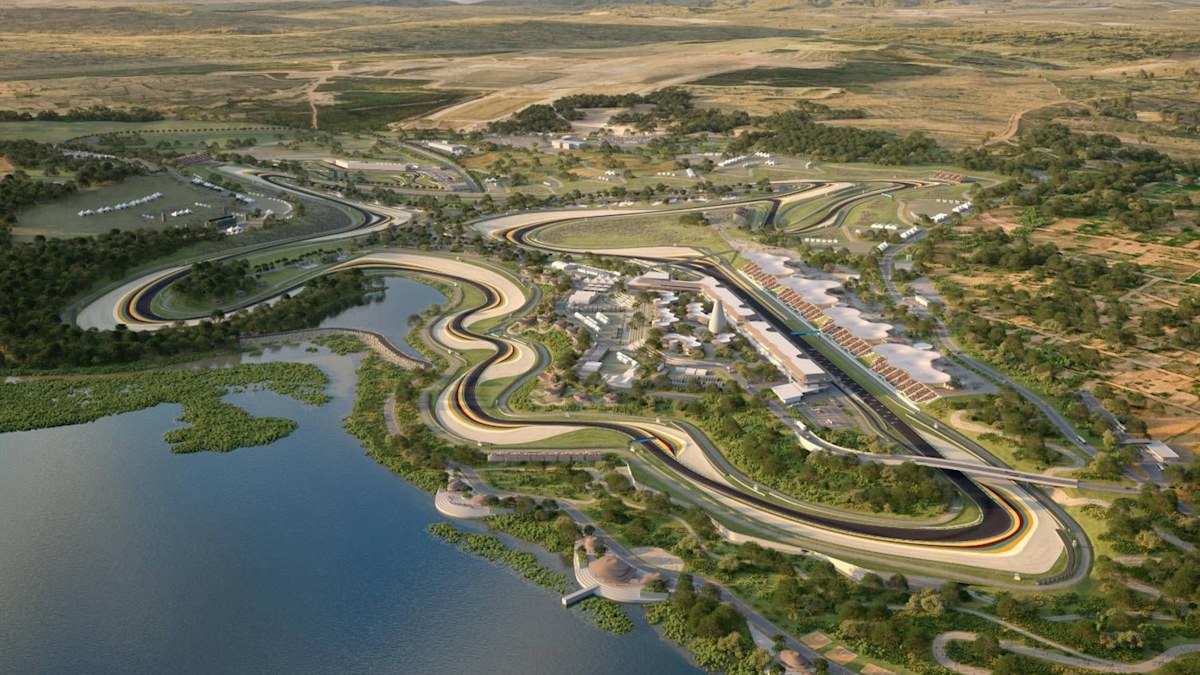
F1 has announced it will make its long-awaited return to Africa on a 10-year deal with the world renowned motorsport hotspot of … Rwanda?
The sport on Tuesday night announced the deal would start “in the early 2030s”. F1 hasn’t raced on the continent since the last South African Grand Prix at Kyalami near Johannesburg in 1993.
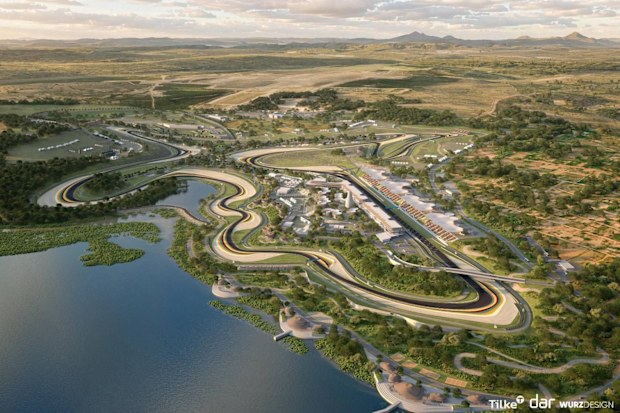
A render of the Bugesera circuit in Rwanda, which will host Formula 1 on a 10-year deal from the “early 2030s”. Formula 1
The Bugesera track will be built about 40km south of the capital Kigali, next to the new international airport. While the design has not yet been finalised, F1’s announcement vowed it would “work in harmony with the natural landscape, using the area’s elevation changes to create a unique and challenging racing experience while delivering exceptional viewing opportunities for fans.”
F1 has long held a desire to return to Africa – the only populated continent without a grand prix – and Lewis Hamilton has been among the most vocal supporters.
But the sport’s decision to partner with Rwanda, a country without a single permanent motorsport venue, and little history of hosting major sporting events, has raised eyebrows.
Morocco and South Africa, which have previously held grands prix and have a lengthy motorsport histories, had both previously made unsuccessful bids to rejoin the calendar.
Like they were about Saudi Arabia and Qatar before it, fans are unhappy the sport has signed another deal with a country with a poor human rights record. Human rights groups including Amnesty have accused the country of “sportswashing” through its ‘Visit Rwanda’ tourism campaign.
As part of the campaign, the country last year hosted the UCI Road World Championships, and has big-money sponsorship agreements with football giants Aston Villa and Paris Saint-Germain, as well as the LA Clippers (basketball) and LA Rams (American football).
It also previously sponsored Arsenal and Bayern Munich, before both clubs cut the deals short following pressure from fans.
Rwandan president Paul Kagame has been in power since 2000, and won the country’s most recent election in 2024 with 99.18 per cent of the vote. Freedom House, a US-based agency that vows to “fight for democratic principles and human dignity”, said the election was neither free nor fair.
It also said the Kagame regime “continues to suppress political dissent through pervasive surveillance, intimidation, arbitrary detention, torture, and renditions or suspected assassinations of exiled dissidents”.
According to the UN, Rwanda had provided “critical” support to the March 23 Movement (M23), which according to Amnesty is responsible for the displacement of “hundreds of thousands of people and significant loss of life”.
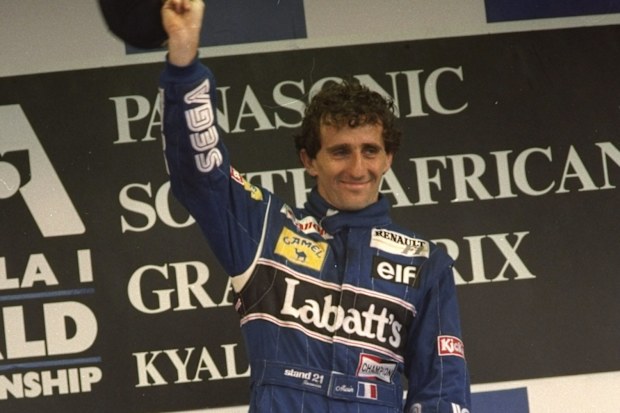
Alain Prost won the 1993 South African Grand Prix at Kyalami. Getty
Kagame announced in 2024 his country was going to bid for a race, and Kagali later that year hosted the FIA’s annual end-of-season prize-giving gala.
Kagame personally handed Max Verstappen the trophy for winning his fourth F1 world championship.
According to World Bank data, Rwanda is ranked 195th of 214 in the global per capita GDP rankings, with just USD $1,123 per person. It would make it by far the least wealthy F1 host nation on the 2026 calendar, with just 15 per cent of the GDP per capita of the next-closest host nation – Azerbaijan.
Nearly 30 per cent of the population live below the national poverty line, while nearly 40 per cent live on less than USD $3 a day.
But as part of the announcement, Kagame declared “today belongs to Africa”.
“For more than three decades, the world’s premier motorsport championship has raced without this continent, and that changes with this agreement,” he said.
FIA president Mohammed Ben Sulayem said the deal was “an important step in the continued global growth of motorsport”, while F1 chief executive Stefano Domenicali said it was a “landmark moment”.
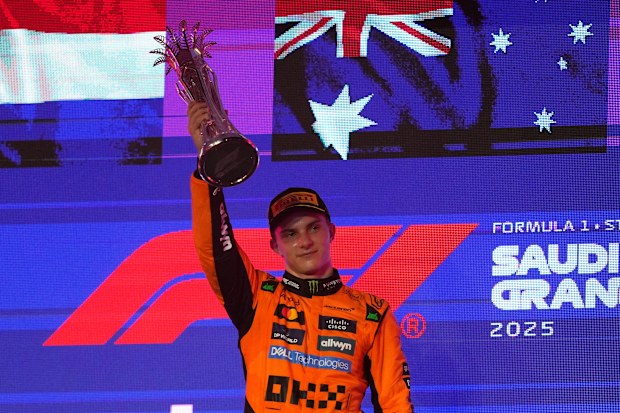
Oscar Piastri won the 2025 Saudi Arabian Grand Prix, which has also been criticised by human rights activists. AP
“Africa has always been part of Formula 1’s future, and from the beginning we were determined to return in the right way, with the right partner, a long-term commitment and a clear vision for creating meaningful impact,” Domenicali said.
A desire to host a grand prix on every continent, and therefore be a ‘world championship’ in every sense of the world is a fair cause.
F1 has navigated difficult political situations in the past, including in Africa, where it continued to race until 1985 as the rest of the sporting world boycotted the nation amid pressure over its apartheid regime. It returned for two races post-apartheid in 1992 and 1993.
But in the modern political climate, selling this idea will be a significantly harder task.