
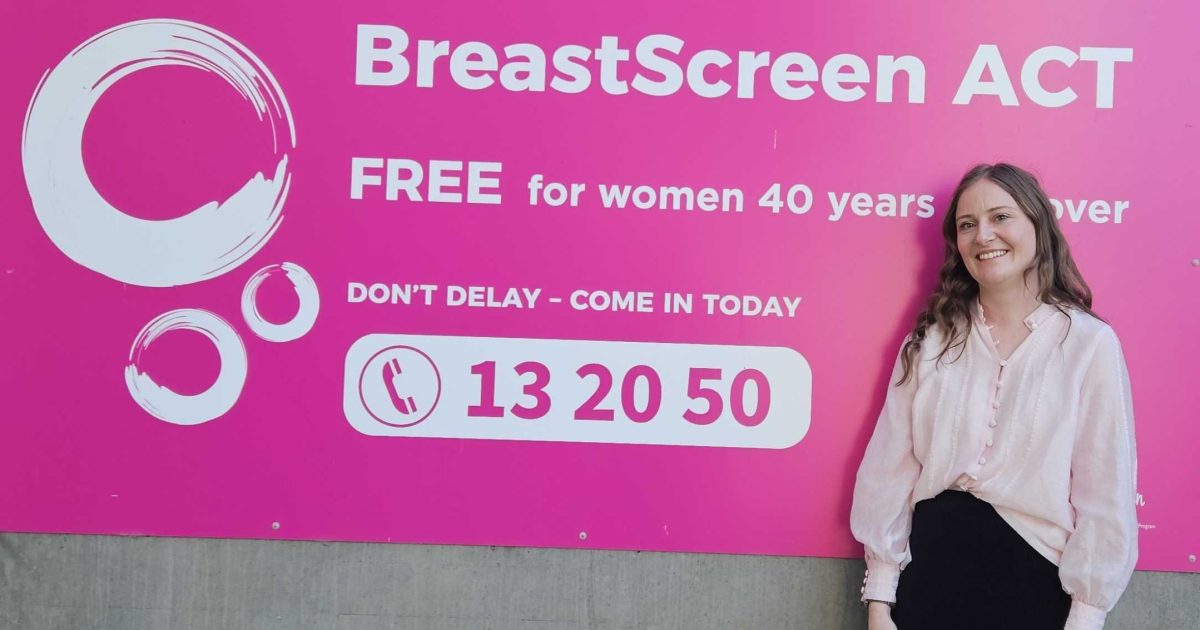
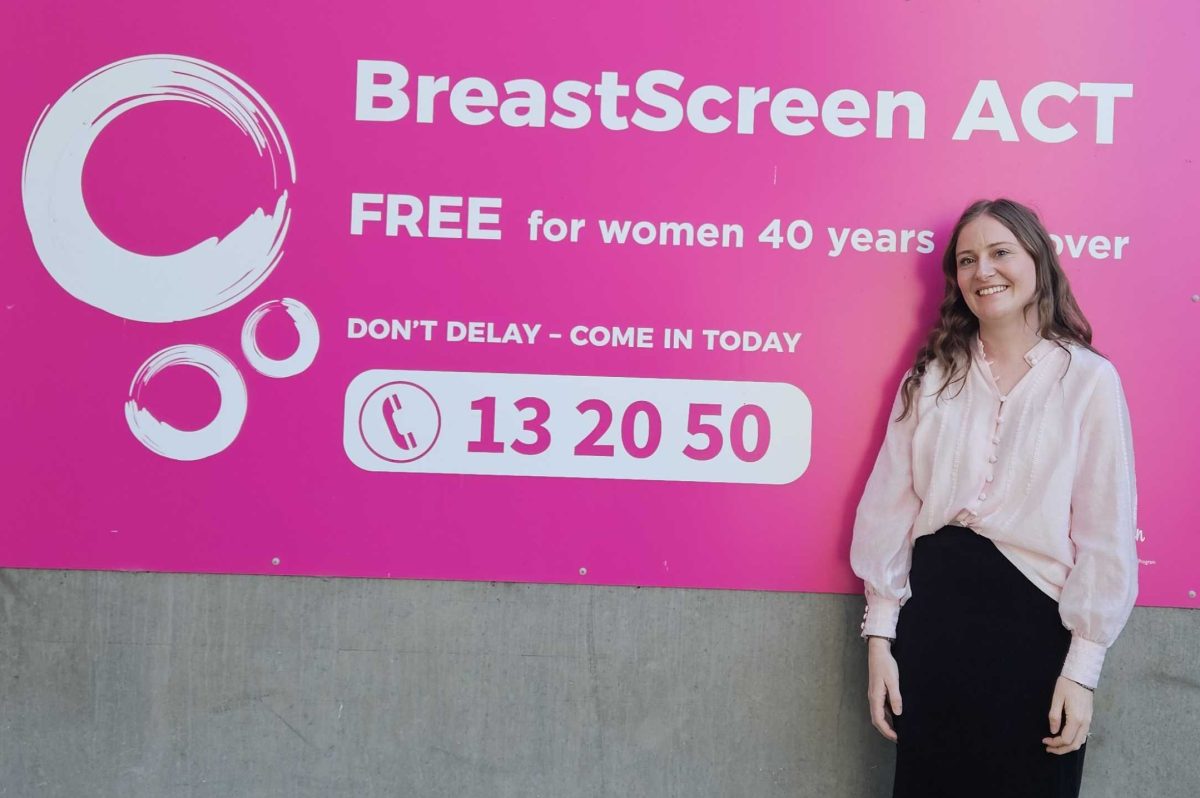
Jodie Kirkness works as BreastScreen ACT’s health promotion and standards manager. Photo: Naziya Alvi.
A lump is not the only warning sign of breast cancer, and waiting until something feels wrong could mean missing an opportunity for early detection.
That is the message from BreastScreen ACT health promotion and standards manager Jodie Kirkness, who is urging Canberra women to become familiar with their breasts, recognise unusual changes and keep up with regular mammograms.
As Breast Cancer Awareness Month puts the spotlight on early detection, Ms Kirkness says women need to understand the difference between breast awareness and routine screening, and why both matter.
Many breast cancers detected through mammograms are too small to be noticed during a self-check.
“The majority of cancers that we detect are very, very small, and women won’t feel them themselves,” she said.
BreastScreen ACT offers free screening mammograms to eligible women aged 40 and over, and encourages women aged 50 to 74 to attend every two years.
No GP referral is required, but Ms Kirkness says a common misconception is that a single mammogram is enough, “so a lot of the work that my team does is deliver sessions in the community”.
These sessions help women understand the screening process and why returning every two years is important. Regular mammograms allow radiologists to compare images and identify changes that may otherwise go unnoticed.
National BreastScreen Australia figures show that more than 6400 invasive breast cancers were detected through screening among women aged 50 to 74 in 2024. Of the cancers detected, 57.3 per cent were small, measuring 15 millimetres or less.
An estimated 20,129 Australian women were expected to be diagnosed with breast cancer in 2025, including about 11,900 aged between 50 and 74.
Despite the benefits of screening, Ms Kirkness says fear continues to prevent some women from booking appointments. Some are concerned about the discomfort of a mammogram, while others worry about receiving a cancer diagnosis.
“There is definitely what we hear when we’re out in community, a fear of the actual mammogram procedure because we are compressing your breasts when we do it,” she said.
She explained that breast compression helps produce clearer images while reducing radiation exposure. But overcoming the fear of finding something wrong can be more difficult.
Ms Kirkness says women should not delay seeking medical advice if they notice a new lump, skin dimpling, nipple changes or anything else unusual.
Importantly, women with symptoms should see their GP rather than book a routine BreastScreen mammogram or wait for their next scheduled appointment.
A GP can arrange the diagnostic tests needed to investigate the change.
For women under 40, who are not eligible for routine screening through BreastScreen ACT, knowing what is normal for their breasts and reporting changes promptly is particularly important.
Ms Kirkness says interest in screening among women aged 40 to 49 has grown, although she has not seen dramatic changes in the overall age profile of those attending.
BreastScreen ACT is also working to reach women who may face additional barriers to accessing screening.
Women from culturally and linguistically diverse communities may be unfamiliar with Australia’s screening program, particularly if breast screening was not routinely available in their country of origin.
Language barriers, cultural concerns, privacy and fear can also discourage participation.
To address these challenges, BreastScreen ACT works with community organisations to deliver information sessions and help women understand how to access appointments.
Its outreach includes working with multicultural communities and arranging group screening opportunities with language support.
The service has also been encouraging women to return to screening after appointments were disrupted during the COVID-19 pandemic.
Ms Kirkness said she understood ACT screening participation had recovered, although detailed local figures were yet to be confirmed.
She also wants men to understand that breast cancer is not exclusively a women’s disease.
Although much less common in men, breast cancer can occur, and men should seek medical advice if they notice an unusual lump or changes around the breast or nipple.
BreastScreen ACT appointments can be booked on 13 20 50. Anyone who notices a new or unusual breast change should contact their GP promptly rather than wait for routine screening.