
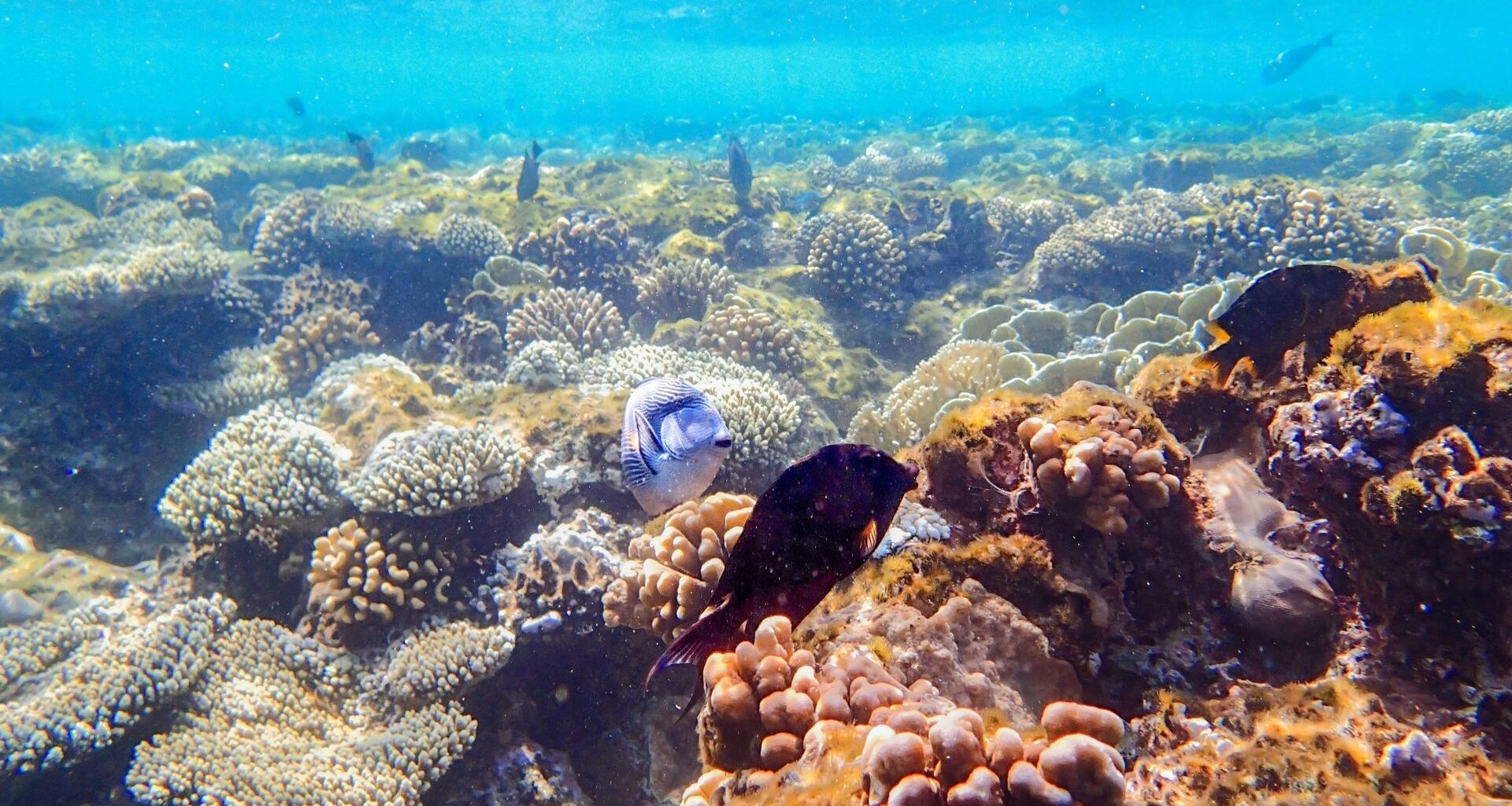
Scientists found that some corals from cooler waters tolerate more heat than those from warmer reefs, offering new insights into coral resilience and restoration.
Many reef-building corals already live close to the most heat they can take. Yet reef-builders that share a stretch of coast don’t all respond to warming the same way.
In a heat test, finger corals from a cooler, wave-exposed bay in Hawaiʻi tolerated more heat than members of the same species from a warmer bay nearby.
A second species, rice coral, showed about the same tolerance from either bay.
The results suggest that heat tolerance depends on both the coral species and the conditions where it lives.
Too much heat makes corals bleach, which means they lose the tiny algae in their tissues that supply most of their food.
Testing heat tolerance in corals
Allison M. Klein, a postdoctoral fellow at FAU Harbor Branch, ran the comparison with Professor Joshua D. Voss and colleagues at the University of Hawaiʻi’s Hawaiʻi Institute of Marine Biology.
The team tested small fragments collected in both bays, in tanks rather than on reefs during a real heat wave.
“By exposing corals from distinct environmental histories to a standardized thermal stress experiment, we were able to directly compare differences in thermal tolerance across species and populations,” Klein said.
“This approach allowed us to examine how prior environmental conditions may shape physiological responses to heat stress.”
Two nearby bays differ
Kāneʻohe Bay, on the east coast of Oʻahu, is the largest sheltered bay in the main Hawaiian Islands.
Its many reefs help keep the water warm and stable, with summer surface temperatures of about 81°F to 84°F (27°C to 29°C).
The bay lost up to 22% of its coral cover during mass bleaching in 2014 and 2015.
Kailua Bay, just southeast of Kāneʻohe, is open to trade winds and ocean swells.
It has more water movement and cooler water, about 77°F to 82°F (25°C to 28°C) in summer, and its temperatures change more over short periods.
At the team’s site there, called Ulupaʻu, finger coral grows in compact, knobby shapes instead of the open branches common in Kāneʻohe Bay.
Heating coral in tanks
Rice coral, Montipora capitata, can form broad plates or branching colonies with a textured surface, while finger coral, Porites compressa, grows in clusters of slender, finger-like branches.
The team collected five colonies of each from three sites in Kāneʻohe Bay in December 2023 and from Ulupaʻu in April 2024, 40 in all.
Before testing, the Kāneʻohe corals spent about five months in an underwater nursery, while the Ulupaʻu corals spent about one month.
In May 2024, two branches from each colony, each about 2 inches (5 centimeters) long, were placed in outdoor seawater tanks.
Over six days, the water warmed from about 78°F (25.5°C) to 90°F (32°C), roughly 7°F (4°C) above the area’s warmest monthly average.
Every two days, the team measured the faint light given off by the algae’s chlorophyll, which shows how well the algae turn sunlight into energy.
Both species tolerated heat
Scientists measure heat stress on reefs in degree heating weeks, a running total of the extra heat a reef has faced over the past three months.
A week of water 1.8°F (1°C) above the usual summer peak adds one degree heating week.
NOAA Coral Reef Watch says significant bleaching usually begins at 4, and stress of 8 or more has been linked to widespread bleaching and death on reefs.
The team tallied heat in the tanks the same way. For each colony, the researchers calculated how much heat it took for its algae to lose 30% of their efficiency.
The colonies reached that threshold after accumulating between 5.93 and 7.21 degree heating weeks, exceeding NOAA’s benchmark for significant bleaching risk on natural reefs.
Some finger corals stood out
Finger corals from Ulupaʻu tolerated about 0.39 more degree heating weeks than their Kāneʻohe Bay counterparts.
They also tolerated 0.65 more than rice coral collected at Ulupaʻu.
That species, by contrast, scored about the same in both bays. So colonies from the cooler bay weren’t tougher across the board.
“This study identified more resilient corals from certain locations in these testing conditions, which provides important hope for the future,” Voss said.
“The results demonstrate that both species identity and local environmental history can influence coral thermal performance and success in coral restoration efforts.”
Species may cope differently
Inside Kāneʻohe Bay, both species had about the same heat limits.
Finger coral also bleached more slowly than rice coral, which suggests the two species may cope with warming in different ways.
“Our findings highlight that coral resilience to ocean warming is not uniform, even among species living in close geographic proximity,” Voss said.
“As reefs around the world face more frequent and intense marine heat events, understanding which corals can tolerate that stress – and why – will be critical for protecting and restoring reefs.”
“What works for one species or population may not work for another, so conservation strategies need to account for both the biological and the environmental diversity that exists within coral reef ecosystems.”
Stronger reefs may need diversity
Ulupaʻu’s finger corals may be one source of naturally heat-tolerant colonies for restoration, where fragments are grown in nurseries and planted on damaged reefs.
Still, the researchers cautioned that the most heat-tolerant ones aren’t always the best choice.
Keeping genetic variety and a range of traits could help a restored reef adjust to different conditions over time.
Why the Ulupaʻu finger corals did better is still unknown, and the differences in collection season and nursery time may play a part.
Repeated exposure to Ulupaʻu’s cooler, more changeable water may help prepare them for heat, but the team didn’t test that idea or check the colonies’ genes or which algae they carry.
Next, the researchers plan to read the DNA of those algae to see whether they help explain the difference.
The full study was published in the journal Scientific Reports.
—–
Like what you read? Subscribe to our newsletter for engaging articles, exclusive content, and the latest updates.
Check us out on EarthSnap, a free app brought to you by Eric Ralls and Earth.com.
—–