
Scientists have found microplastics in virtually every part of the human body. Yet many questions remain about what exactly these infinitesimal flecks of synthetic polymers do to human health, and how they might cause disease.
A new paper looking at the chemical reactions between water and disintegrating plastic offers a potential hypothesis for how microplastics might make us sick.
Plastics were long thought to be chemically inert, meaning they don’t react easily with other compounds. It’s the reason they are often used for packaging, and why they so stubbornly resist biodegradation.
But a Columbia University research team has found that when water molecules come into contact with plastic surfaces, a key chemical reaction does in fact take place. The meeting of water and plastic creates a third class of molecules called reactive oxygen species.
ROS are a type of free radical, a broad term for one class of unstable, high-energy molecules. ROS are known to damage cells and promote inflammation. They “tend to damage nearby materials and molecules,” said Wei Min, a professor of chemistry and biomedical engineering at Columbia and co-author of the study. “For example, if ROS is bumping into DNA, most likely [it will] cause mutation.”
In the first stage of the experiment, the team added water to microscopic bits of six different types of common plastics: polyethylene; polypropylene; polystyrene; polyvinyl chloride, or PVC; poly(methyl methacrylate), or PMMA; and polyethylene terephthalate (PET), which is used in disposable water bottles. Then they measured how much ROS each encounter created. Polyethylene and polypropylene exposure led to more ROS formation. PMMA, which is commonly known as acrylic, generated less.
They then exposed mouse red blood cells to each type of plastic. When the cells encountered the microplastics, they changed shape and ruptured. The more ROS a plastic type generated, the more damage they observed in the cells.
The study’s authors emphasized that their research doesn’t prove that these chemical reactions are responsible for disease or damage in the human body. But they do think it’s a clue to why this man-made material seems to become more harmful the smaller it gets.
When a piece of plastic breaks down into microscopically small components, its total surface area goes up exponentially. Given that these damaging ROS molecules are formed when water meets a plastic’s surface, and the fact that water is present in every cell of the human body, this particular chemical reaction could be a real problem.
The paper was published Wednesday in the journal Nature.
In 2024, the Columbia team showed that the amount of microplastics in commercially-available bottled drinking water was 10 to 100 times greater than previously believed. Ninety percent of those particles were small enough to qualify as nanoplastics, which are small enough to cross the blood-brain barrier and be absorbed into human cells.
“Regular people get exposed to those kind of things regularly in their daily life,” said Beizhan Yan, a Columbia environmental chemist and a co-author of the study.
Everyday actions generate billions of these nanoparticles, Yan noted, from washing a load of laundry to reheating a dish in the microwave.
The most recent paper is also relevant to understanding environmental plastic pollution, said Matthew Campen, professor of pharmaceutical research at the University of New Mexico. Like the paper’s authors, he cautioned against making premature conclusions about human health. When the researchers added a surfactant chemical called Triton X100, it eliminated ROS production. That could indicate that the presence of other compounds in the body might dampen free radical creation.
“It’s a foundational study about the chemistry of plastics interacting with the most common chemical, water, and it’s important because it really does show that these things are capable of generating hydroxyl radicals,” Campen said.
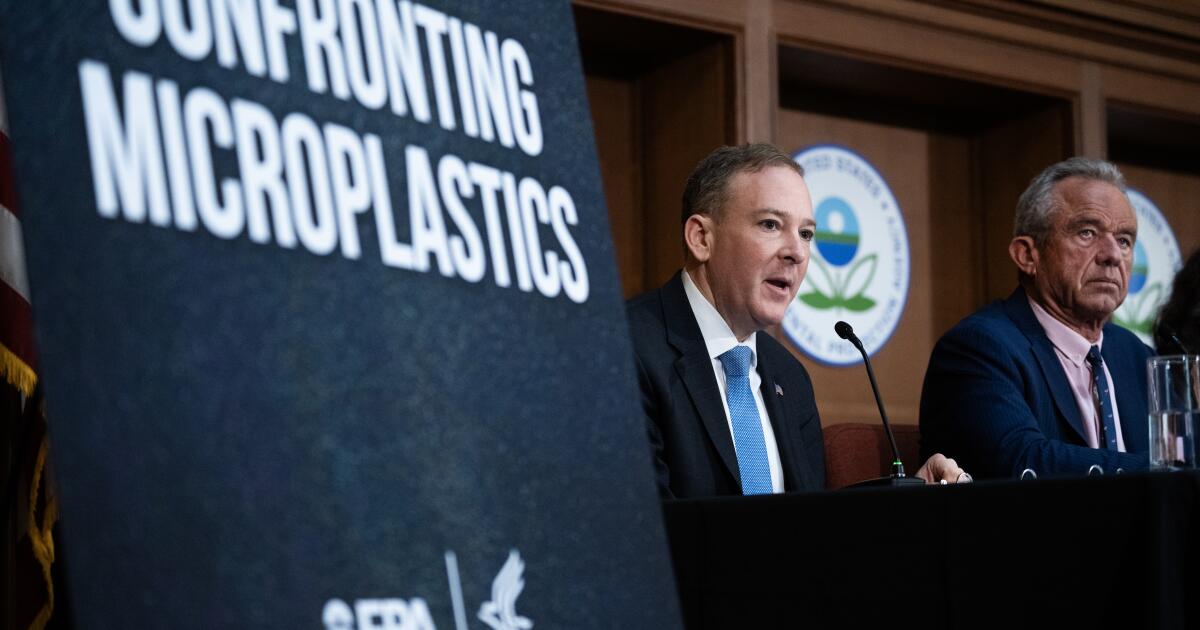
It comes amid mounting concern about the long-term health impacts of these ubiquitous particles. In April, the federal government announced a $144-million effort to study the effects of microplastics in human bodies and drinking water.
“We know enough that people should be taking actions to reduce their exposures” to plastic, said Tracey Woodruff, a Stanford professor of epidemiology and population health. “If we wait to reduce exposures, we could also be causing more harm.”