
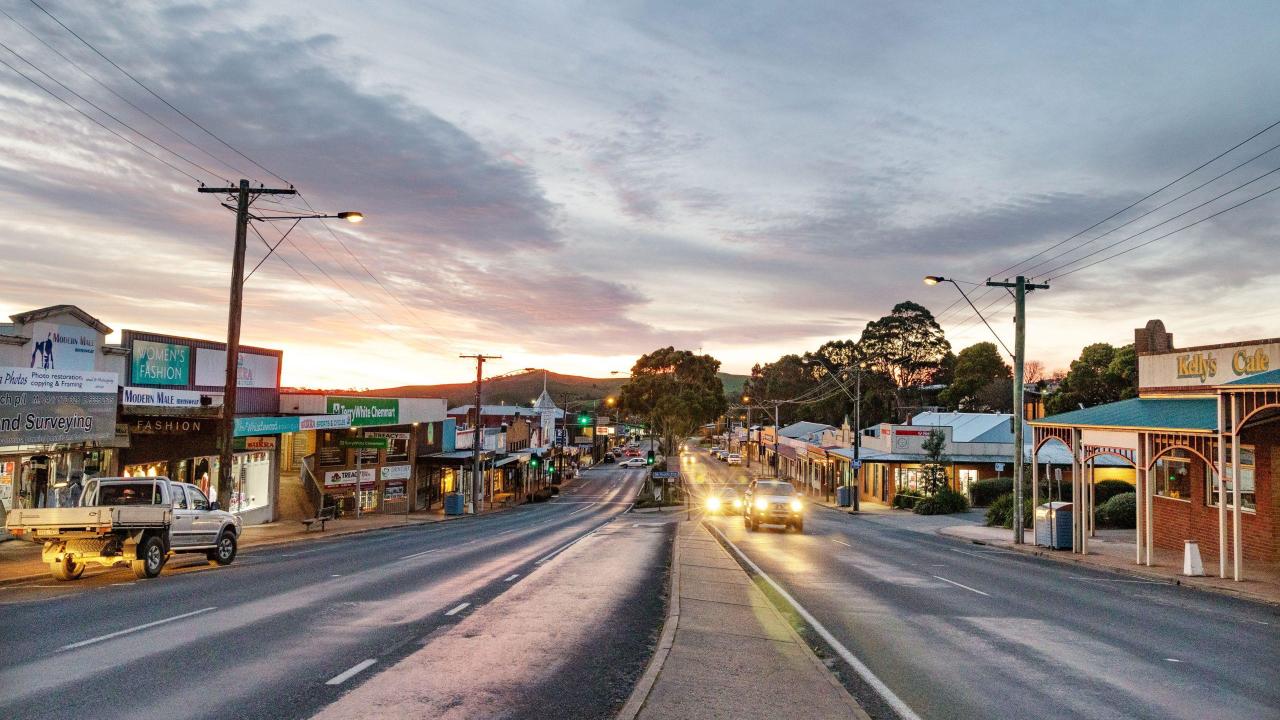
Victorians should brace for more earthquakes after a tremor rattled Gippsland on Saturday, with a leading seismologist warning aftershocks could continue for months.
Geoscience Australia seismologist Dr Tanja Pejic told News24.com.au the magnitude-3.0 earthquake near Korumburra was likely an aftershock of the stronger October 3 quake.
“It is likely that there will be further tremors because the aftershocks can continue for weeks or months,” Dr Pejic said.
Asked whether Saturday’s earthquake was linked to the earlier tremor, she said, “More than likely, it is, because it’s in a very similar location to the one that happened on the third.”
Dr Pejic cautioned that Geoscience Australia’s senior analysts were yet to review Saturday’s earthquake, meaning its recorded magnitude could change.
Asked whether aftershocks continuing two weeks after an initial earthquake were unusual, she said: “Not at all. This is pretty common for aftershocks to continue for more than two weeks, sometimes even months.”
While a stronger earthquake cannot be ruled out, Dr Pejic said the risk remained low.
“Normally, after a main event, like the one that we had on the third, which we now consider to be the main event in this sequence, aftershocks generally tend to be smaller, and over time they peter out.”
“I would say the risk of that is low, but it’s not zero per cent.”
Dr Pejic explained that aftershocks occur when movement along a fault disturbs surrounding rock, with the effects sometimes continuing long after the initial earthquake.
“If you have a slinky and, let’s say, you disturb one end of your slinky, you will see how that disturbance, like a little wave, propagates through the whole slinky,” she said.
She explained that, unlike a slinky, the disturbance in rock can become trapped along sections of a fault before spreading further days, weeks or months later.
“Essentially, that’s kind of what the aftershocks are. The energy that was released from an initial earthquake has caused some disturbance in the area, and now basically all of that needs to settle down again.”
Gippsland is susceptible to seismic activity because of numerous active geological faults, some showing evidence of powerful earthquakes in the distant past.
“Among other things, we have numerous mapped faults in the Gippsland area that actually show geological evidence of having hosted really big magnitude earthquakes in the recent geological past,” Dr Pejic said.
She said magnitude-two and magnitude-three earthquakes were common in Gippsland, with Saturday’s tremor likely to have produced brief but noticeable shaking.
“It would be a rattle, and probably a bit noisy. Commonly, people report noise for something like this, like a deep rumble, almost like thunder.”
“Furniture might rattle for a little bit, but not much more than that normally.”
Residents experiencing further shaking are advised to “drop, cover and hold”, getting low to the ground, sheltering beneath sturdy furniture and holding on until the shaking stops.
Dr Pejic also cautioned against running to doorways during an earthquake.